
Advertisement


Sections
Why one in four countries around the world is facing extreme water stress
India is among the 25 countries that face extremely high water stress each year, WRI’s Aqueduct Water Risk Atlas has found. The report says that the situation is likely to worsen by 2050, with 60 per cent of the world’s population experiencing water scarcity at least one month a year

India is among the 25 countries, which house a quarter of the global population, that face extremely high water stress each year, according to a report published by World Resources Institute’s (WRI) Aqueduct Water Risk Atlas on Wednesday (16 August). Bahrain, Cyprus, Kuwait, Lebanon and Oman are the top five worst-affected nations.'Extreme water stress’, as per the report, means that the country uses more than 80 per cent of its renewable water supply for irrigation, livestock, industry and domestic purposes.Water stress measures the demand for the resource in an area as compared to its available water supply. If the water stress is greater, the country is more prone to experience water shortages, particularly when demand is higher such as during a heatwave, noted Sky News.What are the other findings of the report? How worried should we be? What can be done? Let’s take a closer look.Global water demand to soarThe report says that the worldwide demand for water has more than doubled since 1960.![water shortage]() Increased water stress can harm the economic growth of countries. Reuters (Representational Image)[/caption]According to water risk research, heightened water stress can also harm the economic growth of countries. It also puts global food security at risk.About 60 per cent of global irrigated agriculture is facing extremely high water stress, especially sugarcane, wheat, rice and maize. “Yet to feed a projected 10 billion people by 2050, the world will need to produce 56 per cent more food calories than it did in 2010 — all while dealing with increasing water stress as well as climate-driven disasters like droughts and floods,” the report’s authors say.“Water is arguably our most important resource on the planet and yet we’re not managing it in a way that reflects that. I’ve been working in water for close to 10 years, and unfortunately, the story has been the same almost the entire 10 years,” Samantha Kuzma, Aqueduct data lead from WRI’s water program and a report author, told CNN.ALSO READ: Drowning in Misery: How swimming pools of the rich are leading to a water crisis in the worldWater stress will worsenCurrently, half the world’s population – four billion people – is exposed to extremely high water stress at least one month a year. This is set to worsen by 2050 when 60 per cent of the population could be subjected to such conditions.The researchers have sounded alarm that an additional one billion people are likely to witness extremely high water stress by that time even if the global warming threshold is limited to 1.3 to 2.4 degrees Celsius above pre-industrial levels.As per Aqueduct’s data, 31 per cent of global GDP – $70 trillion – will be exposed to high water stress by 2050, an uptick from 24 per cent in 2010. India, Mexico, Egypt and Turkey will account for over half of this exposed GDP in 2050.[caption id="attachment_13009452" align="alignnone" width="640"]
Increased water stress can harm the economic growth of countries. Reuters (Representational Image)[/caption]According to water risk research, heightened water stress can also harm the economic growth of countries. It also puts global food security at risk.About 60 per cent of global irrigated agriculture is facing extremely high water stress, especially sugarcane, wheat, rice and maize. “Yet to feed a projected 10 billion people by 2050, the world will need to produce 56 per cent more food calories than it did in 2010 — all while dealing with increasing water stress as well as climate-driven disasters like droughts and floods,” the report’s authors say.“Water is arguably our most important resource on the planet and yet we’re not managing it in a way that reflects that. I’ve been working in water for close to 10 years, and unfortunately, the story has been the same almost the entire 10 years,” Samantha Kuzma, Aqueduct data lead from WRI’s water program and a report author, told CNN.ALSO READ: Drowning in Misery: How swimming pools of the rich are leading to a water crisis in the worldWater stress will worsenCurrently, half the world’s population – four billion people – is exposed to extremely high water stress at least one month a year. This is set to worsen by 2050 when 60 per cent of the population could be subjected to such conditions.The researchers have sounded alarm that an additional one billion people are likely to witness extremely high water stress by that time even if the global warming threshold is limited to 1.3 to 2.4 degrees Celsius above pre-industrial levels.As per Aqueduct’s data, 31 per cent of global GDP – $70 trillion – will be exposed to high water stress by 2050, an uptick from 24 per cent in 2010. India, Mexico, Egypt and Turkey will account for over half of this exposed GDP in 2050.[caption id="attachment_13009452" align="alignnone" width="640"]![india water]() India is among the 25 countries that face extremely high water stress each year. Reuters (Representational Image)[/caption]“Without better water management, population growth, economic development and climate change are poised to worsen water stress,” the WRI report warns."People like to talk about climate change as the biggest existential threat to humanity, but water stress is climate change's deadliest and most used weapon," Crystal Davis, global director of WRI's Food, Land and Water programme, was quoted as saying by The Messenger.What can be done?WRI report calls for better water management to reduce water stress. Citing the example of Singapore and the United States’ Las Vegas, it says that methods such as getting rid of water-thirsty grass, desalination, and wastewater treatment and reuse show how to manage scarce water resources.It notes that political will and financial backing are necessary to implement these “cost-effective” solutions.With climate change, “water challenges are only going to become more frequent and more intense,” Heather Cooley, director of research for the Pacific Institute, told The Washington Post. “That needs to motivate us to begin preparing and implementing projects.”With inputs from agencies
India is among the 25 countries that face extremely high water stress each year. Reuters (Representational Image)[/caption]“Without better water management, population growth, economic development and climate change are poised to worsen water stress,” the WRI report warns."People like to talk about climate change as the biggest existential threat to humanity, but water stress is climate change's deadliest and most used weapon," Crystal Davis, global director of WRI's Food, Land and Water programme, was quoted as saying by The Messenger.What can be done?WRI report calls for better water management to reduce water stress. Citing the example of Singapore and the United States’ Las Vegas, it says that methods such as getting rid of water-thirsty grass, desalination, and wastewater treatment and reuse show how to manage scarce water resources.It notes that political will and financial backing are necessary to implement these “cost-effective” solutions.With climate change, “water challenges are only going to become more frequent and more intense,” Heather Cooley, director of research for the Pacific Institute, told The Washington Post. “That needs to motivate us to begin preparing and implementing projects.”With inputs from agencies
This is likely to surge further by 20 to 25 per cent by 2050.The highest increase in water demand – 163 per cent – is expected to occur in sub-Saharan Africa. “While most countries in Sub-Saharan Africa are not extremely water-stressed right now, demand is growing faster there than any other region in the world,” as per the WRI’s report.It attributes a rise in water demand to increasing populations and growing demands of industries such as agriculture, energy production and manufacturing. Moreover, the research says that unsustainable water use policies, a lack of investment in water infrastructure and climate change can also affect the available water supply.Most water-stressed regionsMiddle East and North Africa are the most water-stressed regions, with a whopping 83 per cent of the population exposed to extremely high water stress.In South Asia, 74 per cent of the population is vulnerable to such conditions.As per Charles Iceland, director of Freshwater Initiatives at the WRI, "If a country is using 100 per cent of its available supply, usually you're going to start to see a few bad things happen,” reported Sky News."Groundwater levels drop, rivers dry up, lakes dry up, wetlands dry up and we're seeing that across places in the Middle East, like Iraq and Iran."Water shortages can trigger industrial disruptions, power outages as well as losses in agricultural production, says the report.[caption id="attachment_13009462" align="alignnone" width="640"]
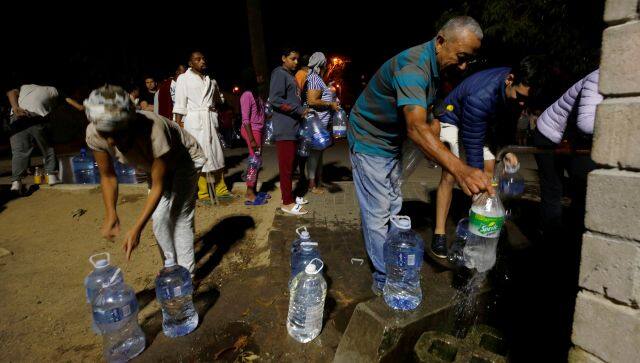 Increased water stress can harm the economic growth of countries. Reuters (Representational Image)[/caption]According to water risk research, heightened water stress can also harm the economic growth of countries. It also puts global food security at risk.About 60 per cent of global irrigated agriculture is facing extremely high water stress, especially sugarcane, wheat, rice and maize. “Yet to feed a projected 10 billion people by 2050, the world will need to produce 56 per cent more food calories than it did in 2010 — all while dealing with increasing water stress as well as climate-driven disasters like droughts and floods,” the report’s authors say.“Water is arguably our most important resource on the planet and yet we’re not managing it in a way that reflects that. I’ve been working in water for close to 10 years, and unfortunately, the story has been the same almost the entire 10 years,” Samantha Kuzma, Aqueduct data lead from WRI’s water program and a report author, told CNN.ALSO READ: Drowning in Misery: How swimming pools of the rich are leading to a water crisis in the worldWater stress will worsenCurrently, half the world’s population – four billion people – is exposed to extremely high water stress at least one month a year. This is set to worsen by 2050 when 60 per cent of the population could be subjected to such conditions.The researchers have sounded alarm that an additional one billion people are likely to witness extremely high water stress by that time even if the global warming threshold is limited to 1.3 to 2.4 degrees Celsius above pre-industrial levels.As per Aqueduct’s data, 31 per cent of global GDP – $70 trillion – will be exposed to high water stress by 2050, an uptick from 24 per cent in 2010. India, Mexico, Egypt and Turkey will account for over half of this exposed GDP in 2050.[caption id="attachment_13009452" align="alignnone" width="640"]
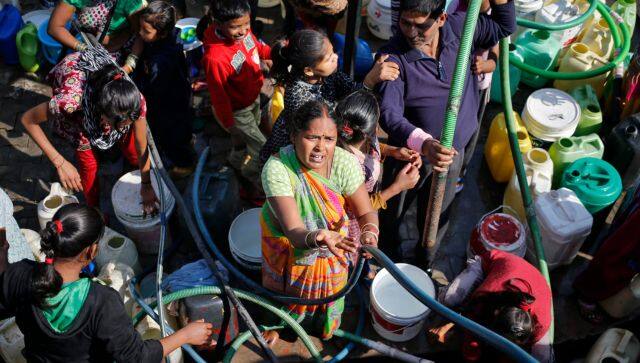 India is among the 25 countries that face extremely high water stress each year. Reuters (Representational Image)[/caption]“Without better water management, population growth, economic development and climate change are poised to worsen water stress,” the WRI report warns."People like to talk about climate change as the biggest existential threat to humanity, but water stress is climate change's deadliest and most used weapon," Crystal Davis, global director of WRI's Food, Land and Water programme, was quoted as saying by The Messenger.What can be done?WRI report calls for better water management to reduce water stress. Citing the example of Singapore and the United States’ Las Vegas, it says that methods such as getting rid of water-thirsty grass, desalination, and wastewater treatment and reuse show how to manage scarce water resources.It notes that political will and financial backing are necessary to implement these “cost-effective” solutions.With climate change, “water challenges are only going to become more frequent and more intense,” Heather Cooley, director of research for the Pacific Institute, told The Washington Post. “That needs to motivate us to begin preparing and implementing projects.”With inputs from agencies
First Published:Aug 17, 2023, 20:11:28 IST
Advertisement
Advertisement

The Great Covid Fraud: How Indian-origin couple in UK funded lavish lifestyle through fake PPE orders
Indian-origin couple Jogesh Bhandari and his wife Meenakashi Bhandari have bee convicted of carrying out a personal protective equipment (PPE) scam alongside associate Craig Morris in the United Kingdom. The investigation found bank records showing Bhandari and his wife used the money to purchase Rolex watches, jewellery, holiday packages and luxury cars
3 min read
Fake jobs, tourist visas: Inside Russia’s vast network luring foreigners to fight Ukraine war
Russia is accused of using fake job offers, tourist visas and lucrative military contracts to recruit thousands of foreign nationals for the Ukraine war. Investigations reveal how poverty, deception and coercion have drawn people from Asia, Africa and Latin America into one of the world's deadliest conflicts
8 min read
Why has Bangladesh’s choice of India spokespersons raised eyebrows?
Bangladesh’s appointment of journalists Md Saidur Rahman and Umme Marufa to media roles in New Delhi and Kolkata has triggered controversy over their past anti-India social media posts, many of which were later deleted, prompting diplomatic scrutiny as India and Bangladesh seek to improve bilateral ties
6 min read
Who is Sandeep Lamba, the Delhi cop removed from protest site duty after slapping female protester?
Sandeep Lamba, an Additional Deputy Commissioner of Police (DCP) (North East District), was seen slapping a female CJP protester in a video on July 20. Lamba has now been removed from the protest site and sent back to his original station. In 2021, Lamba was awarded the Union Home Minister’s medal for excellent investigation
4 min read
Explorers discover wreckage of plane 72 years later. Will this help in finding MH370?
On April 11, 1952, a Pan Am Flight 526A, crashed into the Atlantic Ocean, killing 52 of the 69 people on board. After decades of effort, explorers have found the wreck of the plane at the bottom of the seabed near Puerto Rico. The discovery offers new hope to families who lost loved ones in the Malaysia Airlines Flight 370 crash in 2014
5 min read
Advertisement
Advertisement