
Advertisement


Sections
Heat Fury in February: Is India seeing an early summer?
The Indian Meteorological Department has issued a heatwave alert for Maharashtra's Konkan and Gujarat's Kutch areas, the earliest ever. Temperatures in other states have also seen a spike — in Delhi, the maximum has risen to 31.5 degrees Celsius, seven degrees above normal

Get your air conditioners ready, pack up the woolies, as India is welcoming a hot, hot summer. This is surprising for India, as not even a month ago half of the country was reeling under a cold wave.The month of February has already seen a drastic rise in temperatures, with some parts of the country already running ahead of the curve as far as the onset of summer is concerned. And, if you think that this rise in temperatures is temporary, brace yourself as an even hotter March is a foregone conclusion.The India Meteorological Department (IMD) has already issued its first heatwave alert for the Konkan and Kutch regions and relief is only expected by the middle of the week. Incidentally, this alert comes much earlier than usual, as heatwave alerts usually begin in March, and may suggest that India could skip the spring season entirely and enter directly into summer.We take a look at just how hot it is across the country and what could be the repercussions of an early summer.Maharashtra bakes The meteorological department has issued a heatwave alert for the Raigad and Ratnagiri districts of coastal Maharashtra on Monday and Tuesday.In a statement, the weather department said, “Maharashtra and parts of Gujarat will come under the influence of dry and hot anti-cyclonic winds blowing in from northern and northwestern India regions. This will affect the local weather and lead to a spike in the maximum temperatures, especially over Konkan-Goa and some pockets of Gujarat for another two days.”Ratnagiri, on the western coast has already been burning up for the past one week; the maximum temperatures have been ranging between 37 degrees Celsius and 40 degrees Celsius.Mumbai, the financial capital of India, too is witnessing sizzling heat. On Sunday the maximum temperature recorded by IMD Santacruz observatory was 36.5 degrees Celsius, which was six degrees above normal. IMD Colaba also recorded a maximum temperature of 34.2 degrees C which was four degrees more than the normal.IMD scientist KS Hosalikar reacting to the weather, tweeted that such weather would continue for the next two days and asked people to avoid stepping out between 11 am and 2 pm when the heat is at its maximum.Delhi feels the heatAfter seeing the most cold days since 1992, Delhi is feeling the heat. On Sunday, the mercury rose to 31.5 degrees Celsius, seven degrees above normal. The Indian Express reported that between 1981 and 2010, the maximum temperature in the capital of India between 15 February and 19 February has been around 24.2 degrees Celsius.The weatherman has predicted that this trend will continue and is likely to rise up to 33 degrees Celsius in the coming days, much before the spring festival of Holi in early March.[caption id="attachment_12182022" align="alignnone" width="640"]![]() Temperatures have risen significantly, with some parts of the country having already recorded over or near 40 degrees Celsius. AFP[/caption]An official was quoted as saying, “There has been no rainfall activity in and around Delhi for the past several days. High temperatures are being reported in most parts of northwest and west India at present. In the coming days, a western disturbance is expected to bring rain to Jammu and Kashmir and Himachal Pradesh, but it is not strong enough to bring rain to Delhi. After Wednesday, the temperatures may see a slight decrease but day temperatures will still be above normal.”Gujarat ki ‘garmi’The western state of Gujarat has also been singed by the unexpected February heat. On 16 February, the temperature in Bhuj rose to 40.3 degrees Celsius — a new monthly record. Moneycontrol also reported that Kandla, which is 70 km from Bhuj, also recorded a monthly record — witnessing the mercury rise to 38.1 degrees Celsius.Ahmedabad too broke history on Sunday when the temperature rose to 38.2 degree Celsius, making it the hottest February day since 1990. The previous hottest day of the month was three years ago on 24 February, when the mercury touched 37.8 degrees Celsius.Cities like Rajkot, Surendranagar, Amreli and Keshod too saw the mercury burning on Sunday.The hills heat upOther states in the North are also witnessing an unexpected hot February with Punjab, Rajasthan, Uttarakhand, seeing the mercury rising. Himalayan towns recorded temperatures five-10 degrees Celsius higher than what is normal for this time of the year. At 14.4 degrees Celsius, the state capital of Himachal Pradesh, Shimla, recorded the highest-ever minimum temperature on Saturday.Reasons for the rising heat The main cause for the sultry weather conditions is because of weak western disturbances that haven’t brought adequate winter rain. Speaking to The Print, Mahesh Palawat, vice president of Skymet weather, said, “In the month of November and December, there were no significant western disturbances and the weather was quite dry as there was no rainfall snowfall. In January, we have seen intense snowfall because of western disturbance, but again from February, the intensity of western disturbance has reduced while the frequency has increased.”Well-known meteorologist Navdeep Dahiya added that an anticyclone — clear skies and no rain —over India has also added to the heat woes.Effect of an early summerThe early onset of a summer is likely to affect the wheat yield. An official from Maharashtra’s agriculture department was quoted as telling Times of India, “This type of weather is unfavourable late-sown wheat. In general too, the tropical weather in Maharashtra is not favourable for the wheat crop.”[caption id="attachment_12182042" align="alignnone" width="640"]
Temperatures have risen significantly, with some parts of the country having already recorded over or near 40 degrees Celsius. AFP[/caption]An official was quoted as saying, “There has been no rainfall activity in and around Delhi for the past several days. High temperatures are being reported in most parts of northwest and west India at present. In the coming days, a western disturbance is expected to bring rain to Jammu and Kashmir and Himachal Pradesh, but it is not strong enough to bring rain to Delhi. After Wednesday, the temperatures may see a slight decrease but day temperatures will still be above normal.”Gujarat ki ‘garmi’The western state of Gujarat has also been singed by the unexpected February heat. On 16 February, the temperature in Bhuj rose to 40.3 degrees Celsius — a new monthly record. Moneycontrol also reported that Kandla, which is 70 km from Bhuj, also recorded a monthly record — witnessing the mercury rise to 38.1 degrees Celsius.Ahmedabad too broke history on Sunday when the temperature rose to 38.2 degree Celsius, making it the hottest February day since 1990. The previous hottest day of the month was three years ago on 24 February, when the mercury touched 37.8 degrees Celsius.Cities like Rajkot, Surendranagar, Amreli and Keshod too saw the mercury burning on Sunday.The hills heat upOther states in the North are also witnessing an unexpected hot February with Punjab, Rajasthan, Uttarakhand, seeing the mercury rising. Himalayan towns recorded temperatures five-10 degrees Celsius higher than what is normal for this time of the year. At 14.4 degrees Celsius, the state capital of Himachal Pradesh, Shimla, recorded the highest-ever minimum temperature on Saturday.Reasons for the rising heat The main cause for the sultry weather conditions is because of weak western disturbances that haven’t brought adequate winter rain. Speaking to The Print, Mahesh Palawat, vice president of Skymet weather, said, “In the month of November and December, there were no significant western disturbances and the weather was quite dry as there was no rainfall snowfall. In January, we have seen intense snowfall because of western disturbance, but again from February, the intensity of western disturbance has reduced while the frequency has increased.”Well-known meteorologist Navdeep Dahiya added that an anticyclone — clear skies and no rain —over India has also added to the heat woes.Effect of an early summerThe early onset of a summer is likely to affect the wheat yield. An official from Maharashtra’s agriculture department was quoted as telling Times of India, “This type of weather is unfavourable late-sown wheat. In general too, the tropical weather in Maharashtra is not favourable for the wheat crop.”[caption id="attachment_12182042" align="alignnone" width="640"]![]() The rising heat is not conducive for the wheat harvest. Farmers worry that the sizzling temperatures will burn their crop. File image/AFP[/caption]The Indian Agricultural Research Institute has issued a warning for wheat growers. “In the present weather condition, constant monitoring of the wheat crop against rust diseases is advised,” it stated, adding that farmers should keep crops irrigated as per requirement because of rising temperatures.In March last year, the heat roiled wheat crops around harvest time, leading to a 2.5 per cent fall in wheat output to 106 million tonnes , even as exports kept rising due to dwindling supplies from the Russia-Ukraine region.With inputs from agenciesRead all the Latest News, Trending News, Cricket News, Bollywood News,India News and Entertainment News here. Follow us on Facebook, Twitter and Instagram.
The rising heat is not conducive for the wheat harvest. Farmers worry that the sizzling temperatures will burn their crop. File image/AFP[/caption]The Indian Agricultural Research Institute has issued a warning for wheat growers. “In the present weather condition, constant monitoring of the wheat crop against rust diseases is advised,” it stated, adding that farmers should keep crops irrigated as per requirement because of rising temperatures.In March last year, the heat roiled wheat crops around harvest time, leading to a 2.5 per cent fall in wheat output to 106 million tonnes , even as exports kept rising due to dwindling supplies from the Russia-Ukraine region.With inputs from agenciesRead all the Latest News, Trending News, Cricket News, Bollywood News,India News and Entertainment News here. Follow us on Facebook, Twitter and Instagram.
 Temperatures have risen significantly, with some parts of the country having already recorded over or near 40 degrees Celsius. AFP[/caption]An official was quoted as saying, “There has been no rainfall activity in and around Delhi for the past several days. High temperatures are being reported in most parts of northwest and west India at present. In the coming days, a western disturbance is expected to bring rain to Jammu and Kashmir and Himachal Pradesh, but it is not strong enough to bring rain to Delhi. After Wednesday, the temperatures may see a slight decrease but day temperatures will still be above normal.”Gujarat ki ‘garmi’The western state of Gujarat has also been singed by the unexpected February heat. On 16 February, the temperature in Bhuj rose to 40.3 degrees Celsius — a new monthly record. Moneycontrol also reported that Kandla, which is 70 km from Bhuj, also recorded a monthly record — witnessing the mercury rise to 38.1 degrees Celsius.Ahmedabad too broke history on Sunday when the temperature rose to 38.2 degree Celsius, making it the hottest February day since 1990. The previous hottest day of the month was three years ago on 24 February, when the mercury touched 37.8 degrees Celsius.Cities like Rajkot, Surendranagar, Amreli and Keshod too saw the mercury burning on Sunday.The hills heat upOther states in the North are also witnessing an unexpected hot February with Punjab, Rajasthan, Uttarakhand, seeing the mercury rising. Himalayan towns recorded temperatures five-10 degrees Celsius higher than what is normal for this time of the year. At 14.4 degrees Celsius, the state capital of Himachal Pradesh, Shimla, recorded the highest-ever minimum temperature on Saturday.Reasons for the rising heat The main cause for the sultry weather conditions is because of weak western disturbances that haven’t brought adequate winter rain. Speaking to The Print, Mahesh Palawat, vice president of Skymet weather, said, “In the month of November and December, there were no significant western disturbances and the weather was quite dry as there was no rainfall snowfall. In January, we have seen intense snowfall because of western disturbance, but again from February, the intensity of western disturbance has reduced while the frequency has increased.”Well-known meteorologist Navdeep Dahiya added that an anticyclone — clear skies and no rain —over India has also added to the heat woes.Effect of an early summerThe early onset of a summer is likely to affect the wheat yield. An official from Maharashtra’s agriculture department was quoted as telling Times of India, “This type of weather is unfavourable late-sown wheat. In general too, the tropical weather in Maharashtra is not favourable for the wheat crop.”[caption id="attachment_12182042" align="alignnone" width="640"]
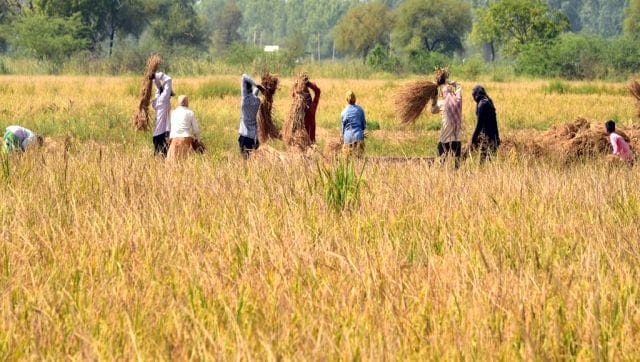 The rising heat is not conducive for the wheat harvest. Farmers worry that the sizzling temperatures will burn their crop. File image/AFP[/caption]The Indian Agricultural Research Institute has issued a warning for wheat growers. “In the present weather condition, constant monitoring of the wheat crop against rust diseases is advised,” it stated, adding that farmers should keep crops irrigated as per requirement because of rising temperatures.In March last year, the heat roiled wheat crops around harvest time, leading to a 2.5 per cent fall in wheat output to 106 million tonnes , even as exports kept rising due to dwindling supplies from the Russia-Ukraine region.With inputs from agenciesRead all the Latest News, Trending News, Cricket News, Bollywood News,India News and Entertainment News here. Follow us on Facebook, Twitter and Instagram.
First Published:Feb 20, 2023, 16:52:20 IST
Advertisement
Advertisement

The Great Covid Fraud: How Indian-origin couple in UK funded lavish lifestyle through fake PPE orders
Indian-origin couple Jogesh Bhandari and his wife Meenakashi Bhandari have bee convicted of carrying out a personal protective equipment (PPE) scam alongside associate Craig Morris in the United Kingdom. The investigation found bank records showing Bhandari and his wife used the money to purchase Rolex watches, jewellery, holiday packages and luxury cars
3 min read
Fake jobs, tourist visas: Inside Russia’s vast network luring foreigners to fight Ukraine war
Russia is accused of using fake job offers, tourist visas and lucrative military contracts to recruit thousands of foreign nationals for the Ukraine war. Investigations reveal how poverty, deception and coercion have drawn people from Asia, Africa and Latin America into one of the world's deadliest conflicts
8 min read
Why has Bangladesh’s choice of India spokespersons raised eyebrows?
Bangladesh’s appointment of journalists Md Saidur Rahman and Umme Marufa to media roles in New Delhi and Kolkata has triggered controversy over their past anti-India social media posts, many of which were later deleted, prompting diplomatic scrutiny as India and Bangladesh seek to improve bilateral ties
6 min read
Who is Sandeep Lamba, the Delhi cop removed from protest site duty after slapping female protester?
Sandeep Lamba, an Additional Deputy Commissioner of Police (DCP) (North East District), was seen slapping a female CJP protester in a video on July 20. Lamba has now been removed from the protest site and sent back to his original station. In 2021, Lamba was awarded the Union Home Minister’s medal for excellent investigation
4 min read
Explorers discover wreckage of plane 72 years later. Will this help in finding MH370?
On April 11, 1952, a Pan Am Flight 526A, crashed into the Atlantic Ocean, killing 52 of the 69 people on board. After decades of effort, explorers have found the wreck of the plane at the bottom of the seabed near Puerto Rico. The discovery offers new hope to families who lost loved ones in the Malaysia Airlines Flight 370 crash in 2014
5 min read
Advertisement
Advertisement