
Advertisement


Sections
Taiwan unveils new drones amid China tensions: What we know about UAVs
Taiwan on Tuesday unveiled six drones developed by the military-run National Chung-Shan Institute of Science and Technology. The self-ruled island, which lives under constant threat of an invasion by China, said UAVs are the key to its ‘asymmetric warfare’ strategy

Amid rising tensions with China, Taiwan has unveiled its first domestically-produced portable attack drones.Taiwan on Tuesday said UAVs are the key to its "asymmetric warfare" capacity against China.Taiwan's 23.5 million people live under constant threat of an invasion by China, which claims the self-ruled democracy as part of its territory to be seized one day, by force if necessary.Let’s take a closer look at the new drones:Taiwan on Tuesday unveiled six different drones developed by the military-run National Chung-Shan Institute of Science and Technology (NCSIST).The Albatross II surveillance drone, one of the UAVs, can remain airborne for 16 hours and has a maximum range of 300 kilometres, according to CNN.The outlet quoted the NCSIST as saying the drone can conduct ‘extended periods of surveillance’ and track naval ships using artificial intelligence.The institute told CNN the Cardinal III UAV is built to to monitor activities along the coastline.![]() The Albatross II UAV can conduct ‘extended periods of surveillance’ and track naval ships using artificial intelligence. AFP[/caption]"Because it is lightweight and portable, it is like a big grenade that can fly," said Chi Li-pin, head of NCSIST's Aeronautical Systems Research division."It is effective in attacking targets near our shores," he added, noting its maximum flying distance is 10 kilometres.The Chien Hsiang (Flying Sword) drone can seek and terminate radio emission sources from enemy jammers, radios and radars on ships and air-defence systems, as per Japan Times.The launch system, mounted on a truck trailer, allows a dozen drones to be deployed.The Teng Yun (Cloud Rider), to be used for surveillance and reconnaissance, is still in development.The Tactical EVTOL surveillance drone, also capable of taking off and landing vertically, is in use with the army.Taiwan is also developing its next generation of "suicide" attack drones, Chi said, including larger versions that can be used in longer distance attacks.Attack drones can hover in the air while carrying explosives before crashing into a target to eliminate it.Chi in November said any country that is “confident in itself” will come up with strategies and develop defence technologies.Unmanned combat aerial vehicles are “a future trend,” Chi said. “This is why we are doing research about it and laying out some strategies.”Taiwan’s army in October began taking delivery of the first of 100 helicopter drones ordered from the institute. Chi emphasized their importance in relaying images to the army’s command and communication systems for analysis and forwarding to combat units.Taiwan has also developed the Teng Yun, which resembles the American MQ-9 Reaper unmanned aerial vehicle and can stay aloft for up to 24 hours.Ukraine war lends urgencyThe war in Ukraine has lent new urgency to Taiwan military's efforts to bolster defence including a push to develop drones.NCSIST head Art Chang said the war in Ukraine had focused attention on drones, and his institution had teamed up with Taiwan companies to build a "national team" to develop military drones.
The Albatross II UAV can conduct ‘extended periods of surveillance’ and track naval ships using artificial intelligence. AFP[/caption]"Because it is lightweight and portable, it is like a big grenade that can fly," said Chi Li-pin, head of NCSIST's Aeronautical Systems Research division."It is effective in attacking targets near our shores," he added, noting its maximum flying distance is 10 kilometres.The Chien Hsiang (Flying Sword) drone can seek and terminate radio emission sources from enemy jammers, radios and radars on ships and air-defence systems, as per Japan Times.The launch system, mounted on a truck trailer, allows a dozen drones to be deployed.The Teng Yun (Cloud Rider), to be used for surveillance and reconnaissance, is still in development.The Tactical EVTOL surveillance drone, also capable of taking off and landing vertically, is in use with the army.Taiwan is also developing its next generation of "suicide" attack drones, Chi said, including larger versions that can be used in longer distance attacks.Attack drones can hover in the air while carrying explosives before crashing into a target to eliminate it.Chi in November said any country that is “confident in itself” will come up with strategies and develop defence technologies.Unmanned combat aerial vehicles are “a future trend,” Chi said. “This is why we are doing research about it and laying out some strategies.”Taiwan’s army in October began taking delivery of the first of 100 helicopter drones ordered from the institute. Chi emphasized their importance in relaying images to the army’s command and communication systems for analysis and forwarding to combat units.Taiwan has also developed the Teng Yun, which resembles the American MQ-9 Reaper unmanned aerial vehicle and can stay aloft for up to 24 hours.Ukraine war lends urgencyThe war in Ukraine has lent new urgency to Taiwan military's efforts to bolster defence including a push to develop drones.NCSIST head Art Chang said the war in Ukraine had focused attention on drones, and his institution had teamed up with Taiwan companies to build a "national team" to develop military drones.![]() Locally produced anti-radiation UAV on display. AFP[/caption]Allies have urged Taiwan to adopt an asymmetric "porcupine strategy" that would make it hard for China's larger military to invade, an argument that has been bolstered by the stout defence that Ukraine's much smaller forces have put up against Russia.That strategy emphasises purchasing comparatively inexpensive and mobile weapon systems, and training civilians to fight.President Tsai Ing-wen has championed the idea of "asymmetric warfare" to make Taiwan's forces more mobile and harder to attack.
Locally produced anti-radiation UAV on display. AFP[/caption]Allies have urged Taiwan to adopt an asymmetric "porcupine strategy" that would make it hard for China's larger military to invade, an argument that has been bolstered by the stout defence that Ukraine's much smaller forces have put up against Russia.That strategy emphasises purchasing comparatively inexpensive and mobile weapon systems, and training civilians to fight.President Tsai Ing-wen has championed the idea of "asymmetric warfare" to make Taiwan's forces more mobile and harder to attack.
This UAV can take off and land vertically.The Loitering Munition UAV is similar to the US-made Switchblade 300 currently used by Ukrainian soldiers.Launched with a built-in rocket, they are guided by a propeller engine before crashing into their targets and detonating on impact.Japan Times reported that the light system uses electro-optical/imaging infrared sensors for guidance and targeting.The Taiwanese-made single-use drone, designed to be small enough to be carried in a backpack, can stay in the air for 15 minutes, according to NCSIST.[caption id="attachment_12298052" align="alignnone" width="640"]
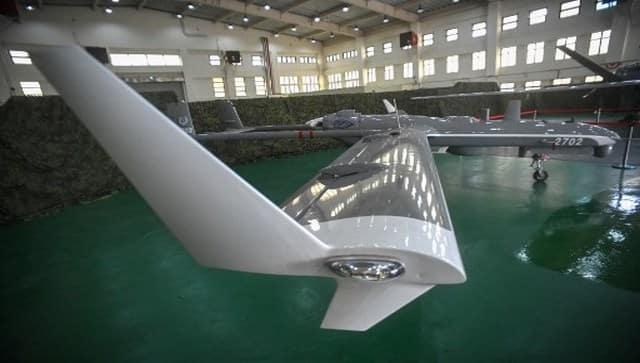 The Albatross II UAV can conduct ‘extended periods of surveillance’ and track naval ships using artificial intelligence. AFP[/caption]"Because it is lightweight and portable, it is like a big grenade that can fly," said Chi Li-pin, head of NCSIST's Aeronautical Systems Research division."It is effective in attacking targets near our shores," he added, noting its maximum flying distance is 10 kilometres.The Chien Hsiang (Flying Sword) drone can seek and terminate radio emission sources from enemy jammers, radios and radars on ships and air-defence systems, as per Japan Times.The launch system, mounted on a truck trailer, allows a dozen drones to be deployed.The Teng Yun (Cloud Rider), to be used for surveillance and reconnaissance, is still in development.The Tactical EVTOL surveillance drone, also capable of taking off and landing vertically, is in use with the army.Taiwan is also developing its next generation of "suicide" attack drones, Chi said, including larger versions that can be used in longer distance attacks.Attack drones can hover in the air while carrying explosives before crashing into a target to eliminate it.Chi in November said any country that is “confident in itself” will come up with strategies and develop defence technologies.Unmanned combat aerial vehicles are “a future trend,” Chi said. “This is why we are doing research about it and laying out some strategies.”Taiwan’s army in October began taking delivery of the first of 100 helicopter drones ordered from the institute. Chi emphasized their importance in relaying images to the army’s command and communication systems for analysis and forwarding to combat units.Taiwan has also developed the Teng Yun, which resembles the American MQ-9 Reaper unmanned aerial vehicle and can stay aloft for up to 24 hours.Ukraine war lends urgencyThe war in Ukraine has lent new urgency to Taiwan military's efforts to bolster defence including a push to develop drones.NCSIST head Art Chang said the war in Ukraine had focused attention on drones, and his institution had teamed up with Taiwan companies to build a "national team" to develop military drones.
Taiwan's military has announced a partnership with companies aimed at producing 3,000 drones next year.Chi said the armed forces should increase their adoption of drones in their strategies.Taiwan's Defence Ministry showcases its domestically developed drones to the press in Taichung"I hope our national troops can familiarise themselves with this weapon of asymmetric warfare and use them boldly," he told reporters at an NCSIST facility in the central city of Taichung.Tensions soared last year after Beijing launched major military exercises in response to a visit by then-US House Speaker Nancy Pelosi to Taipei, in what some experts saw as a rehearsal for an invasion of the island by China.[caption id="attachment_12298102" align="alignnone" width="640"]
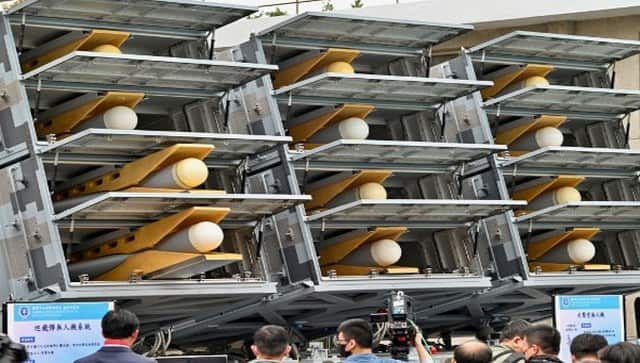 Locally produced anti-radiation UAV on display. AFP[/caption]Allies have urged Taiwan to adopt an asymmetric "porcupine strategy" that would make it hard for China's larger military to invade, an argument that has been bolstered by the stout defence that Ukraine's much smaller forces have put up against Russia.That strategy emphasises purchasing comparatively inexpensive and mobile weapon systems, and training civilians to fight.President Tsai Ing-wen has championed the idea of "asymmetric warfare" to make Taiwan's forces more mobile and harder to attack.
Taiwan's armed forces are well-equipped but still dwarfed by China's.China has sent its drones to areas close to Taiwan to test its responses, the island's defence ministry has said.Last year, Taiwan shot down a civilian drone that entered its airspace near an islet off the Chinese coast.The island's defence ministry said in a report to parliament this week, a copy of which was reviewed by Reuters, that China was quickly building up its combat capacity with drones, including swarms of flying robots.In response, Taiwan will focus on developing its combat and surveillance drones, as well as anti-drone systems, the ministry said.With inputs from agencies Read all the Latest News, Trending News, Cricket News, Bollywood News, India News and Entertainment News here. Follow us on Facebook, Twitter and Instagram.
First Published:Mar 15, 2023, 18:25:20 IST
Advertisement
Advertisement

The Great Covid Fraud: How Indian-origin couple in UK funded lavish lifestyle through fake PPE orders
Indian-origin couple Jogesh Bhandari and his wife Meenakashi Bhandari have bee convicted of carrying out a personal protective equipment (PPE) scam alongside associate Craig Morris in the United Kingdom. The investigation found bank records showing Bhandari and his wife used the money to purchase Rolex watches, jewellery, holiday packages and luxury cars
3 min read
Fake jobs, tourist visas: Inside Russia’s vast network luring foreigners to fight Ukraine war
Russia is accused of using fake job offers, tourist visas and lucrative military contracts to recruit thousands of foreign nationals for the Ukraine war. Investigations reveal how poverty, deception and coercion have drawn people from Asia, Africa and Latin America into one of the world's deadliest conflicts
8 min read
Why has Bangladesh’s choice of India spokespersons raised eyebrows?
Bangladesh’s appointment of journalists Md Saidur Rahman and Umme Marufa to media roles in New Delhi and Kolkata has triggered controversy over their past anti-India social media posts, many of which were later deleted, prompting diplomatic scrutiny as India and Bangladesh seek to improve bilateral ties
6 min read
Who is Sandeep Lamba, the Delhi cop removed from protest site duty after slapping female protester?
Sandeep Lamba, an Additional Deputy Commissioner of Police (DCP) (North East District), was seen slapping a female CJP protester in a video on July 20. Lamba has now been removed from the protest site and sent back to his original station. In 2021, Lamba was awarded the Union Home Minister’s medal for excellent investigation
4 min read
Explorers discover wreckage of plane 72 years later. Will this help in finding MH370?
On April 11, 1952, a Pan Am Flight 526A, crashed into the Atlantic Ocean, killing 52 of the 69 people on board. After decades of effort, explorers have found the wreck of the plane at the bottom of the seabed near Puerto Rico. The discovery offers new hope to families who lost loved ones in the Malaysia Airlines Flight 370 crash in 2014
5 min read
Advertisement
Advertisement