


Why do ships and planes disappear at the Bermuda Triangle? Do scientists have an answer now
The Bermuda Triangle, an area of ocean between Florida, Puerto Rico and Bermuda, continues to grab the world’s attention. Over the years, reports of ships and planes vanishing over this stretch have puzzled scientists. Now, they have found a geological structure unlike anything seen on Earth beneath the island

The Bermuda Triangle mystery has fascinated the world for decades. Reports of ships and planes disappearing in the area of ocean between Florida, Puerto Rico and Bermuda have sparked several theories.
Legends of the Bermuda Triangle continue to haunt the world. Now, scientists may have finally unearthed a “real” mystery linked to Bermuda.
We take a look.
What’s the Bermuda mystery?
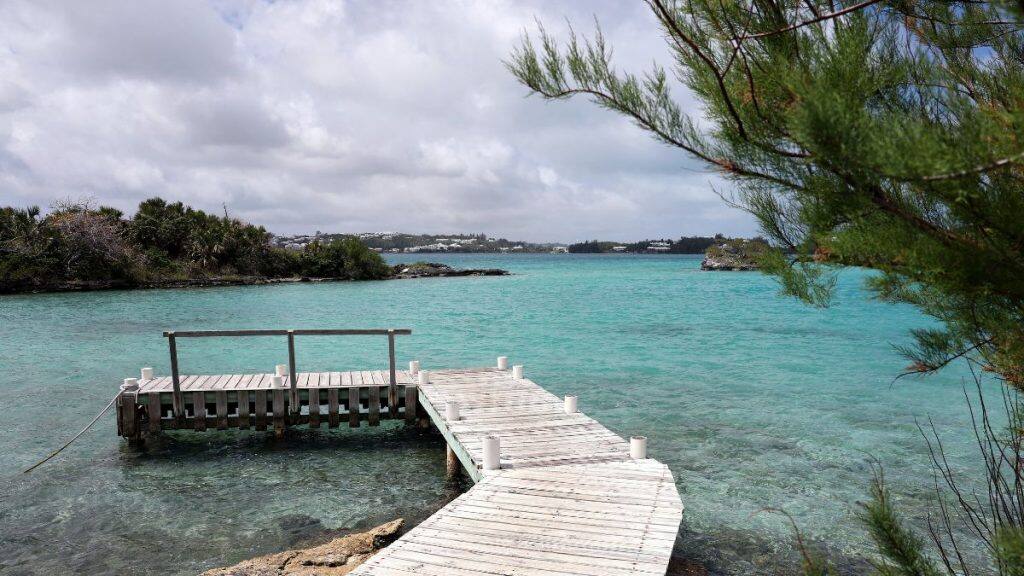
Bermuda, an archipelago in the western Atlantic Ocean, is famed for its pink sands and turquoise waters.
American scientists have now unveiled a mystery hidden deep beneath the densely populated British overseas territory.
Research led by William Frazer, a seismologist at Carnegie Science, and Jeffrey Park of Yale University has found that the geological structure that supports Bermuda has not been witnessed anywhere else on Earth, according to the Carnegie Institution for Science.
 More from Explainers
Their findings shed light on why the island rises above the Atlantic Ocean even though its volcanoes have been silent for over 30 million (3 crore) years.
Most volcanic island chains form above a mantle plume, a buoyant mass of material pushing from the Earth’s mantle.
As this column of hot rock rises upward, it creates volcanoes. With this, the seafloor bulges, forming a raised region known as a swell.
Over time, tectonic plates shift away from the plume and volcanic activity subsides. This results in these swells usually sinking back down.
But this has not happened with Bermuda.
Bermuda continues to sit atop a broad swell, standing roughly 1,600 feet higher than the surrounding ocean floor.
This comes despite no evidence of an active mantle plume beneath the island.
Scientists have wondered for decades how this swell still exists without a known source of heat or uplift from beneath.
Solving the Bermuda mystery
To find out the answer, the researchers used seismic waves generated by large earthquakes globally.
As these waves travel through the Earth, their movement becomes faster or slower depending on the density and composition of the material they pass through.
Scientists examined recordings from a seismic station on Bermuda, which helped them to draw up an image of Earth’s interior down to about 20 miles beneath the island.
Their findings were surprising. They came across a layer of rock over 12 miles thick lying just below the oceanic crust.
As this rock is less dense than the surrounding mantle, it has become unusually buoyant. This lighter rock, which functions like a raft, is keeping the seafloor, as well as Bermuda, afloat, instead of a plume rising from below.
According to the researchers, this layer, known as an underplating, was created when Bermuda had active volcanoes millions of years ago. They believe that at the time, molten mantle rock, rich in carbon, intruded into the base of the crust and cooled in place.
This material likely emerged deep within Earth hundreds of millions of years ago, during the formation of the supercontinent Pangea.
The study highlights the importance of seismic imaging and analysing extreme and unexpected places.
“Bermuda is an exciting place to study because a variety of its geologic features do not fit the model of a mantle plume, the classic way for deep material to be brought to the surface,” Frazer said.
“We observe thick underplating, something that is not observed at most mantle plumes. Combined with recent geochemical observations, this suggests that there are other convective processes within Earth’s mantle that have yet to be well understood.”
Frazer is on the hunt for similar features beneath other islands around the world. This would help to discover whether Bermuda is unique or part of a broader phenomenon.
With inputs from agencies

The Great Covid Fraud: How Indian-origin couple in UK funded lavish lifestyle through fake PPE orders
Fake jobs, tourist visas: Inside Russia’s vast network luring foreigners to fight Ukraine war
Why has Bangladesh’s choice of India spokespersons raised eyebrows?
Who is Sandeep Lamba, the Delhi cop removed from protest site duty after slapping female protester?
Explorers discover wreckage of plane 72 years later. Will this help in finding MH370?