


Barcode turns 50: Are its days numbered as it competes with QR codes?
The barcode that revolutionised supermarket checkout and facilitated retail globalisation is turning 50. However, its days may be numbered as it competes with the more recent QR code, the information-filled squares used in smartphones

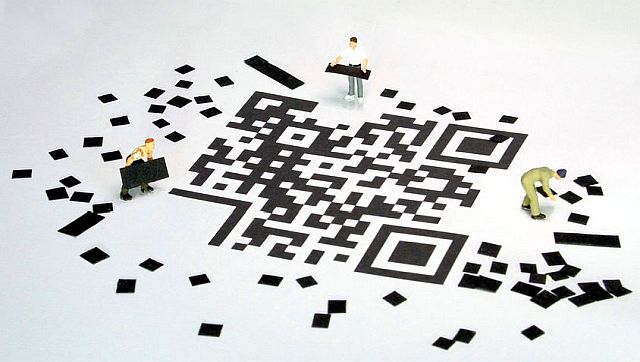
Barcodes are likely to remain in place for years to come as the world gradually transitions to QR codes. Image used for representational purpose/Pixabay[/caption]The following year, on 26 June in the US state of Ohio, the first product was scanned: a pack of chewing gum that is now in the National Museum of American History in Washington.Today, the non-governmental organisation Global Standard 1 manages the barcode system and counts about two million firms as members.It provides companies with a unique "global trade item number" for each product, which is then translated into the barcode. Each firm must pay an annual fee based on their sales, up to nearly $5,000 (Rs 1.42 lakh) per year.From bars to QRsBut the humble barcode will soon give way to another standard developed by the organisation, said Renaud de Barbuat and Didier Veloso, the respective heads of GS1 Global and GS1 France.The new standard, based on QR, or Quick Response code, will be introduced around 2027.If barcodes have been compared to prison bars by critics of the over-commercialisation of society, the Chinese game Go with its white and black pieces on a square board was the inspiration for the QR code's Japanese creator, Masahiro Hara.Developed in 1994, QR codes can hold much more information as they are read both horizontally, like barcodes, and vertically.Instead of having to search a database for information to go along with a product, the QR code can integrate information directly, such as the composition of the product and recycling instructions.GS1 believes moving to the QR code format allows the sharing of far more information about products as well as content, enabling new uses that will be accessible to consumers as well as retailers.As smartphones can read QR codes, they are an easy way to send people to websites to get additional information, leading to their widespread adoption by companies, artists and even museums. They are even used by payment systems.But barcodes are likely to remain in place for years to come as the world gradually transitions to QR codes.Read all the Latest News, Trending News, Cricket News, Bollywood News,India News and Entertainment News here. Follow us on Facebook, Twitter and Instagram.

The Great Covid Fraud: How Indian-origin couple in UK funded lavish lifestyle through fake PPE orders
Fake jobs, tourist visas: Inside Russia’s vast network luring foreigners to fight Ukraine war
Why has Bangladesh’s choice of India spokespersons raised eyebrows?
Who is Sandeep Lamba, the Delhi cop removed from protest site duty after slapping female protester?
Explorers discover wreckage of plane 72 years later. Will this help in finding MH370?