
Advertisement
Co Presented By
Co Presented By


Sections
US says has received sufficient H-1B visas in just five days to meet 65,000 cap for FY 2020
The H-1B visa is a non-immigrant visa that allows the US companies to employ foreign workers in speciality occupations that require theoretical or technical expertise

Washington: The US Citizenship and Immigration Services (USCIS) said it has reached Congressionally-mandated 65,000 H-1B visa cap for the fiscal year 2020, after it started receiving the applications for the most sought-after work visa among foreign, including Indian, professionals.The H-1B visa is a non-immigrant visa that allows the US companies to employ foreign workers in speciality occupations that require theoretical or technical expertise. The technology companies depend on it to hire tens of thousands of employees each year from countries like India and China.The USCIS, the federal agency mandated with task of approving such applications, on Friday said "it has received a sufficient number of petitions projected as needed to reach the congressionally-mandated 65,000 H-1B visa regular cap for fiscal year 2020." The fiscal year begins on 1 October 2019 and it the USCIS started receiving the visa petitions from 1 April. However, the agency did not reveal the number of petitions received by it in the first five days.![Representational image. Reuters]() Representational image. Reuters[/caption]Last year, the USCIS received 190,000 cap-subjected H-1B petitions. In 2018, it received 199,000 applications while in 2017, 236,000 petitions in the first five days after it started receiving the applications. The USCIS received 232,972 H-1B cap-subject petitions in 2016 and in 2015, it received 172,581 cap-subjected petitions.This is the first season of H-1B applications after the USCIS announced enforcing new rules for the most sought-after US work visa applications for foreign professionals. The new rules give preferences to those who have completed their post-graduation degree course from any US educational institutions.This year the USCIS has suspended the electronic registration requirement for the fiscal year 2020 cap season to complete user testing and ensure the system and process are fully functional.Under the new system, the USCIS first selects H-1B petitions submitted on behalf of all beneficiaries, including those that may be eligible for the advanced degree exemption.Thereafter, the USCIS will select from the remaining eligible petitions, a number projected to reach the advanced degree exemption. Changing the order in which the USCIS counts these allocations will likely increase the number of petitions for beneficiaries with a master's or higher degree from a US institution of higher education to be selected under the H-1B numerical allocations.The USCIS says that the change will result in an estimated increase of up to 16 percent (or 5,340 workers) in the number of selected petitions for H-1B beneficiaries with a master's degree or higher from a US institution of higher education."These simple and smart changes are a positive benefit for employers, the foreign workers they seek to employ, and the agency's adjudicators, helping the H-1B visa program work better," USCIS Director L. Francis Cissna had said in a statement."The US employers seeking to employ foreign workers with a US master's or higher degree will have a greater chance of selection in the H-1B lottery in years of excess demand for new H-1B visas," Cissna said.
Representational image. Reuters[/caption]Last year, the USCIS received 190,000 cap-subjected H-1B petitions. In 2018, it received 199,000 applications while in 2017, 236,000 petitions in the first five days after it started receiving the applications. The USCIS received 232,972 H-1B cap-subject petitions in 2016 and in 2015, it received 172,581 cap-subjected petitions.This is the first season of H-1B applications after the USCIS announced enforcing new rules for the most sought-after US work visa applications for foreign professionals. The new rules give preferences to those who have completed their post-graduation degree course from any US educational institutions.This year the USCIS has suspended the electronic registration requirement for the fiscal year 2020 cap season to complete user testing and ensure the system and process are fully functional.Under the new system, the USCIS first selects H-1B petitions submitted on behalf of all beneficiaries, including those that may be eligible for the advanced degree exemption.Thereafter, the USCIS will select from the remaining eligible petitions, a number projected to reach the advanced degree exemption. Changing the order in which the USCIS counts these allocations will likely increase the number of petitions for beneficiaries with a master's or higher degree from a US institution of higher education to be selected under the H-1B numerical allocations.The USCIS says that the change will result in an estimated increase of up to 16 percent (or 5,340 workers) in the number of selected petitions for H-1B beneficiaries with a master's degree or higher from a US institution of higher education."These simple and smart changes are a positive benefit for employers, the foreign workers they seek to employ, and the agency's adjudicators, helping the H-1B visa program work better," USCIS Director L. Francis Cissna had said in a statement."The US employers seeking to employ foreign workers with a US master's or higher degree will have a greater chance of selection in the H-1B lottery in years of excess demand for new H-1B visas," Cissna said.
The USCIS said it will next determine if it has received a sufficient number of petitions to meet the 20,000 H-1B visa US advanced degree exemption, known as the master's cap. The agency said it will reject and return visa fees for all unselected cap-subject petitions that are not prohibited multiple filings. It will continue to accept and process petitions that are otherwise exempt from the cap.Petitions filed for current H-1B workers who have been counted previously against the cap, and who still retain their cap number, are exempt from the FY 2020 H-1B, the USCIS said. It did not say if it would resort to a computerised draw of lots as was the case in the last several years.[caption id="attachment_4151741" align="alignleft" width="380"]
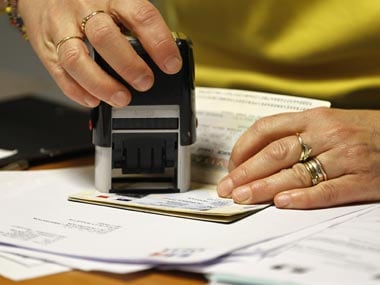 Representational image. Reuters[/caption]Last year, the USCIS received 190,000 cap-subjected H-1B petitions. In 2018, it received 199,000 applications while in 2017, 236,000 petitions in the first five days after it started receiving the applications. The USCIS received 232,972 H-1B cap-subject petitions in 2016 and in 2015, it received 172,581 cap-subjected petitions.This is the first season of H-1B applications after the USCIS announced enforcing new rules for the most sought-after US work visa applications for foreign professionals. The new rules give preferences to those who have completed their post-graduation degree course from any US educational institutions.This year the USCIS has suspended the electronic registration requirement for the fiscal year 2020 cap season to complete user testing and ensure the system and process are fully functional.Under the new system, the USCIS first selects H-1B petitions submitted on behalf of all beneficiaries, including those that may be eligible for the advanced degree exemption.Thereafter, the USCIS will select from the remaining eligible petitions, a number projected to reach the advanced degree exemption. Changing the order in which the USCIS counts these allocations will likely increase the number of petitions for beneficiaries with a master's or higher degree from a US institution of higher education to be selected under the H-1B numerical allocations.The USCIS says that the change will result in an estimated increase of up to 16 percent (or 5,340 workers) in the number of selected petitions for H-1B beneficiaries with a master's degree or higher from a US institution of higher education."These simple and smart changes are a positive benefit for employers, the foreign workers they seek to employ, and the agency's adjudicators, helping the H-1B visa program work better," USCIS Director L. Francis Cissna had said in a statement."The US employers seeking to employ foreign workers with a US master's or higher degree will have a greater chance of selection in the H-1B lottery in years of excess demand for new H-1B visas," Cissna said.
In April 2017, US President Donald Trump, had issued the 'Buy American and Hire American Executive Order', instructing the Department of Homeland Security (DHS) to "propose new rules and issue new guidance, to supersede or revise previous rules and guidance if appropriate, to protect the interests of US workers in the administration of our immigration system."The executive order specifically mentioned the H-1B program and directed the DHS and other agencies to "suggest reforms to help ensure that H-1B visas are awarded to the most-skilled or highest-paid petition beneficiaries."
First Published:Apr 06, 2019, 10:40:52 IST
Advertisement
Advertisement

Google burns cash for first time as AI spending pushes 2026 capex to $205 billion
Google parent Alphabet reported negative free cash flow of $5.9 billion in the second quarter for the first time since going public, as surging AI infrastructure spending pushed its 2026 capital expenditure forecast to as much as $205 billion
6 min read
Tesla sells more cars but makes less money: Why Musk’s AI pivot is squeezing profits
Tesla’s record Q2 deliveries failed to translate into higher profits as price cuts, falling regulatory-credit revenue and Elon Musk’s aggressive AI spending squeezed margins and pushed the EV maker into negative free cash flow
5 min read
No premium queues, 30-minute target: What changes for Indian passport applicants in UAE
Indian passport applicants in the UAE can now access passport, visa and attestation services through Alhind’s 16 centres, with no premium queues, a Dh19 service fee and a target of completing applications within 30 minutes
4 min read
Bharat Forge, Flying Whales sign pact to develop 60-tonne airships for India’s defence logistics
Bharat Forge has signed an MoU with Flying Whales to jointly develop and manufacture 60-tonne heavy-lift airships in India for defence logistics, strategic mobility and disaster response
3 min read
Air India to cut Delhi-Toronto flight time by 3 hours, resume non-stop services from August 1
Air India will resume non-stop Delhi-Toronto flights from August 1, cutting travel time by nearly three hours and deploying its new Boeing 787-9 Dreamliner on the route
2 min read
Advertisement
Advertisement