



Union Budget 2019: Monetary policy's primary objective is to maintain price stability while keeping in mind the objective of growth
The RBI’s monetary policy department (MPD) assists the MPC in formulating the monetary policy.

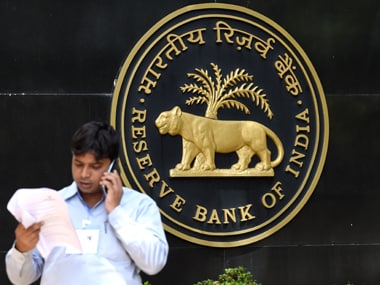
Representational image. AFP.[/caption]In May 2016, the RBI Act, 1934 was amended to provide a statutory basis for the implementation of the flexible inflation targeting framework.Monetary policy processThe Monetary Policy Committee (MPC) constituted by the Centre under Section 45ZB determines the policy interest rate required to achieve the inflation target, says the Reserve Bank of India (RBI) website.The RBI’s monetary policy department (MPD) assists the MPC in formulating the monetary policy. Views of key stakeholders in the economy, and analytical work of the RBI contribute to the process for arriving at the decision on the policy repo rate.The Financial Market Committee (FMC) meets daily to review the liquidity conditions so as to ensure that the operating target of monetary policy (weighted average lending rate) is kept close to the policy repo rate.Instruments of monetary policyThere are several direct and indirect instruments that are used for implementing monetary policy. Some of them are:Repo rate: The (fixed) interest rate at which the RBI provides overnight liquidity to banks against the collateral of government and other approved securities under the liquidity adjustment facility (LAF).Reverse repo rate: The (fixed) interest rate at which the RBI absorbs liquidity, on an overnight basis, from banks against the collateral of eligible government securities under the LAF.Liquidity adjustment facility: The liquidity adjustment facility (LAF) consists of overnight as well as term repo auctions. Progressively, the RBI has increased the proportion of liquidity injected under fine-tuning variable rate repo auctions of range of tenors. The aim of term repo is to help develop the inter-bank term money market, which in turn can set market-based benchmarks for pricing of loans and deposits, and hence improve the transmission of monetary policy.Bank rate: The rate at which the RBI is ready to buy or rediscount bills of exchange or other commercial papers.Cash reserve ratio: The average daily balance that a bank is required to maintain with the RBI as a share of such percent of its net demand and time liabilities (NDTL) that the RBI may notify from time to time in the Gazette of India.Open market operations: These include both, outright purchase and sale of government securities, for injection and absorption of durable liquidity, respectively.The RBI's monetary policy panel meets once in two months to review the economic situation of the country.On 6 June, the MPC cut interest rates by 25 basis points, as was widely expected, to spur growth. After the cut in the second bi-monthly monetary policy review this financial year, the repo rate now stands at 5.75 percent. This is the third consecutive cut by 25 bps each since February.Follow full coverage of Union Budget 2019-20 here

Google burns cash for first time as AI spending pushes 2026 capex to $205 billion
Tesla sells more cars but makes less money: Why Musk’s AI pivot is squeezing profits
No premium queues, 30-minute target: What changes for Indian passport applicants in UAE
Bharat Forge, Flying Whales sign pact to develop 60-tonne airships for India’s defence logistics
Air India to cut Delhi-Toronto flight time by 3 hours, resume non-stop services from August 1