
Advertisement
Co Presented By
Co Presented By


Sections
State-run banks not under PCA framework expected to retain loan market share at 51% medium-term
Private sector banks are expected to increase it from 30.9 percent in March 2018 to 38-40 percent in the foreseeable future and stabilise at that levels

Mumbai: The state-run banks which are not under the prompt corrective action (PCA) framework are expected to maintain their loan market share at 50-51 percent in the near future, while the overall credit growth is likely to be 8-9.5 percent in the next two years, says a report.![Representational image. Reuters]() Representational image. Reuters[/caption]Depending on the capital position, state-run banks under PCA may start posing competition for private sector banks from FY21 onwards restricting the market share gain by the latter.ICRA's financial sector rating's head Anil Gupta said despite being faced with lingering asset quality concerns, dwindling profitability, and capital constraints, the state-run banks not under the PCA managed to hold on to their loan market share at around 50-51 percent for the past two years.Private sector ones were able to gain market share in advances to 30.9 percent as of March 2018 from 25.8 percent as of June 2016 primarily at the expense of the NPA-laden state-owned banks whose market share declined to 18.6percentt from 23.3 percent during this period.Unlike the gain in loan market share, private banks were unable to gain significant market share in deposits given the strong deposit franchise of the government owned banks. Within state-run banks, non-PCA ones held on to their market share at 52-53 pe cent, however, deposit market share of PCA ones declined to 21.9 percent as of March 2018 from 25.1 percent as of June 2016.
Representational image. Reuters[/caption]Depending on the capital position, state-run banks under PCA may start posing competition for private sector banks from FY21 onwards restricting the market share gain by the latter.ICRA's financial sector rating's head Anil Gupta said despite being faced with lingering asset quality concerns, dwindling profitability, and capital constraints, the state-run banks not under the PCA managed to hold on to their loan market share at around 50-51 percent for the past two years.Private sector ones were able to gain market share in advances to 30.9 percent as of March 2018 from 25.8 percent as of June 2016 primarily at the expense of the NPA-laden state-owned banks whose market share declined to 18.6percentt from 23.3 percent during this period.Unlike the gain in loan market share, private banks were unable to gain significant market share in deposits given the strong deposit franchise of the government owned banks. Within state-run banks, non-PCA ones held on to their market share at 52-53 pe cent, however, deposit market share of PCA ones declined to 21.9 percent as of March 2018 from 25.1 percent as of June 2016.
"Loan market share of public sector banks which are not under the PCA is expected to be maintained at 50-51 percent while private sector banks are expected to increase it from 30.9 percent in March 2018 to 38-40 percent in the foreseeable future and stabilise at that levels," ICRA said in a report on Wednesday.The Reserve Bank of India (RBI) has since end-FY17 been tagging badly performing state-run banks under the PCA framework and so far as many as 11 of them are under this. Being under the PCA means such banks cannot engage in fresh corporate lending and can mostly be from deposits and recoveries only.The RBI started this punitive action on these banks' after bad loans ballooned to high double-digit levels.The report said with the expected resolution under the bankruptcy code, the asset quality for all state-run banks is expected to improve over next couple of years. Improvement in recoveries and capital infusion may help them come out of the PCA framework and stabilise their market share, though at lower levels of 9-12 percent.[caption id="attachment_4405669" align="alignleft" width="380"]
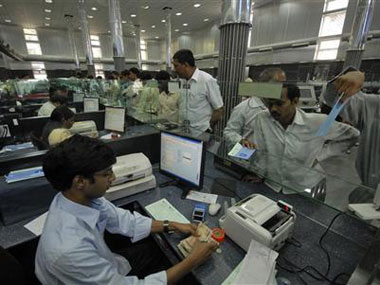 Representational image. Reuters[/caption]Depending on the capital position, state-run banks under PCA may start posing competition for private sector banks from FY21 onwards restricting the market share gain by the latter.ICRA's financial sector rating's head Anil Gupta said despite being faced with lingering asset quality concerns, dwindling profitability, and capital constraints, the state-run banks not under the PCA managed to hold on to their loan market share at around 50-51 percent for the past two years.Private sector ones were able to gain market share in advances to 30.9 percent as of March 2018 from 25.8 percent as of June 2016 primarily at the expense of the NPA-laden state-owned banks whose market share declined to 18.6percentt from 23.3 percent during this period.Unlike the gain in loan market share, private banks were unable to gain significant market share in deposits given the strong deposit franchise of the government owned banks. Within state-run banks, non-PCA ones held on to their market share at 52-53 pe cent, however, deposit market share of PCA ones declined to 21.9 percent as of March 2018 from 25.1 percent as of June 2016.
First Published:Jul 26, 2018, 07:17:32 IST
Advertisement
Advertisement

Google burns cash for first time as AI spending pushes 2026 capex to $205 billion
Google parent Alphabet reported negative free cash flow of $5.9 billion in the second quarter for the first time since going public, as surging AI infrastructure spending pushed its 2026 capital expenditure forecast to as much as $205 billion
6 min read
Tesla sells more cars but makes less money: Why Musk’s AI pivot is squeezing profits
Tesla’s record Q2 deliveries failed to translate into higher profits as price cuts, falling regulatory-credit revenue and Elon Musk’s aggressive AI spending squeezed margins and pushed the EV maker into negative free cash flow
5 min read
No premium queues, 30-minute target: What changes for Indian passport applicants in UAE
Indian passport applicants in the UAE can now access passport, visa and attestation services through Alhind’s 16 centres, with no premium queues, a Dh19 service fee and a target of completing applications within 30 minutes
4 min read
Bharat Forge, Flying Whales sign pact to develop 60-tonne airships for India’s defence logistics
Bharat Forge has signed an MoU with Flying Whales to jointly develop and manufacture 60-tonne heavy-lift airships in India for defence logistics, strategic mobility and disaster response
3 min read
Air India to cut Delhi-Toronto flight time by 3 hours, resume non-stop services from August 1
Air India will resume non-stop Delhi-Toronto flights from August 1, cutting travel time by nearly three hours and deploying its new Boeing 787-9 Dreamliner on the route
2 min read
Advertisement
Advertisement