
Advertisement
Co Presented By
Co Presented By


Sections
Share what you know: Chef Sanjeev Kapoor on how he became a household name
Chef Sanjeev Kapoor, a brand in himself, is the man that most turn to for cooking instructions: simple, clear and a no-hassle method of cooking.

Success Quotient is a weekly feature that appears every Friday on Firstpost, which looks at the pains and joys en route to success for a head honcho - a CEO, MD or an entrepreneur. The column looks at the ideas that helped launch a company, its highs and lows and future plans.He has uplifted rabbit food like carrots, leafy vegetables, oft-despised veggies like pumpkins, gourds, among others to a hallowed place on the dining table with a taste that shames the reputation of the vegetable. Chef Sanjeev Kapoor, a brand in himself, is the man that most turn to for cooking instructions: simple, clear and a no-hassle method of cooking.[caption id="attachment_2083635" align="alignleft" width="380"]![Sanjeev Kapoor, chef and entrepreneur. Pic courtesy: Sanjeevkapoor.com]() Sanjeev Kapoor, chef and entrepreneur. Pic courtesy: sanjeevkapoor.com[/caption]The busy Mr Kapoor runs several enterprises with an overall turnover of approximately Rs 1000 crore that includes a TV channel, brand endorsements, a cooking competition on another TV channel, writing cook books (4 big format and 8 booklet sized ones yearly) and a hotel franchisee business.Chef Kapoor speaks to Firstpost in between shots for a TV show about his career, the business it turned into and how he finds time to learn and grow as he cruises between them all.Excerpts from the conversation:When one thinks of cooking Indian food, the name that pops in most people’s mind is that of Chef Sanjeev Kapoor. How did you reach this easy familiarity with people?I think if we plan anything meticulously, we can achieve it without much difficulty. In my first job as a trained Chinese cook, I realized within a year that no matter how well I cooked, as an Indian it would be difficult for me to attain global credibility unlike a Chinese chef. So I started learning Indian cuisine and worked at gaining expertise in it. After getting on top of my profession in the hotel industry—where I was told it would take 20 years at least to be an Executive Chef, I challenged myself and became one in 8 years when I was only 28 years old—I realized that I would get saturated in that position with not much scope for further growth. My brother Rajeev, a chartered accountant and consultant, gave me the courage to break off and start on my own. I had seen cookery shows on TV before I started off on Zee TV, where chefs would rustle up meals with recipes that were quite difficult and tedious. I wondered how would anyone not familiar with a hotel’s kitchen want to attempt them. I decided to simplify recipes and make it easy for anyone who wanted to follow it. I realized early on that if I wanted to reach out to more people, I need to take chances which I did with a cookery show on TV. I have worked to a plan to reach where I have. Luck played a part, too.You did well at the hotel management course and got many campus placement offers. What was going on in your mind before deciding which one to take up?I had three offers. One hotel offered me work on flight kitchens, which I wasn't keen on continuing after working there for a day. Another big chain that made an offer was then in the habit of giving plum working positions to hotel management graduates from Mumbai and secondary positions to graduates from other states. So I decided to join the ITDC Group of hotels . On my first day at the job, all of us newcomers were ushered into the Executive Chef’s room where I saw him reading the newspapers and eating litchis in the morning. I asked him: How long does it to reach this position? I think he must have been irritated with my query, especially since this was the first meeting with newcomers. I wasn’t surprised when I was assigned the duty of only cleaning tiles the first day!I think placements should be based on:
Sanjeev Kapoor, chef and entrepreneur. Pic courtesy: sanjeevkapoor.com[/caption]The busy Mr Kapoor runs several enterprises with an overall turnover of approximately Rs 1000 crore that includes a TV channel, brand endorsements, a cooking competition on another TV channel, writing cook books (4 big format and 8 booklet sized ones yearly) and a hotel franchisee business.Chef Kapoor speaks to Firstpost in between shots for a TV show about his career, the business it turned into and how he finds time to learn and grow as he cruises between them all.Excerpts from the conversation:When one thinks of cooking Indian food, the name that pops in most people’s mind is that of Chef Sanjeev Kapoor. How did you reach this easy familiarity with people?I think if we plan anything meticulously, we can achieve it without much difficulty. In my first job as a trained Chinese cook, I realized within a year that no matter how well I cooked, as an Indian it would be difficult for me to attain global credibility unlike a Chinese chef. So I started learning Indian cuisine and worked at gaining expertise in it. After getting on top of my profession in the hotel industry—where I was told it would take 20 years at least to be an Executive Chef, I challenged myself and became one in 8 years when I was only 28 years old—I realized that I would get saturated in that position with not much scope for further growth. My brother Rajeev, a chartered accountant and consultant, gave me the courage to break off and start on my own. I had seen cookery shows on TV before I started off on Zee TV, where chefs would rustle up meals with recipes that were quite difficult and tedious. I wondered how would anyone not familiar with a hotel’s kitchen want to attempt them. I decided to simplify recipes and make it easy for anyone who wanted to follow it. I realized early on that if I wanted to reach out to more people, I need to take chances which I did with a cookery show on TV. I have worked to a plan to reach where I have. Luck played a part, too.You did well at the hotel management course and got many campus placement offers. What was going on in your mind before deciding which one to take up?I had three offers. One hotel offered me work on flight kitchens, which I wasn't keen on continuing after working there for a day. Another big chain that made an offer was then in the habit of giving plum working positions to hotel management graduates from Mumbai and secondary positions to graduates from other states. So I decided to join the ITDC Group of hotels . On my first day at the job, all of us newcomers were ushered into the Executive Chef’s room where I saw him reading the newspapers and eating litchis in the morning. I asked him: How long does it to reach this position? I think he must have been irritated with my query, especially since this was the first meeting with newcomers. I wasn’t surprised when I was assigned the duty of only cleaning tiles the first day!I think placements should be based on:
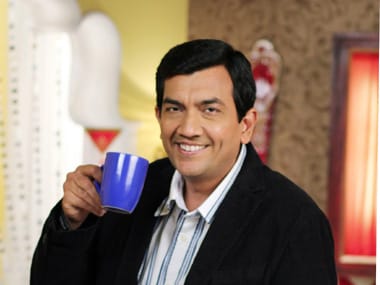 Sanjeev Kapoor, chef and entrepreneur. Pic courtesy: sanjeevkapoor.com[/caption]The busy Mr Kapoor runs several enterprises with an overall turnover of approximately Rs 1000 crore that includes a TV channel, brand endorsements, a cooking competition on another TV channel, writing cook books (4 big format and 8 booklet sized ones yearly) and a hotel franchisee business.Chef Kapoor speaks to Firstpost in between shots for a TV show about his career, the business it turned into and how he finds time to learn and grow as he cruises between them all.Excerpts from the conversation:When one thinks of cooking Indian food, the name that pops in most people’s mind is that of Chef Sanjeev Kapoor. How did you reach this easy familiarity with people?I think if we plan anything meticulously, we can achieve it without much difficulty. In my first job as a trained Chinese cook, I realized within a year that no matter how well I cooked, as an Indian it would be difficult for me to attain global credibility unlike a Chinese chef. So I started learning Indian cuisine and worked at gaining expertise in it. After getting on top of my profession in the hotel industry—where I was told it would take 20 years at least to be an Executive Chef, I challenged myself and became one in 8 years when I was only 28 years old—I realized that I would get saturated in that position with not much scope for further growth. My brother Rajeev, a chartered accountant and consultant, gave me the courage to break off and start on my own. I had seen cookery shows on TV before I started off on Zee TV, where chefs would rustle up meals with recipes that were quite difficult and tedious. I wondered how would anyone not familiar with a hotel’s kitchen want to attempt them. I decided to simplify recipes and make it easy for anyone who wanted to follow it. I realized early on that if I wanted to reach out to more people, I need to take chances which I did with a cookery show on TV. I have worked to a plan to reach where I have. Luck played a part, too.You did well at the hotel management course and got many campus placement offers. What was going on in your mind before deciding which one to take up?I had three offers. One hotel offered me work on flight kitchens, which I wasn't keen on continuing after working there for a day. Another big chain that made an offer was then in the habit of giving plum working positions to hotel management graduates from Mumbai and secondary positions to graduates from other states. So I decided to join the ITDC Group of hotels . On my first day at the job, all of us newcomers were ushered into the Executive Chef’s room where I saw him reading the newspapers and eating litchis in the morning. I asked him: How long does it to reach this position? I think he must have been irritated with my query, especially since this was the first meeting with newcomers. I wasn’t surprised when I was assigned the duty of only cleaning tiles the first day!I think placements should be based on:
- The road map you have made for yourself and what you consider important milestones to reach the goal. Decide how to break established paradigms.
- Your belief -- Do not accept what the world tells you. I was teased by my extended family members for choosing this profession. My father and my family had only one question: Are you sure you want to do this? If you are, we are with you.
- Realistic expectations -- Any work that you start off with may seem tough in the beginning. But that is the only way you will learn and then you will find the going easy. It is a competitive world. Accept it and create your own special niche.
First Published:Feb 09, 2015, 10:00:15 IST
Advertisement
Advertisement

Google burns cash for first time as AI spending pushes 2026 capex to $205 billion
Google parent Alphabet reported negative free cash flow of $5.9 billion in the second quarter for the first time since going public, as surging AI infrastructure spending pushed its 2026 capital expenditure forecast to as much as $205 billion
6 min read
Tesla sells more cars but makes less money: Why Musk’s AI pivot is squeezing profits
Tesla’s record Q2 deliveries failed to translate into higher profits as price cuts, falling regulatory-credit revenue and Elon Musk’s aggressive AI spending squeezed margins and pushed the EV maker into negative free cash flow
5 min read
No premium queues, 30-minute target: What changes for Indian passport applicants in UAE
Indian passport applicants in the UAE can now access passport, visa and attestation services through Alhind’s 16 centres, with no premium queues, a Dh19 service fee and a target of completing applications within 30 minutes
4 min read
Bharat Forge, Flying Whales sign pact to develop 60-tonne airships for India’s defence logistics
Bharat Forge has signed an MoU with Flying Whales to jointly develop and manufacture 60-tonne heavy-lift airships in India for defence logistics, strategic mobility and disaster response
3 min read
Air India to cut Delhi-Toronto flight time by 3 hours, resume non-stop services from August 1
Air India will resume non-stop Delhi-Toronto flights from August 1, cutting travel time by nearly three hours and deploying its new Boeing 787-9 Dreamliner on the route
2 min read
Advertisement
Advertisement