



Mega PSU bank merger marks new dawn for Indian banking space: Finance ministry
The biggest-ever consolidation exercise in the public sector banking space effected on Wednesday will mark a new dawn for the Indian banking sector, the Finance Ministry said on Wednesday

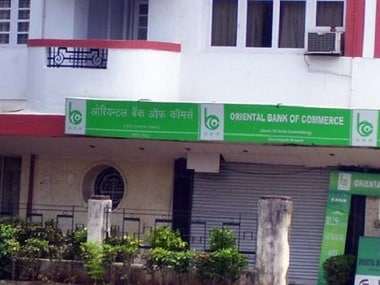
Representational image. Courtesy: News18[/caption]Earlier in the day, Punjab National Bank said all nation-wide branches of United Bank of India and Oriental Bank of Commerce has started functioning as PNB branches.The merger has created the second largest nationalised bank of the country - both in terms of business and branch network after the State Bank of India (SBI).The amalgamated bank will have a wider geographical reach through 11,000 plus branches, more than 13,000 ATMs, one lakh employees and a business mix of over Rs 18 lakh crore."The bigger geographical footprint will help us serve our customers more effectively and efficiently," said PNB managing director S S Mallikarjuna Rao said.Experts were of the opinion that the merger at this point of time will not be very smooth and seamless. However, heads of the anchor banks exuded confidence."We don't foresee any problem it is going as per the plan. We have reviewed in the light of this situation also. Certain modification in implementation we have done so that there is no disruption for employees and customers. We are ensuring zero disruption," Union Bank of India Managing Director Rajkiran Rai G told PTI.The four anchor banks -- PNB, Canara Bank, Union Bank and Indian Bank -- are postponing some part of the implementation and processes due to the lockdown."For merging banks, we have not changed some of the process like loan process etc, which we proposed to do earlier. However, because of the prevailing situation, we will be continuing old system till the situation comes under control," he said.With the merger, the bank looking at more than Rs 2,500 crore of synergy benefits in the next three years, he added.As per the mega consolidation plan announced in August last year, Oriental Bank of Commerce and United Bank of India is merged into Punjab National Bank (PNB); Syndicate Bank into Canara Bank; Andhra Bank and Corporation Bank into Union Bank of India; and Allahabad Bank into Indian Bank.Following the consolidation, there will be now seven large public sector banks (PSBs), and five smaller ones.There were as many as 27 PSBs in 2017. The total number of public sector banks in the country has come down to 12.The merger has resulted in the creation of seven large PSBs with scale and national reach, with each amalgamated entity having a business of over Rs 8 lakh crore. These banks now have scale comparable to global banks and capable of competing effectively in India and globally.In addition, the consolidation is expected to provide impetus to the merged entities by increasing their ability to support larger ticket-size lending and have competitive operations by virtue of greater financial capacity.Last year, Dena Bank and Vijaya Bank were merged with Bank of Baroda. Prior to this, the government had merged five associate banks of SBI and Bharatiya Mahila Bank with the public sector bank.These were State Bank of Patiala, State Bank of Bikaner and Jaipur, State Bank of Mysore, State Bank of Travancore and State Bank of Hyderabad effective April 2017.

Google burns cash for first time as AI spending pushes 2026 capex to $205 billion
Tesla sells more cars but makes less money: Why Musk’s AI pivot is squeezing profits
No premium queues, 30-minute target: What changes for Indian passport applicants in UAE
Bharat Forge, Flying Whales sign pact to develop 60-tonne airships for India’s defence logistics
Air India to cut Delhi-Toronto flight time by 3 hours, resume non-stop services from August 1