
Advertisement
Co Presented By
Co Presented By


Sections
Govt moves to arrest rupee depreciation may not drive fund inflows, negative from long-term perspective, says report
The government measures will have a sentimental impact on the market and the rupee trajectory "might not see a full reversal of the appreciation move of the last couple of days", it said.

Mumbai: The government's rupee depreciation arresting measures announced on Friday may not drive fund inflows and are a negative from a longer term perspective as they increase short term debt, a HDFC Bank report has said.![Representational image. Reuters.]() Representational image. Reuters.[/caption]After announcement of the measures, reports had quoted government sources as saying that it will have a $8-10 billion positive impact through forex savings or increased flows."These measures are better suited when the sentiment in the global market is positive towards emerging markets and, in general, when it is relatively easy for emerging market corporates to raise money abroad," the note said.It added that demand for masala bonds from offshore investors is generally driven by the stability of the rupee and in an environment where the rupee is under pressure, foreign investor are unlikely to increase portfolio of rupee-denominated assets.On the move to let corporates borrow from abroad, it said a lot would depend on how quickly and easily Indian corporates are able to garner additional short-term debt through ECBs or portfolio investments.The government measures will have a sentimental impact on the market and the rupee trajectory "might not see a full reversal of the appreciation move of the last couple of days", it said.The report also warned that while we set to achieve near term fixes, any protectionist gestures have to be viewed with some caution by global investors as it gives the impression of a reversal of 'reforms'."We see this as potential negative for the currency beyond the very near term," it said.It also said that there could be additional measures which were supposed to be announced Saturday. It can be noted that there was no announcement Saturday.Meanwhile, foreign brokerage Nomura said that the measures "underwhelm expectations" and also signify policymakers moving from the first line of defence which includes allowing currency depreciation, forex intervention and positive comments, to the second line which include measures to boost capital inflows, cut imports and boost exports.The Japanese firm said it expects more measures going forward.
Representational image. Reuters.[/caption]After announcement of the measures, reports had quoted government sources as saying that it will have a $8-10 billion positive impact through forex savings or increased flows."These measures are better suited when the sentiment in the global market is positive towards emerging markets and, in general, when it is relatively easy for emerging market corporates to raise money abroad," the note said.It added that demand for masala bonds from offshore investors is generally driven by the stability of the rupee and in an environment where the rupee is under pressure, foreign investor are unlikely to increase portfolio of rupee-denominated assets.On the move to let corporates borrow from abroad, it said a lot would depend on how quickly and easily Indian corporates are able to garner additional short-term debt through ECBs or portfolio investments.The government measures will have a sentimental impact on the market and the rupee trajectory "might not see a full reversal of the appreciation move of the last couple of days", it said.The report also warned that while we set to achieve near term fixes, any protectionist gestures have to be viewed with some caution by global investors as it gives the impression of a reversal of 'reforms'."We see this as potential negative for the currency beyond the very near term," it said.It also said that there could be additional measures which were supposed to be announced Saturday. It can be noted that there was no announcement Saturday.Meanwhile, foreign brokerage Nomura said that the measures "underwhelm expectations" and also signify policymakers moving from the first line of defence which includes allowing currency depreciation, forex intervention and positive comments, to the second line which include measures to boost capital inflows, cut imports and boost exports.The Japanese firm said it expects more measures going forward.
"Considering that most of the measures aim at increasing short-term external debt or in effect worsen the risk profile of companies (by increasing un-hedged exposure), could actually be considered negative," the note released Saturday by one of the largest private sector lenders said.Increase in short-term external commercial borrowings or foreign institutional investor exposure "could lead to further worsening of vulnerability ratios and the global investors might actually take this negatively", it warned.The measures include permitting manufacturing sector entities to avail ECBs up to $50 million with a minimum maturity of one year versus the earlier period of three years, removing caps on single group exposure for foreign investors, exemption from withholding tax for issuance of masala bond issues and removing restrictions on Indian banks' market making in masala bonds.[caption id="attachment_4495585" align="alignleft" width="380"]
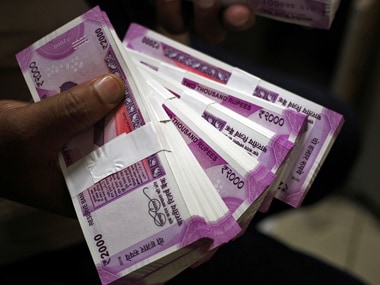 Representational image. Reuters.[/caption]After announcement of the measures, reports had quoted government sources as saying that it will have a $8-10 billion positive impact through forex savings or increased flows."These measures are better suited when the sentiment in the global market is positive towards emerging markets and, in general, when it is relatively easy for emerging market corporates to raise money abroad," the note said.It added that demand for masala bonds from offshore investors is generally driven by the stability of the rupee and in an environment where the rupee is under pressure, foreign investor are unlikely to increase portfolio of rupee-denominated assets.On the move to let corporates borrow from abroad, it said a lot would depend on how quickly and easily Indian corporates are able to garner additional short-term debt through ECBs or portfolio investments.The government measures will have a sentimental impact on the market and the rupee trajectory "might not see a full reversal of the appreciation move of the last couple of days", it said.The report also warned that while we set to achieve near term fixes, any protectionist gestures have to be viewed with some caution by global investors as it gives the impression of a reversal of 'reforms'."We see this as potential negative for the currency beyond the very near term," it said.It also said that there could be additional measures which were supposed to be announced Saturday. It can be noted that there was no announcement Saturday.Meanwhile, foreign brokerage Nomura said that the measures "underwhelm expectations" and also signify policymakers moving from the first line of defence which includes allowing currency depreciation, forex intervention and positive comments, to the second line which include measures to boost capital inflows, cut imports and boost exports.The Japanese firm said it expects more measures going forward.
First Published:Sep 17, 2018, 06:54:19 IST
Advertisement
Advertisement

Google burns cash for first time as AI spending pushes 2026 capex to $205 billion
Google parent Alphabet reported negative free cash flow of $5.9 billion in the second quarter for the first time since going public, as surging AI infrastructure spending pushed its 2026 capital expenditure forecast to as much as $205 billion
6 min read
Tesla sells more cars but makes less money: Why Musk’s AI pivot is squeezing profits
Tesla’s record Q2 deliveries failed to translate into higher profits as price cuts, falling regulatory-credit revenue and Elon Musk’s aggressive AI spending squeezed margins and pushed the EV maker into negative free cash flow
5 min read
No premium queues, 30-minute target: What changes for Indian passport applicants in UAE
Indian passport applicants in the UAE can now access passport, visa and attestation services through Alhind’s 16 centres, with no premium queues, a Dh19 service fee and a target of completing applications within 30 minutes
4 min read
Bharat Forge, Flying Whales sign pact to develop 60-tonne airships for India’s defence logistics
Bharat Forge has signed an MoU with Flying Whales to jointly develop and manufacture 60-tonne heavy-lift airships in India for defence logistics, strategic mobility and disaster response
3 min read
Air India to cut Delhi-Toronto flight time by 3 hours, resume non-stop services from August 1
Air India will resume non-stop Delhi-Toronto flights from August 1, cutting travel time by nearly three hours and deploying its new Boeing 787-9 Dreamliner on the route
2 min read
Advertisement
Advertisement