



Retail FDI: How much will global majors bite?
To instil the much required confidence in global majors, the government will have to come out with a clear policy.

Better late then never - does this hold as far as the government's retail FDI reforms are concerned?
Even as the government is indicating that it is serious about allowing FDI in retail, a worsening global economic situation may hold back global majors from making substantive investment commitment in India in the near term.
A report in the Business Standard said French retail giant Carrefour, which has set up cash & carry stores in India, is going slow on its expansion plans for the country. The reason being cited for this is the lagging global economy.
[caption id="attachment_371912" align="alignleft" width="380"]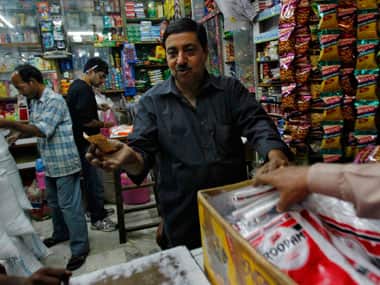 The change in the government's attitude shows that it is ready to walk that extra mile to bring in long-term capital. Reuters[/caption]
This may be an indication that there is no surety that other majors, which have lined up such cash & carry outlets and are waiting for the government to push through the FDI norms, may jump in with loads of money to set up shops here.
 More from Economy
Wal-Mart and Tesco are two majors waiting to enter India once the government pushes forth the retail FDI rules.
FDI in the retail sector is one of the key reforms - and a sticky one at that- for the government ever since ally Trinamool Congress forced the UPA to back track on this.
If the Congress manages to push through with this reform, it will be proof of the government's strong will to bring about economic reforms.
Straddled with a widening current account deficit, the government is desperately looking for ways to increase inflow of long-term foreign capital.
Already there are indications that the government is going full steam ahead on retail FDI front. There are indications that it may relax foreign direct investment norms for single-brand retail chains, in response to Swedish furniture retail giant IKEA's request for a leeway.
A report in The Economic Times said the government is set to change the contentious norms such as those on local sourcing, brand ownership etc to woo long-term foreign capital.
In IKEA's case, the company is not comfortable with the 30 percent local sourcing norm. It has said that it is impossible to meet this guideline from Day 1 as the gestation period for an IKEA store is three to five years.
The ET report says the government is willing to change this, not only for IKEA, but in general.
Also, the report says the rule may be changed to make 30 percent sourcing applicable to costs and not sales, as it is now.
There have also been reports that the Congress may be gearing up for a showdown on the issue of multi-brand retail FDI. A report in PTI said the party is playing down the opposition its ally Trinamool Congress has to the law.
"I do not think there is really any need to go into the specifics of objections, which a particular political party may or may not have raised," party spokesperson Manish Tewari was quoted as saying.
"But on the broader question on whether FDI in retail is in India's interest, I think the balance of convenience really lies in favour of FDI," he said.
The change in the government's attitude shows that it is ready to walk that extra mile to bring in long-term capital.
To instil the much required confidence in global majors, the government will have to come out with a clear policy.
Given the global economic situation, a slow progress on this may also prompt them to step back.
Nobody would want to invest in a country where policies keep changing in accordance with the whims and fancies of the political parties.

India’s trade surplus with US may cross $90 billion after tariff cuts, says SBI report
Inflation likely to be a big focus area for budget 2024, say sources
Explained: Will the Bank of Japan break tradition and raise interest rates?
UK enters recession, central bank admits
Explained: How the rising US dollar can affect everyone