



Coalgate: Supreme Court questions functioning of screening committee
The Supreme Court on Wednesday questioned the Centre over the functioning of the screening committee for allocation of coal blocks in which certain private companies were allegedly preferred despite not figuring in the recommendations by competent authorities.

New Delhi: The Supreme Court on Wednesday questioned the Centre over the functioning of the screening committee for allocation of coal blocks in which certain private companies were allegedly preferred despite not figuring in the recommendations by competent authorities.
The court was also critical of the centre for its "laxity" in deallocating coal blocks from entities which held them for long without meeting necessary clearances even as Attorney General G E Vahanvati informed it that the process of deallocation has been put in motion.
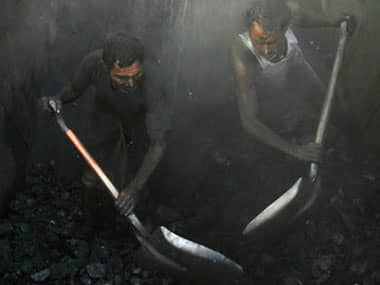 The apex court raised questions on the working of the screening committee for considering some of private companies where were not in the list of recommendations of Central Electricity Authority (CEA) and Ministry of Power.
A three-judge bench headed by Justice R M Lodha wanted to know from Attorney General about the guidelines and parameters followed by the screening committee in coal block allocations, saying the minutes of meetings did not reflect these factors.
The bench said it was necessary for it to know the norms for allocation as there were no affidavits of the members of screening committee who were involved in the decision-making process for allocation.
 More from Economy
"The allegation is that allocations were made arbitrarily and it smacks of favouritism," the bench, also comprising justices M B Lokur and Kurian Joseph, said while making it clear that "decision-making process can be explained only by those who were involved in the process and not by an outsider".
"What appears to be for sure is that the screening committee is not accepting the broad guidelines," it observed while hearing the issue of allocation of coal blocks by screening committee in 2007-08 when Prime Minister Manmohan Singh was holding charge of the coal ministry.
Referring to one screening committee decision, the bench said it needs explanation as out of 28 recommendations, it accepted 20 and rejected another 8 while adding on the application of 11 private companies for allocation of coal blocks on its own.
"Of the 28 recommendations made by the CEA and endorsed by the Ministry of Power, 20 were accepted by the screening committee and eight were not. Why was this?.
"What was the criteria adopted by the screening committee to exclude eight. Why 11 were added by the screening committee which were not recommended by the CEA and Ministry of Power. What makes screening committee to add or include the 11 companies/applicants. Please look into it and tell us," the bench asked the Attorney General.
The decision taken by the screening committee did not reflect the merits and demerits considered by it in its exercise while making the allocation, the court observed.
The screening committee is functioning under the chairmanship of Coal Secretary along with other members including representatives of nodal ministries/ departments such as Ministries of power, steel and railways besides the Department of Industrial Policy and Promotion.
At the outset, Vahanvati said de-allocation process for the coal block allocation made between 1993-2008 has been put on motion and the private parties to whom allocation has been made for 61 blocks has been asked by the Centre to clear deficiencies within four to six weeks for obtaining mining lease.
However, the bench questioned the Centre for waiting for so long in taking decision for de-allocating the coal blocks.
"Why there was laxity till now. Why it was held up till now," the bench asked Vahanvati who said there was no laxity.
The bench said "if it remains pending for long, the goal is frustrated".
The AG read out the Centre's statement which said that failure to clear deficiencies within specified period would lead to deallocation of coal block allocations where environment and forest clearance stage one have not been obtained and where state governments are not executing mining leases in spite of all approvals having been obtained.
The statement said in respect of the category where forest and environment clearances have not been obtained, three weeks time will be given to allottees to obtain and submit proof of clearances failing which a decision will be taken to de-allocate blocks within one week thereafter.
In respect of category where state governments have not executed mining lease, the state may be immediately advised to go ahead with execution of mining leases where such clarification has been sought subject to the proceedings pending before the apex court, it said.
The statement said that if the allottees do not obtain an order from the state governments that they will execute mining leases within three weeks from the date of clarification letter, the allocations will be cancelled within one week thereafter.
The statement said that in respect of the third category where coal blocks were unexplored, regionally explored, partially explored at the time of allocation, the allottees will be issued a notice granting three weeks time for submission of prospecting licence or geological report as the case may be, failing which a decision will be taken to deallocate the coal blocks within one week thereafter.
It said cases where forest clearance stage two have not been obtained will be reviewed on case to case basis and a decision thereon will be taken within six weeks, keeping in mind the guidelines of Ministry of Environment and Forests (MoEF).
The statement said that MoEF will be requested to take an appropriate decision within four weeks.
Any case included in 61 blocks that faces any other impediment will be reviewed in a time-bound manner and efforts will made to remove those impediments within six weeks and if the effort fails, the blocks will be deallocated, it said.
The statement clarified that these decisions have been taken on the basis that the allocations have been pending for a very long time and do not in any manner constitute an acknowledgement or acceptance of the fact that there was any thing improper or illegal in the procedure adopted in making the allocations.
PTI

India’s trade surplus with US may cross $90 billion after tariff cuts, says SBI report
Inflation likely to be a big focus area for budget 2024, say sources
Explained: Will the Bank of Japan break tradition and raise interest rates?
UK enters recession, central bank admits
Explained: How the rising US dollar can affect everyone