



Catastrophe bonds: It's time govt considers insurance-linked securities with increasing frequency of natural calamities
Naturally to entice investors, the coupon rates have to be much higher than the ones offered by corporate bonds and gilts.

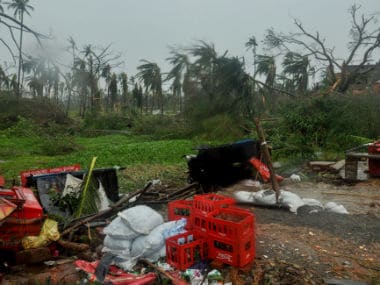
Odisha's Puri was one of the areas worst affected by cyclone Fani. PTI[/caption]Those who have great appetite and capacity for risks are the ones who subscribe to CAT. Hedge funds and pension funds top the list naturally. It might also interest weather forecasters but it is certainly not for the small investors and mutual funds catering to small investors. In India, CAT carrying a coupon of say 12 percent per annum might catch the fancy of pension funds and high net worth individuals. Its riskiness and hence the yield can be reduced by reducing its duration from say three to two years.The insurance company itself must make sure that the funds mobilised through the issuance of CAT are not exposed to high-risk investments. It has a fine balancing act to do. It has to earn something from the funds to take care of the high coupon payable on CAT. At the same time, it has to have the funds ready and realisable so as to be able to settle claims. Otherwise, it will have to pay up from its general pool of funds thus defeating the very purpose of issuing CAT.One may wonder why CAT is issued mostly by insurers and reinsurers. The answer is it is a natural fit for them. It is a risk-mitigating measure for them. It is well possible that the insurance industry in India which charges very high premiums for natural disasters might reduce them if they were allowed to mitigate their risks or transfer their risks to the market through CAT. Fallout of CAT could be bonds in general finding favor with investors in India. As it is the bond market in India is both shallow and small.There is no reason why governments themselves cannot issue CAT. For example, Odisha is prone to periodic cyclone with the recent Fani cyclone wrecking havoc on properties though, thanks to high preparedness, loss of human lives was minimal. Odisha government itself can take the initiative and issue Odisha and cyclone-specific CAT. A longer duration bond would be beneficial to it i.e., instead of a three-year bond if it issues a five-year bond, the chances of cyclone hitting coastal Odisha is higher and hence the success of the exercise (loss mitigation) greater.But correspondingly the issue of CAT being a hit with investors diminishes with lengthening of the maturity period of the bonds. Indeed for a high duration CAT, the expected yield could be still higher. A sweetener for such government-issued CAT as opposed to insurer-issued CAT could be income-tax exemption for interest to the investors.(The writer is a senior columnist and tweets @smurlidharan)

Google burns cash for first time as AI spending pushes 2026 capex to $205 billion
Tesla sells more cars but makes less money: Why Musk’s AI pivot is squeezing profits
No premium queues, 30-minute target: What changes for Indian passport applicants in UAE
Bharat Forge, Flying Whales sign pact to develop 60-tonne airships for India’s defence logistics
Air India to cut Delhi-Toronto flight time by 3 hours, resume non-stop services from August 1