
Advertisement
Co Presented By
Co Presented By


Sections
Budget 2020: Unless govt is firm about its basic economic ideology, it will continue to make ad-hoc, ill-planned changes in name of policy
In today’s dynamic world, it may be appropriate to adopt quarterly budget announcements in line with the publicly affirmed economic ideology instead of policymaking through frequent press releases.

Finance Minister Nirmala Sitharaman has a crisis on her hands. On 1 February, we will know if she is going to waste it or use it to create a transformative moment in India’s economic story. Some of her policies in the last six months have met with limited success. The government has been spending money on social sector schemes but consumption is subdued. It invested heavily in infrastructure but supply bottlenecks refuse to ease. Sitharaman cut corporate taxes but private investments have not picked up. She asked banks to pass on Reserve Bank of India's (RBI) rate cuts and made the right noises on fiscal prudence but interest rates refused to play ball. Perhaps there are more things that she should be doing and experts have offered many suggestions. But I fear none of these will work unless the government makes up its mind about its basic economic ideology.Given that fiscal profligacy will give us nothing but higher interest obligations and inflation, we have only two options: Either fund higher public expenditure through an increase in taxes (libertarianism) or cut taxes along with spending (conservatism). The choice requires the government to introspect and articulate its economic ideology first.If the guiding economic principle is liberatarianism, then admit that the government will have to tax more, simply because it intends to spend more. And identify the key sectors that are job generators and growth drivers. Then try to spend your way out of the crisis by harnessing multiplier effects and crowding-in private investments. On the other hand, if the ideology is conservative, the government must make it clear that from now on it will tax less, spend less and let the private sector drive the economy. Accept that the markets are supreme and the government is an inefficient provider of all goods and services. Withdraw from all businesses except those that are public goods or in the nature of strategic activities. There is enough idle cash and liquidity in the system and such a strong signal from the government will kickstart the spending and growth cycle.[caption id="attachment_4368147" align="alignleft" width="380"]![Representational image. Reuters.]() Representational image. Reuters.[/caption]Committing to one of these economic ideologies will provide clarity to industry and investors on what to expect from the government. All ministries and departments would have to fall in line with the guiding principles. They will stop tinkering with the economy through ad-hoc and often ill-planned circulars in the name of policy changes. Internal consistency will bring regulatory stability and that will solve one of the main problems we are facing right now which is regulatory uncertainty. We see too many policy changes that are often unforeseen and sometimes appear contradictory or unreasonable.Consumers, businesses and investors want stability so that they can plan ahead. Economic decisions of individuals and businesses do not always depend on the current situation but what is likely to be the rules of the game—months or years later. The government can provide assurance and confidence by laying out its economic philosophy and then take as many measures as it wants in alignment with the broad principles.Let me make a few suggestions for the 2020 Union Budget to boost growth and employment without burdening the fisc (and my favoured economic ideology would become obvious).
Representational image. Reuters.[/caption]Committing to one of these economic ideologies will provide clarity to industry and investors on what to expect from the government. All ministries and departments would have to fall in line with the guiding principles. They will stop tinkering with the economy through ad-hoc and often ill-planned circulars in the name of policy changes. Internal consistency will bring regulatory stability and that will solve one of the main problems we are facing right now which is regulatory uncertainty. We see too many policy changes that are often unforeseen and sometimes appear contradictory or unreasonable.Consumers, businesses and investors want stability so that they can plan ahead. Economic decisions of individuals and businesses do not always depend on the current situation but what is likely to be the rules of the game—months or years later. The government can provide assurance and confidence by laying out its economic philosophy and then take as many measures as it wants in alignment with the broad principles.Let me make a few suggestions for the 2020 Union Budget to boost growth and employment without burdening the fisc (and my favoured economic ideology would become obvious).
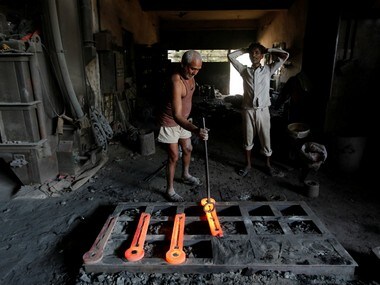 Representational image. Reuters.[/caption]Committing to one of these economic ideologies will provide clarity to industry and investors on what to expect from the government. All ministries and departments would have to fall in line with the guiding principles. They will stop tinkering with the economy through ad-hoc and often ill-planned circulars in the name of policy changes. Internal consistency will bring regulatory stability and that will solve one of the main problems we are facing right now which is regulatory uncertainty. We see too many policy changes that are often unforeseen and sometimes appear contradictory or unreasonable.Consumers, businesses and investors want stability so that they can plan ahead. Economic decisions of individuals and businesses do not always depend on the current situation but what is likely to be the rules of the game—months or years later. The government can provide assurance and confidence by laying out its economic philosophy and then take as many measures as it wants in alignment with the broad principles.Let me make a few suggestions for the 2020 Union Budget to boost growth and employment without burdening the fisc (and my favoured economic ideology would become obvious).
- Privatise all state-owned companies that are not in publicly declared strategic sectors.
- Abolish mandatory corporate social responsibility (CSR) spending and replace it with incentives for corporate spending on apprenticeship schemes.
- Boost agricultural productivity by embracing GM crops. Currently, there is no other way to double farmers' income as was promised and indeed is imperative for reviving rural demand. Follow it up by replacing fertiliser subsidy with enhanced direct cash transfers to the farmers (under PM-KISAN).
- Unleash the animal spirits of the export sector by lifting regulatory shackles, clearing all pending dues and slashing the bureaucracy at customs and ports.
- In today’s dynamic world, it may be appropriate to adopt quarterly budget announcements in line with the publicly affirmed economic ideology instead of policymaking through frequent press releases.
First Published:Jan 28, 2020, 13:37:28 IST
Advertisement
Advertisement

China has dominated Myanmar’s rare earth mines — now India eyes deal to harness country’s critical minerals
India is deepening rare earth cooperation with Myanmar as New Delhi seeks alternative sources of critical minerals dominated by China, including dysprosium and terbium used in EVs, defence systems and clean energy technologies
6 min read
JPMorgan to hire 1,000 technology professionals for India GCCs amid AI-led transformation
Wall Street banking giant to expand hiring across cloud, cybersecurity and AI data pipeline roles as it strengthens its India Global Capability Centres despite AI-driven workforce optimisation.
1 min read
BOJ seen raising interest rates by December as weak yen fuels inflation risks
Majority of economists expect Japan's central bank to deliver a 25-basis-point rate hike by year-end, with further policy tightening likely through 2027.
2 min read
'From make in India to launch from India': Skyroot COO on why Vikram-1 could change India’s space sector
Skyroot Aerospace’s successful Vikram-1 mission marks a major milestone for India’s private space sector, as the country seeks to shift from “Make in India” to “Launch from India” and compete in the global commercial satellite launch market
8 min read
Google burns cash for first time as AI spending pushes 2026 capex to $205 billion
Google parent Alphabet reported negative free cash flow of $5.9 billion in the second quarter for the first time since going public, as surging AI infrastructure spending pushed its 2026 capital expenditure forecast to as much as $205 billion
6 min read
Advertisement
Advertisement