



Budget 2019 has delivered quick fixes; govt seems to have made attempt to address several policy gaps
The maiden Budget speech of Finance Minister Nirmala Sitharaman, perhaps the longest in recent years, witnessed a flurry of policy announcements, both for rural and urban India.

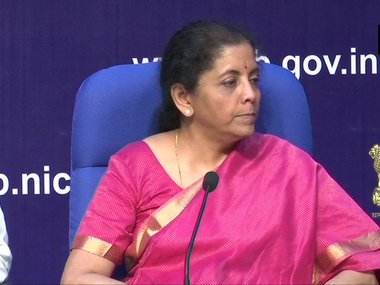
File image of Finance Minister Nirmala Sitharaman. PTI[/caption]There are several steps taken towards capital markets reforms too, both for debt and equity components. For one, proposal to raise free float requirement for listed companies to 35 percent holds the promise of channelling domestic savings as well as inviting additional portfolio capital to the Indian equity market.Doing away with foreign portfolio investment (FPI) cap within the permitted FDI sectoral limits lends better fungibility to fund-raising. Measures announced to deepen corporate debt market is a welcome policy thinking, and can help catalyse sizeable investments over the next few years.Turning to tax proposals in the Budget, for one, the government seems to have bitten the bullet on higher tax for ultra-rich individual taxpayers, by rolling out a steep hike in the surcharge rates, which would entail an increase in effective tax rate by 3 to 7 percent for income earners in the highest tax brackets. In several ways, the levy justifies itself, partly to fund the tax relief granted to marginal taxpayers. The impact, however, makes India one of the highest tax countries, even by global standards (US, effective maximum marginal tax rate of 39 percent).From corporate tax rate standpoint, on anticipated lines, 25 percent tax rate benefit is available to corporates with sales below Rs 400 crore (earlier, Rs 250 crore) during the financial year 2017-18. Sitharaman did mention that such widening of relief is targeted towards medium and small enterprises subsuming 99.3 percent of companies. Whilst this allays some concerns, the industry was much rather expecting across-the-board cut to 25 percent. Maybe, this wish off the long list will take a few more years to fulfil.Absence of rationalisation measures in respect of dividend distribution tax (DDT) and the minimum alternate tax (MAT) is a clear miss; these two levies cut deeper than it might look, and a lot of investments, particularly from foreign sources, feel the sore. Besides, after many policy flip-flops in the past, clarifications on ‘angel tax’ for eligible startups bodes quite well, and will pave way for next wave of angels and accredited investments in technology and innovation-led ventures.
Insofar as M&A transactions, the Budget proposals are quite the mixed bag. On positives, realigning conditions for tax neutral demerger to Ind-AS requirements is a quick fix yet a massive step in allowing businesses to reorganise without a tax cost. On the other hand, the proposal to levy buyback distribution tax on listed shares now would be possible to add certain cost to many instances of shareholding reorganisation, and make profit repatriation a touch expensive.From tax policy direction standpoint, there are several cues. Proposal to roll out faceless tax e-assessments is a well-meaning step in the right direction; a phased roll-out is a great idea indeed. The worry, however, would be whether such faceless tax proceedings would allow adequate opportunities to taxpayers to explain their complex business dynamics adequately, and thus, seek a more contextual application of tax principles. Least to say, the companies were keen to listen to a road map for unveiling the next big thing—the new direct tax code (DTC). Perhaps, with the revised due date of 31 July round the corner for issuance of a new draft for the DTC, all eyes are now looking forward to the approach followed.
On the Goods and Services Tax (GST) front, the finance minister did well in announcing a set of administrative steps to enable implementation ease. These include the introduction of a single monthly return, electronic invoice system that shall capture the invoice details to be used for invoice matching, and detection of tax evasion.Overall, a well-rounded effort by the government to address several policy gaps. Budget 2019 certainly has delivered many quick fixes, and most likely will help the government pluck low-hanging outcomes without much effort. At the same time, majority announcements are only to set out policy intent, and what will be key is to see how well the administration follows through on many of these, in the coming months, especially given that we are less than six months away from the second Budget of the re-elected government.(Sumit Singhania, partner and Gaurav Barchha, manager, Deloitte Touche Tohmatsu India LLP)

Google burns cash for first time as AI spending pushes 2026 capex to $205 billion
Tesla sells more cars but makes less money: Why Musk’s AI pivot is squeezing profits
No premium queues, 30-minute target: What changes for Indian passport applicants in UAE
Bharat Forge, Flying Whales sign pact to develop 60-tonne airships for India’s defence logistics
Air India to cut Delhi-Toronto flight time by 3 hours, resume non-stop services from August 1