



BP cuts value of holdings in Reliance gas fields by 10%
Reliance partner BP has written down 10 percent of the value of the assets it purchased last year.

That Reliance Industries' troubles are deeper than its gas wells can be seen from two recent developments.
First, BP, its partner in Krishna-Godavari offshore, has reduced the net fair value of its investment in the joint venture with Reliance. On 30 August 2011, BP acquired a 30 percent stake in 21 oil and gas production sharing agreements (PSAs) operated by Reliance for $7.026 billion. Within five months BP has reduced the net fair value of this investment based on "new information obtained, including further understanding of the acquired assets and potential development options", says the company's earning release. BP has reduced the value of its investment by $785 million, eroding more than 10 percent of its investment value.
[caption id="attachment_214978" align="alignleft" width="380" caption="BP has reduced the value of its investment by $785 million. Reuters"]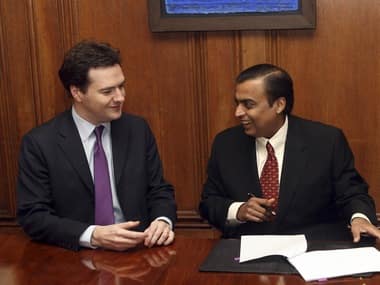 [/caption]
The reason for this reduction can be seen in the second development. A top oil ministry official has been quoted as saying that Reliance's KG-D6 offshore fields may see production drop to an all-time low of about 27 million cubic metres a day by April/May due to the entry of sand or water in the wells. Reliance currently produces 34.5 mmcmd when, as per the field development plan approved in 2006, should have touched 70.39 mmcmd. Production was to touch 80 mmcmd by April, after drilling of 31 wells by Reliance. The company did manage to touch a peak production rate of 61.5 mmcmd in March 2010.
 More from Business
Reports say the the production is expected to go down further to 22.6 mmcmd by 2013-14.
The current announcement of a production cut to 22.6 mmcmd will be its lowest since production commenced on the well. Most of the analysts have built into their estimates a production output upwards of 35 mmcmd. But for the ongoing buyback issue, a number of broking firms would have downgraded the stock on the lower output.
HSBC downgraded the stock on Wednesday with a target price of Rs 800, the reasoning being that the company's focus on domestic markets limits the potential for growth. The stock has run up by 10 percent since the announcement of buyback.
Post the current development its seems, it is probably better to let the company buy back its shares.

China has dominated Myanmar’s rare earth mines — now India eyes deal to harness country’s critical minerals
JPMorgan to hire 1,000 technology professionals for India GCCs amid AI-led transformation
BOJ seen raising interest rates by December as weak yen fuels inflation risks
'From make in India to launch from India': Skyroot COO on why Vikram-1 could change India’s space sector
Google burns cash for first time as AI spending pushes 2026 capex to $205 billion