
Advertisement
Co Presented By
Co Presented By


Sections
Bad loans crisis: Reserve Bank of India puts 200 stressed accounts under scanner
Reserve Bank of India (RBI) is examining as to whether banks have followed prudential norms in respect of these stressed assets, a senior public sector bank official said.

New Delhi: As part of its effort to contain rising non-performing assets (NPAs), the RBI has started scrutiny of 200 large accounts to assess level of stress and provisioning done against them by respective banks.Reserve Bank of India (RBI) is examining as to whether banks have followed prudential norms in respect of these stressed assets, a senior public sector bank official said.It is also assessing classification, provisioning and debt recast in respect of those loans, the official added. This is a part of a regular annual inspection of the book of the banks that the central bank undertakes each year after the closure of the financial year, another official said.Some of the accounts include Videocon, Jindal Steel, and Power, the official added.![Representational image. Reuters.]() Representational image. Reuters.[/caption]The lenders started reporting divergences since June last year for having under-reported NPAs in FY16. This was followed by the second round of disclosures, starting October, of under-reporting in FY17 by a few lenders.In most cases, this led to a shooting up of NPAs and an ensuing jump in provisions against dud assets. This eroded their bottom lines, and led to a sell-off in the stock causing erosion of wealth for investors.Private sector lenders, which were reputed for their caution on the asset quality front vis-a-vis the poorly governed state-owned peers, were the worst hit in this exercise.Among others, mid-sized private sector lender Yes Bank was found to have under-reported gross NPAs by a whopping Rs 11,000 crore in the two fiscals, while the third largest lender Axis Bank was found to have a divergence of over Rs 14,000 crore and ICICI Bank had over Rs 5,000 crore on these accounts for FY16 alone.Last year, RBI had tweaked the rules to make it compulsory for lenders to disclose under-reporting of bad assets. Before this there was a massive book clean-up through the asset quality review (AQR) in the previous year.
Representational image. Reuters.[/caption]The lenders started reporting divergences since June last year for having under-reported NPAs in FY16. This was followed by the second round of disclosures, starting October, of under-reporting in FY17 by a few lenders.In most cases, this led to a shooting up of NPAs and an ensuing jump in provisions against dud assets. This eroded their bottom lines, and led to a sell-off in the stock causing erosion of wealth for investors.Private sector lenders, which were reputed for their caution on the asset quality front vis-a-vis the poorly governed state-owned peers, were the worst hit in this exercise.Among others, mid-sized private sector lender Yes Bank was found to have under-reported gross NPAs by a whopping Rs 11,000 crore in the two fiscals, while the third largest lender Axis Bank was found to have a divergence of over Rs 14,000 crore and ICICI Bank had over Rs 5,000 crore on these accounts for FY16 alone.Last year, RBI had tweaked the rules to make it compulsory for lenders to disclose under-reporting of bad assets. Before this there was a massive book clean-up through the asset quality review (AQR) in the previous year.
This exercise comes at a time when gross NPAs in the banking system has risen to around Rs 10.3 lakh crore, or 11.2 percent of advances, compared to Rs 8 lakh crore, or 9.5 percent of the total loan, as on 31 March 2017.Following the annual inspection of the last year, many lenders, including Axis Bank, Bank of India and Yes Bank, were caught for under-reporting of NPAs.[caption id="attachment_4495585" align="alignleft" width="380"]
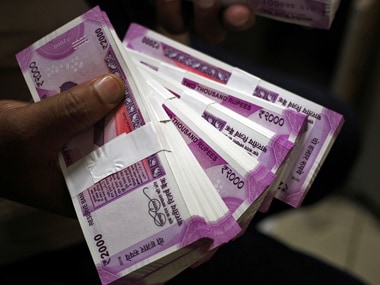 Representational image. Reuters.[/caption]The lenders started reporting divergences since June last year for having under-reported NPAs in FY16. This was followed by the second round of disclosures, starting October, of under-reporting in FY17 by a few lenders.In most cases, this led to a shooting up of NPAs and an ensuing jump in provisions against dud assets. This eroded their bottom lines, and led to a sell-off in the stock causing erosion of wealth for investors.Private sector lenders, which were reputed for their caution on the asset quality front vis-a-vis the poorly governed state-owned peers, were the worst hit in this exercise.Among others, mid-sized private sector lender Yes Bank was found to have under-reported gross NPAs by a whopping Rs 11,000 crore in the two fiscals, while the third largest lender Axis Bank was found to have a divergence of over Rs 14,000 crore and ICICI Bank had over Rs 5,000 crore on these accounts for FY16 alone.Last year, RBI had tweaked the rules to make it compulsory for lenders to disclose under-reporting of bad assets. Before this there was a massive book clean-up through the asset quality review (AQR) in the previous year.
First Published:Aug 15, 2018, 16:19:09 IST
Advertisement
Advertisement

Google burns cash for first time as AI spending pushes 2026 capex to $205 billion
Google parent Alphabet reported negative free cash flow of $5.9 billion in the second quarter for the first time since going public, as surging AI infrastructure spending pushed its 2026 capital expenditure forecast to as much as $205 billion
6 min read
Tesla sells more cars but makes less money: Why Musk’s AI pivot is squeezing profits
Tesla’s record Q2 deliveries failed to translate into higher profits as price cuts, falling regulatory-credit revenue and Elon Musk’s aggressive AI spending squeezed margins and pushed the EV maker into negative free cash flow
5 min read
No premium queues, 30-minute target: What changes for Indian passport applicants in UAE
Indian passport applicants in the UAE can now access passport, visa and attestation services through Alhind’s 16 centres, with no premium queues, a Dh19 service fee and a target of completing applications within 30 minutes
4 min read
Bharat Forge, Flying Whales sign pact to develop 60-tonne airships for India’s defence logistics
Bharat Forge has signed an MoU with Flying Whales to jointly develop and manufacture 60-tonne heavy-lift airships in India for defence logistics, strategic mobility and disaster response
3 min read
Air India to cut Delhi-Toronto flight time by 3 hours, resume non-stop services from August 1
Air India will resume non-stop Delhi-Toronto flights from August 1, cutting travel time by nearly three hours and deploying its new Boeing 787-9 Dreamliner on the route
2 min read
Advertisement
Advertisement