



Air India's failed stake sale: Government now has another shot at setting things right at the ailing national carrier
The government must ensure that Air India focuses on its core competency to turn around, and could plan for an IPO in three to four years.

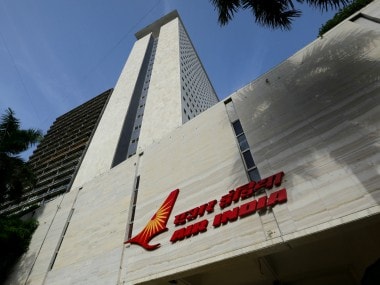
Representational image. Reuters.[/caption]The happiest people in India after this botched attempt would be the employees of the ailing national carrier. They had been resisting the government's attempt in various forums and their wish was fulfilled in a very bizarre manner. Now that the whole exercise has come to an end, the government should rethink its strategy about dealing with the future of Air India.I view this as a blessing in disguise for the government. The government should not think of tinkering with the current package of divestment and make it friendlier to the investor – which actually means compromising its interests. I would suggest that the government should continue to run Air India. As far as an operational team is concerned Air India has the best team in the airline industry. The airline has invested hundreds of crores of rupees in building its IT infrastructure and systems to make it compliant with the Star Alliance. The problem lies with its financial structure.To make Air India viable financially viable, the government should take care of its accumulated losses and current account liabilities. The government should float a special purpose vehicle (SPV) where these losses and the bulk of the current account liabilities are transferred along with non-operating immovable assets. Once this is done Air India can start showing better bottom-line – better than its competitors in the Indian market. When we look at the history of profit margins of various airlines in the world – they range from a low of about 2.5 percent to a high of approximately eight percent.For the Asia-Pacific region, these margins have been higher than the world average. So, at a turnover of nearly Rs 18,000 crore, the airline should be able to make a good profit.This requires that the airline is run by professionals and not general administrators. Administrators are good for policy implementation and not for a competitive business. This is not a comment on the versatility of our IAS officers, who can do anything and everything as assigned to them.While running the airline the government should look at the other subsidiary companies of Air India and find professional and strategic partners to make them more efficient and effective. There is an urgent need to take such a measure in its MRO and airport services. Then, there is a need to revisit its catering and hospitality services. Air India needs to focus on its core competency to turn around. And after a couple of years the government can plan an initial public offering (IPO) and list the airline on the stock market. In three-to-four years’ time, the government can offload some more shares and transfer all the money from the IPO and the share-sale to the SPV to nullify all accumulated losses and current liabilities assigned to the SPV.The government can also ask insurer LIC or any other government agency with the financial strength to support any gap in running day-to-day operations in exchange for shares allotted to them. This will not be a charity by these institutions and they will be able to make good money at the end of few years.The government should be happy that it has got another shot at setting things right at Air India.(The writer is Director at VES Institute of Management, Mumbai)

Bharat Forge, Flying Whales sign pact to develop 60-tonne airships for India’s defence logistics
Air India to cut Delhi-Toronto flight time by 3 hours, resume non-stop services from August 1
South Korea economy grows faster than expected in Q2 as chip exports power recovery
India remains among fastest-growing major economies despite global uncertainty, says RBI Bulletin
Iran war could cut global growth by more than half: World Bank’s chief economist Indermit Gill