


Kantar's Eric Salama: Wouldn't be good for TV ratings collapse in India
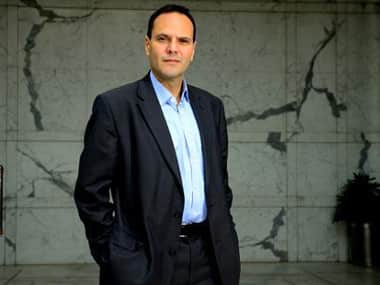
Here is Kantar's CEO, Eric Salama, on what's in store for the company and how it plans to address the TAM issue.

TAM is once again caught between a rock and a hard place. This time, it's because of the new guidelines on TV ratings agencies that were approved by the Union cabinet last week. Among other things, the guidelines mandate that no investor can have more than 10 percent equity holding in both ratings agencies and a broadcast or advertising company. Remember, TAM is a 50:50 Joint Venture between WPP-owned Kantar and Nielsen. Here, Kantar's CEO Eric Salama talks to Storyboard editor Anant Rangaswami on what's in store for the company and how it plans to address this issue.
 To begin with, can we have your top line reactions to the guidelines?
Our only interest is in creating and delivering a system of ratings that serves all the stake-holders, broadcasters, advertisers and the agencies. We've already adopted a number of the TRAI guidelines that come through in the cabinet regulation. And so, we agree with much in there. But there are two things that strike me as unfair and unworkable. The 30- day timeline is an unworkable timeline. There's no way that change can happen in that space of time. And I think the cross-ownership is something that shouldn't be in there because, it's not in the interest of the industry, and isn't something that will promote the most competition or the best service for the Indian industry.
 More from Brands
What are your reactions to the decision on cross-ownership?
It's not a good idea because it's not something that is an issue in India, and it's not an issue for us anywhere in the world. It's a red-herring that has been introduced. Even one of the companies that BARC wants to work with, called Mediametrie, has got an ownership stake from Publicis and Omnicom. Now, I don't think that Publicis and Omnicom's ownership stake in Mediametrie affects what Mediametrie does from a professional point of view. And what TAM does is not affected by the ownership stake either. There is no country in the world which has got this kind of cross ownership. It's going to limit competition; it's going to mean the number of companies that are able to do it is much less. And it means that India isn't getting the best in terms of what's available from around the world.
Is there any other country where they have such a restriction?
There's no other country in which we operate... To my knowledge, there's no country in the world which has got limits of cross-ownership of this kind.
If there is no change in the 30-day deadline, what do you foresee would happen?
If things stay exactly as they are, then in theory, the industry could have no ratings at the end of 30 days, which I think is a disaster for the industry. And I think most of the stakeholders within the industry believe that. It's in no one's interest to have no ratings. Although, I think that some in India who would like to see that kind of chaos actually ensue in the marketplace. But anyone who actually cares about the industry, and who cares about media in India wouldn't want that to happen.
Have you had any reactions from users of TAM? What are they saying?
I have spoken to some of the stakeholders, and obviously, the people within the TAM business have spoken extensively to the stakeholders. And I think almost unanimously that the 30-days should come out. That it's unworkable. That it wouldn't be good for ratings collapse in India. But clearly, there are some voices who would quite like the chaos for their own reasons. Not for reasons to do with the good well being of the industry but for other reasons.
In an ideal world, what would you like to see different in the guidelines?
I think in an ideal world, we welcome competition. And we welcome guidelines. In an ideal world, there wouldn't be limit on cross-ownership because it serves no purpose whatsoever. In an ideal world, we wouldn't be the political cricket ball that everybody tries to hit around the park; which is what's happening at the moment. People who don't like ratings try and hit TAM. People who've got different agendas try and hit TAM. So I would like there to be a debate amongst people who really care about the media industry within India as to what should be done going forward. Both TAM and we welcome competition in the marketplace. We welcome the setup of BARC. The BARC structure is a structure that we work with in many markets of the world. In markets like the UK, we have something that's very similar to BARC, and we work very successfully with BARC. We work with those types of setups. And I think a fully functioning BARC which is self-funded and which represents the interest of all of the stakeholders, the broadcasters, the advertisers, the agencies, would be a good thing for the industry, and by implication, for us as well.
Eric, can you tell us your immediate plans?
We are considering what we ought to be doing in all of this. Our sole focus is on delivering a really good service to the industry. We have plans to expand the panel which we would like to get on with. But obviously, the cross-ownership clause makes it impossible for us to get on and do that. But we will continue with the service of the quality that we know.
Unconnected to the guidelines, Digvijay Singh, a senior Congress party functionary tweeted this, "@digvijaya_28:Is it a fact that TAM was paid a huge sum to upgrade Modi's TRP ratings and reduce Rahul Gandhi's TRP ratings ?" What do you have to say on this?
It's an outrageous libelous slur. There's no truth in it whatsoever. Politics ought to stay out of this business. We're not a political cricket ball to be hit in all kinds of directions. We don't take sides with anyone. Not with any company, not with any agency, not with anybody, and not with any political party. There's no truth in it whatsoever. And I did reply to those tweets yesterday. Because I think there are people who are playing with the livelihood of an industry and the representation of individuals, and they ought to be ashamed of themselves.
Anant Rangaswami was, until recently, the editor of Campaign India magazine, of which Anant was also the founding editor. Campaign India is now arguably India's most respected publication in the advertising and media space. Anant has over 20 years experience in media and advertising. He began in Madras, for STAR TV, moving on as Regional Manager, South for Sony’s SET and finally as Chief Manager at BCCL’s Times Television and Times FM. He then moved to advertising, rising to the post of Associate Vice President at TBWA India. Anant then made the leap into journalism, taking over as editor of what is now Campaign India's competitive publication, Impact. Anant teaches regularly and is a prolific blogger and author of Watching from the sidelines.

IEA predicts major oil surplus in 2027 as Hormuz reopening sparks supply rebound
CNN-News18 Launches #CNNNews18OneLess, Inspiring India to Turn Small Actions into Big Environmental Impact
Sensex crashes over 1,000 points; Nifty tumbles 359 points in late sell-off
Hindware wins case against Google, Delhi HC fines tech giant Rs 30 lakh for trademark infringement
Best Ways to Get Exposure to Gold in India?