


WHO Summit reveals nine out of 194 countries keeping pledge to eradicate hepatitis by 2030
Only nine of 194 countries which pledged last year to eradicate hepatitis by 2030 are working towards that goal,

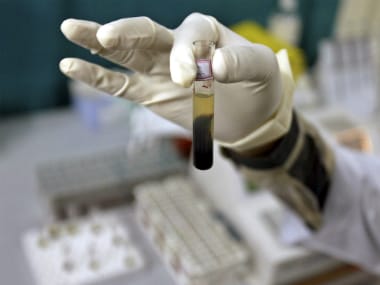
Representational image. Reuters[/caption]Host Brazil promoted its successful widespread testing strategy, which has seen 28 million screenings carried out in the last six years, aiming to reach 200 million by 2030 to cover almost its entire population. "These results bring hope that the elimination of hepatitis can and will become a reality," said Gottfried Hirnschall, director of WHO's department of HIV and global hepatitis program.Access to treatment was also discussed, after the WHO said on Tuesday a record three million people received hepatitis C treatment in the last two years, and 2.8 million received type B treatment in 2016. But millions are still denied breakthrough treatments such as sofosbuvir and daclatasvir which have a 95 percent success rate and work in 12 weeks.For humanitarian organisation Medecins Sans Frontieres (Doctors Without Borders), the solution is comparable generics. "Governments must use every tool in their toolbox to fight for access to lower-priced generics," said Jessica Burry, pharmacist for MSF's Access Campaign, suggesting governments should "issue compulsory licenses" when patents block access.There are 325 million confirmed hepatitis cases worldwide but the estimated diagnosis rates for hepatitis B and C, two of five types, are just 10 and 20 percent respectively.

US set to announce new tariff plan as temporary 10% duty nears expiry
India rejects Pakistan's 'baseless' claims at Asean, says Indus Waters Treaty to remain on hold
Indian trucker arrested in US over alleged theft of $3 million worth of tungsten powder
Austria turns Hitler’s birthplace into a police station 81 years after his death: 5 things to know
Nawaz Sharif wants to become prime minister of PoK — but laws framed by Pakistan disqualify him