


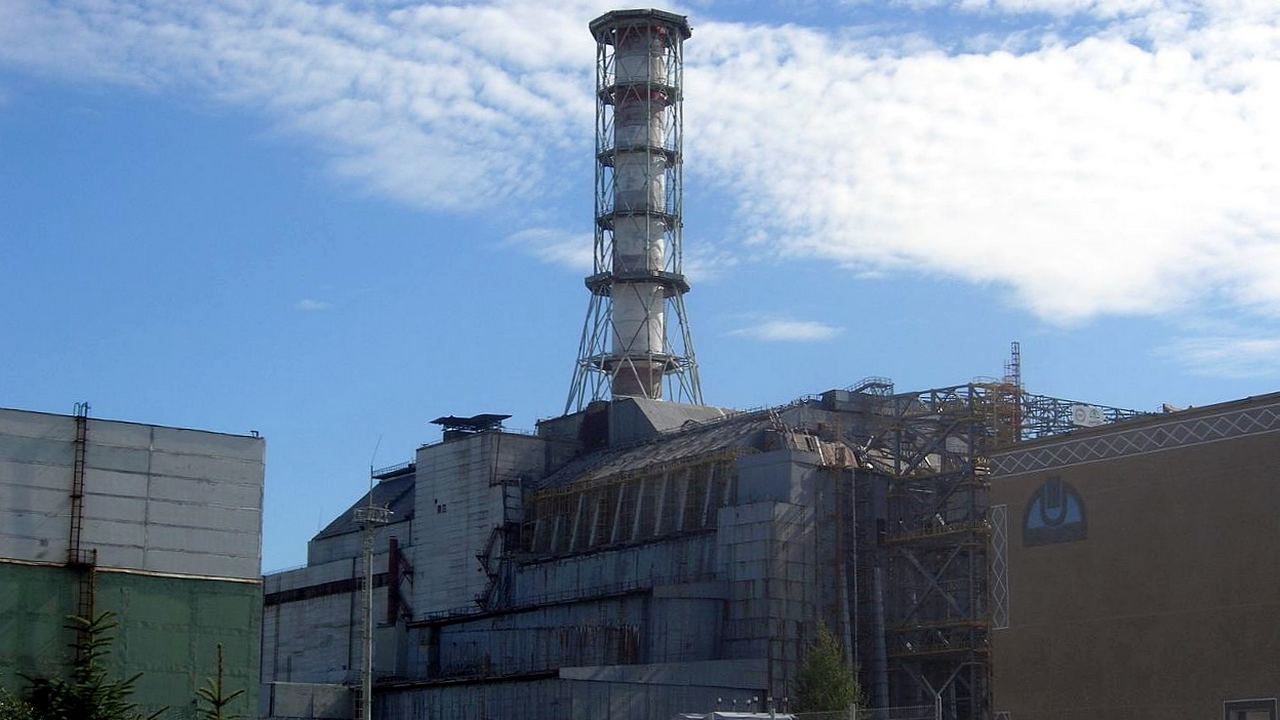
The Chernobyl power plant. Image credit: Wikipedia[/caption]Ten years later, the cleanup is far from finished at the disabled plant, which is operated by the Tokyo Electric Power Coy. To keep the three damaged reactor cores from melting, cooling water is pumped through them continuously. The water is then sent through a powerful filtration system that is able to remove all of the radioactive material except for tritium, an isotope of hydrogen that experts say is not harmful to human health in small doses.There are now about 1.25 million tons of wastewater stored in more than 1,000 tanks at the plant site. The water continues to accumulate at a rate of about 170 tons a day, and releasing all of it is expected to take decades.In 2019, the Japanese Ministry of Economy, Trade and Industry proposed disposing of the wastewater either by gradually releasing it into the ocean or by allowing it to evaporate. The International Atomic Energy Agency said last year that both options were “technically feasible.” Nuclear power plants around the world routinely discharge treated wastewater containing tritium into the sea.But the Japanese government’s plan faces strong opposition from local officials and fishing crews, who say that it would add to consumer fears about the safety of Fukushima seafood. Catch levels in the area are already a small fraction of what they were before the disaster.After meeting with Suga last week, Hiroshi Kishi, head of the National Federation of Fisheries, told reporters that his group was still opposed to the ocean release. Neighboring countries including China and South Korea have also expressed concerns.Responding to Japan’s decision, the U.S. State Department said in a statement, “In this unique and challenging situation, Japan has weighed the options and effects, has been transparent about its decision, and appears to have adopted an approach in accordance with globally accepted nuclear safety standards.”Jennifer Jett and Ben Dooley. c.2021 The New York Times Company
