


US removes Nepal Maoists from its list of terrorists
The US State Department has removed the Communist Party of Nepal (Maoist) from its list of terrorist organisations.

Washington: The US State Department has removed the Communist Party of Nepal (Maoist) from its list of terrorist organisations, RIA Novosti reported."The (State) Department has determined that the CPN(M) is no longer engaged in terrorist activity that threatens the security of US nationals or US foreign policy," a State Department press release said.[caption id="attachment_447156" align="alignleft" width="380"]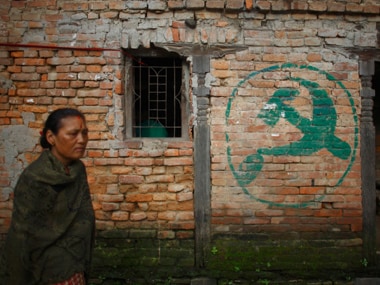 Reuters[/caption]The de-listing, which removes restrictions on the Maoists doing business with US entities and vice versa, is an acknowledgement of the Communist Party's election victories in recent years and the steps it has taken "to dismantle its apparatus for the conduct of terrorist operations".RIA Novosti said the Maoists launched a bloody insurgency against Nepal's royal government in 1996. By 2005, the two sides had fought to a standstill and a ceasefire was declared.Months later, facing a wave of mass demonstrations against the monarchy, the king abdicated and Nepal was subsequently declared a federal republic.In 2008, the Maoists, who had agreed to participate in the parliamentary process, won a clear victory in national voting and formed a coalition government.Despite bitter power-sharing disputes that toppled successive governments, the Maoists have refrained from re-launching their insurgency.The current prime minister, Baburam Bhattarai, a Maoist, took office in August 2011.IANS

Indian trucker arrested in US over alleged theft of $3 million worth of tungsten powder
Austria turns Hitler’s birthplace into a police station 81 years after his death: 5 things to know
Nawaz Sharif wants to become prime minister of PoK — but laws framed by Pakistan disqualify him
Fake jobs, tourist visas: Inside Russia’s vast network luring foreigners to fight Ukraine war
As Pakistan eyes American dollar for Iran mediation, economists sound the alarm: ‘It can buy time, not growth’