


Uncertainty continues in Sri Lanka as President Maithripala Sirisena dissolves Parliament; all eyes now on Supreme Court
The Sri Lanka Supreme Court's determination of any case brought before it may be key in deciding how long the current crisis will continue.

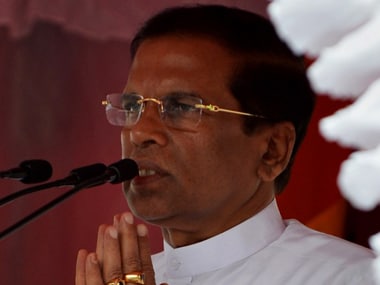
File image of President of Sri Lanka Maithripala Sirisena. AFP[/caption]Norway, the United States, Canada and Australia have raised concerns around the dissolution of the Sri Lankan Parliament in official statements.The past week has seen uneasy calm as Sirisena has continued to appoint new Cabinet ministers, despite several legal analysts decrying the appointments, including that of Sri Lanka Podujana Peramuna MP Mahinda Rajapaksa as prime minister, as unconstitutional. However, the negotiations to coerce MPs to switch over were only partly successful, and reports emerged that Sirisena had been unable to muster a majority in Parliament. This was particularly so after UNP parliamentarian Palitha Ranga Bandara leaked several audio clips of MP and UPFA loyalist SB Dissanayake trying to convince him to switch allegiances. UNP MP Ruwan Wijewardene also tweeted that parliamentarians were being offered money to cross over.In a UPFA press conference, Dissanayake admitted that money had been offered to Bandara, claiming that he had "earlier agreed to accept Rs 200 million and had come down to Rs 80 million". He added that offering ministerial portfolios was not a bribe.Sirisena subsequently appointed Dissanayake the Chief Government Whip.Meanwhile, citizens continued to gather in protest at Kollupitiya, calling for Parliament to re-convene and for a floor vote to be called.The current crisis in Sri Lanka was precipitated when President Sirisena withdrew the UPFA from the coalition government, the result, he said, of differences of policy and culture between himself and UNP leader Ranil Wickremesinghe, the former prime minister.At a "Jana Mahimaya" rally organised by the UPFA on 5 November, the president levelled several homophobic comments towards his former allies, referring to the UNP as leading a "butterfly life". In Sinhala, the word 'samanala' (butterfly) is used to describe the LGBTIQ community, often in a derogatory way. The comments at the rally drew condemnation from the public.In a returning salvo, UNP MP and minister of mass media and finance Mangala Samaraweera tweeted, “I would rather be a butterfly than a leech, Mr President!!”The next day, members of the LGBTIQ community, including LGBTIQ rights organisation Equal Ground, joined the citizens' protest in Kollupitiya. On social media, including Twitter and Facebook, many updated their profile photos or posted photos of butterflies in solidarity.As the uncertainty in Sri Lanka continues, the focus of attention remains on the Supreme Court. Its determination of any case brought before it may be key in deciding how long the current crisis will continue.

US set to announce new tariff plan as temporary 10% duty nears expiry
India rejects Pakistan's 'baseless' claims at Asean, says Indus Waters Treaty to remain on hold
Indian trucker arrested in US over alleged theft of $3 million worth of tungsten powder
Austria turns Hitler’s birthplace into a police station 81 years after his death: 5 things to know
Nawaz Sharif wants to become prime minister of PoK — but laws framed by Pakistan disqualify him