


Trans-Pacific Partnership: Trade ministers commit to go ahead without United States
Pacific Rim trade ministers meeting in Vietnam committed on Sunday to advance with trade pact after the United States pulled out.

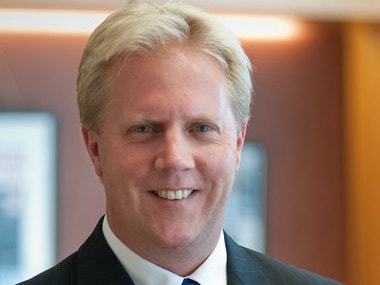
File image of New Zealand trade minister Todd McClay. Flickr[/caption]Since the American withdrawal, Japan and New Zealand have been spearheading efforts to revive the deal.In its current form, the TPP requires United States participation before it can go into effect. That means the remaining countries would need to change the rules for any deal to go ahead, and it would be significantly smaller without the involvement of the world's largest economy.The 11 countries represent roughly 13.5 percent of the global economy, according to the World Bank.The trade ministers said in a statement that they agreed to launch a process to assess options to bring the agreement into force "expeditiously, including how to facilitate membership for the original signatories."The ministers have tasked their trade officials to present the assessment to their leaders when they meet for an annual Asia Pacific Economic Cooperation summit in Vietnam in November, which will also include Trump, Russian president Vladimir Putin and Chinese president Xi Jinping.They also underlined their vision for the TPP to expand to include other economies, saying such efforts would address concerns about protectionism and contribute to maintaining open markets, strengthening the rules-based international trading system, increasing world trade and raising living standards.Vietnam and Malaysia had been expected to be beneficiaries from the original TPP with greater access to United States markets and investments. The TPP was championed by former president Barack Obama and was seen as a counterbalance to China's growing influence in the region.United States Trade Representative Robert Lighthizer, making his international debut since taking office a week ago, defended Trump's decision to pull out of the TPP."We expect to engage with members here in many cases on bilateral basis," he told reporters. "The president made the decision, which I certainly agree with, that bilateral negotiation is better for the United States than multilateral negotiations.""But we certainly expect to stay engaged and I believe that at some point there'll be series of bilateral agreements with willing partners in this part of the world," Lighthizer added.He rejected criticism that the Trump administration was embracing trade protectionism. "Our view is that we want free trade, we want fair trade, we want a system that leads to greater market efficiencies in the world," Lighthizer said.The China-led 16-member Regional Comprehensive Economic Partnership will meet on Monday in Hanoi to further their discussions on a separate deal seen as an alternative to the TPP. It is expected to be finalized by the end of 2017."I think confidence we have shown in this meeting for the multilateral trading system for regional economic cooperation within Asia-Pacific Economic Cooperation can be a very good and strong signal that we are united and we are steadfast in fighting trade protectionism and reducing trade risks," said Chinese deputy trade minister Wang Shouwen.

Epstein's model scout Daniel Siad found dead at his home near Paris amid rape case trial
South China Sea tensions rise as China claims it expelled Philippine ships
Choke terror funding, keep international shipping lanes safe: Jaishankar at Asean Regional Forum
After Australia, New Zealand signs defence pact with Papua New Guinea as China expands in Indo-Pacific
Pakistan's deep state weaponising LeT to counter Asim Munir critic Maulana Fazlur Rehman: Report