
Advertisement


Sections
'State actors working with nuclear traffickers present greatest risk': A recap of the Nuclear Security Summit so far
The Nuclear Security Summit is a flagship event of US President Barack Obama’s tenure, and the second time the US has hosted it

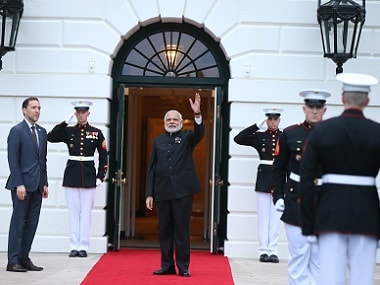
Prime Minister Narendra Modi gave a stirring speech on the first day of the 2016 Nuclear Security Summit being held in Washington, DC, urging nations to pay more attention to the threats posed by terrorism, especially in light of the Brussels attacks last week where 35 people were killed.[caption id="attachment_2707278" align="alignleft" width="380"]![Prime Minister Narendra Modi at the White House. AP]() Prime Minister Narendra Modi at the White House. AP[/caption]“We are no longer looking for a man in a cave, but we are hunting for a terrorist in a city with a computer or a smartphone. State actors working with nuclear traffickers and terrorists present the greatest risk,” he told delegates at the nuclear summit, which he is attending for the first time.Noting that terror has evolved, Modi said terrorists are using 21st century technology. “But our responses are rooted in the past. The reach and supply chains of terrorism are global, but genuine cooperation between nation states is not. Drop the notion that terrorism is someone else’s problem and that ‘his’ terrorist is not ‘my’ terrorist. Terrorism is globally networked. But we still act only nationally to counter this threat,” the PM told the international community.The Nuclear Security Summit is a flagship event of US President Barack Obama’s tenure, and the second time the US has hosted it. A total of 50 representatives are attending the event, including French President François Hollande, British PM David Cameron, Turkish President Recep Tayyip Erdogan, Japanese Prime Minister Shinzo Abe, Canadian Premier Justin Trudeau, South Korean President Park Geun-hye, etc.And while Modi is likely to interact directly with Obama on a number of occasions over the two days, no official bilateral meeting has been announced by either side. “The summit would deliberate on the crucial issue of threat to nuclear security caused by nuclear terrorism. Leaders would discuss ways and measures through which to strengthen the global nuclear security architecture, especially to ensure that non-state actors do not get access to nuclear material,” Modi had said before embarking on the tour.However, he did meet with New Zealand Premier John Key and discussed bilateral ties, trade and tourism.The Pyongyang puzzleOf special interest to the delegates is the question of how to stop an increasingly belligerent North Korea. Pyongyang has been flexing its nuclear muscle in recent weeks, posturing aggressively, conducting missile tests and threatening to attack neighbours Japan and South Korea, and also the US. President Obama is hopeful that in the final months of his eight-year Presidency, he would be able to get help from Seoul and Tokyo in ensuring North Korea is free of nuclear weapons.“We are united in our efforts to deter and defend against North Korean provocations,” Obama said at a press briefing, flanked by Geun-hye and Abe. “We recognised that our security is linked, and that we have to meet together to meet this challenge.”Islamic threatsFollowing the Brussels attacks, there emerged news about the Islamic State terrorists acquiring nuclear armed material. The possibility of nuclear weapons in the hands of IS terrorists also came up at the summit.But the US has said that the possibility is quite remote. "We don't have any indications that it was part of a broader plan to acquire nuclear materials, and we don't have any information that a broader plot exists," said Laura Holgate, special assistant to the president and senior director for WMD terrorism and threat reduction.According to deputy national security advisor Ben Rhodes, the nuclear security summit provides an opportunity both to look at securing nuclear materials so that terrorists are not able to acquire them because of security arrangements."And also how we are also targeting IS and countering them more broadly. So again, both looking at denying access to the most dangerous materials and going on offense against IS broadly. We've seen over the years different terrorist organisations have ambitions related to acquiring nuclear materials. We've seen that in their public statements. We've seen that in different cases in terms of their monitoring of nuclear facilities," he said.The no-showsHowever, the event was also marked by the conspicuous absence of Russia, which chose to give the summit a miss. This made breakthroughs on nuclear security unlikely, given Moscow’s vast nuclear stockpile. The snub was not completely unexpected, given the long-running rift between Russia and the US. But the White House pointed out that Russia has nevertheless cooperated on nuclear issues, not least its role in the talks with Iran over curbing its nuclear programme. "You want Russia at the table on issues of nuclear security," Rhodes said. "They only isolate themselves by not attending summits like this."Moreover, Iran wasn't invited to the event. A country once thought to be pursuing a controversial and illegitimate nuclear programme, has since been brought in line with international norms through last year's historic nuclear deal, but Tehran was missing from the guest list, though many felt, having them attend could have strengthened international nuclear security.
Prime Minister Narendra Modi at the White House. AP[/caption]“We are no longer looking for a man in a cave, but we are hunting for a terrorist in a city with a computer or a smartphone. State actors working with nuclear traffickers and terrorists present the greatest risk,” he told delegates at the nuclear summit, which he is attending for the first time.Noting that terror has evolved, Modi said terrorists are using 21st century technology. “But our responses are rooted in the past. The reach and supply chains of terrorism are global, but genuine cooperation between nation states is not. Drop the notion that terrorism is someone else’s problem and that ‘his’ terrorist is not ‘my’ terrorist. Terrorism is globally networked. But we still act only nationally to counter this threat,” the PM told the international community.The Nuclear Security Summit is a flagship event of US President Barack Obama’s tenure, and the second time the US has hosted it. A total of 50 representatives are attending the event, including French President François Hollande, British PM David Cameron, Turkish President Recep Tayyip Erdogan, Japanese Prime Minister Shinzo Abe, Canadian Premier Justin Trudeau, South Korean President Park Geun-hye, etc.And while Modi is likely to interact directly with Obama on a number of occasions over the two days, no official bilateral meeting has been announced by either side. “The summit would deliberate on the crucial issue of threat to nuclear security caused by nuclear terrorism. Leaders would discuss ways and measures through which to strengthen the global nuclear security architecture, especially to ensure that non-state actors do not get access to nuclear material,” Modi had said before embarking on the tour.However, he did meet with New Zealand Premier John Key and discussed bilateral ties, trade and tourism.The Pyongyang puzzleOf special interest to the delegates is the question of how to stop an increasingly belligerent North Korea. Pyongyang has been flexing its nuclear muscle in recent weeks, posturing aggressively, conducting missile tests and threatening to attack neighbours Japan and South Korea, and also the US. President Obama is hopeful that in the final months of his eight-year Presidency, he would be able to get help from Seoul and Tokyo in ensuring North Korea is free of nuclear weapons.“We are united in our efforts to deter and defend against North Korean provocations,” Obama said at a press briefing, flanked by Geun-hye and Abe. “We recognised that our security is linked, and that we have to meet together to meet this challenge.”Islamic threatsFollowing the Brussels attacks, there emerged news about the Islamic State terrorists acquiring nuclear armed material. The possibility of nuclear weapons in the hands of IS terrorists also came up at the summit.But the US has said that the possibility is quite remote. "We don't have any indications that it was part of a broader plan to acquire nuclear materials, and we don't have any information that a broader plot exists," said Laura Holgate, special assistant to the president and senior director for WMD terrorism and threat reduction.According to deputy national security advisor Ben Rhodes, the nuclear security summit provides an opportunity both to look at securing nuclear materials so that terrorists are not able to acquire them because of security arrangements."And also how we are also targeting IS and countering them more broadly. So again, both looking at denying access to the most dangerous materials and going on offense against IS broadly. We've seen over the years different terrorist organisations have ambitions related to acquiring nuclear materials. We've seen that in their public statements. We've seen that in different cases in terms of their monitoring of nuclear facilities," he said.The no-showsHowever, the event was also marked by the conspicuous absence of Russia, which chose to give the summit a miss. This made breakthroughs on nuclear security unlikely, given Moscow’s vast nuclear stockpile. The snub was not completely unexpected, given the long-running rift between Russia and the US. But the White House pointed out that Russia has nevertheless cooperated on nuclear issues, not least its role in the talks with Iran over curbing its nuclear programme. "You want Russia at the table on issues of nuclear security," Rhodes said. "They only isolate themselves by not attending summits like this."Moreover, Iran wasn't invited to the event. A country once thought to be pursuing a controversial and illegitimate nuclear programme, has since been brought in line with international norms through last year's historic nuclear deal, but Tehran was missing from the guest list, though many felt, having them attend could have strengthened international nuclear security.
 Prime Minister Narendra Modi at the White House. AP[/caption]“We are no longer looking for a man in a cave, but we are hunting for a terrorist in a city with a computer or a smartphone. State actors working with nuclear traffickers and terrorists present the greatest risk,” he told delegates at the nuclear summit, which he is attending for the first time.Noting that terror has evolved, Modi said terrorists are using 21st century technology. “But our responses are rooted in the past. The reach and supply chains of terrorism are global, but genuine cooperation between nation states is not. Drop the notion that terrorism is someone else’s problem and that ‘his’ terrorist is not ‘my’ terrorist. Terrorism is globally networked. But we still act only nationally to counter this threat,” the PM told the international community.The Nuclear Security Summit is a flagship event of US President Barack Obama’s tenure, and the second time the US has hosted it. A total of 50 representatives are attending the event, including French President François Hollande, British PM David Cameron, Turkish President Recep Tayyip Erdogan, Japanese Prime Minister Shinzo Abe, Canadian Premier Justin Trudeau, South Korean President Park Geun-hye, etc.And while Modi is likely to interact directly with Obama on a number of occasions over the two days, no official bilateral meeting has been announced by either side. “The summit would deliberate on the crucial issue of threat to nuclear security caused by nuclear terrorism. Leaders would discuss ways and measures through which to strengthen the global nuclear security architecture, especially to ensure that non-state actors do not get access to nuclear material,” Modi had said before embarking on the tour.However, he did meet with New Zealand Premier John Key and discussed bilateral ties, trade and tourism.The Pyongyang puzzleOf special interest to the delegates is the question of how to stop an increasingly belligerent North Korea. Pyongyang has been flexing its nuclear muscle in recent weeks, posturing aggressively, conducting missile tests and threatening to attack neighbours Japan and South Korea, and also the US. President Obama is hopeful that in the final months of his eight-year Presidency, he would be able to get help from Seoul and Tokyo in ensuring North Korea is free of nuclear weapons.“We are united in our efforts to deter and defend against North Korean provocations,” Obama said at a press briefing, flanked by Geun-hye and Abe. “We recognised that our security is linked, and that we have to meet together to meet this challenge.”Islamic threatsFollowing the Brussels attacks, there emerged news about the Islamic State terrorists acquiring nuclear armed material. The possibility of nuclear weapons in the hands of IS terrorists also came up at the summit.But the US has said that the possibility is quite remote. "We don't have any indications that it was part of a broader plan to acquire nuclear materials, and we don't have any information that a broader plot exists," said Laura Holgate, special assistant to the president and senior director for WMD terrorism and threat reduction.According to deputy national security advisor Ben Rhodes, the nuclear security summit provides an opportunity both to look at securing nuclear materials so that terrorists are not able to acquire them because of security arrangements."And also how we are also targeting IS and countering them more broadly. So again, both looking at denying access to the most dangerous materials and going on offense against IS broadly. We've seen over the years different terrorist organisations have ambitions related to acquiring nuclear materials. We've seen that in their public statements. We've seen that in different cases in terms of their monitoring of nuclear facilities," he said.The no-showsHowever, the event was also marked by the conspicuous absence of Russia, which chose to give the summit a miss. This made breakthroughs on nuclear security unlikely, given Moscow’s vast nuclear stockpile. The snub was not completely unexpected, given the long-running rift between Russia and the US. But the White House pointed out that Russia has nevertheless cooperated on nuclear issues, not least its role in the talks with Iran over curbing its nuclear programme. "You want Russia at the table on issues of nuclear security," Rhodes said. "They only isolate themselves by not attending summits like this."Moreover, Iran wasn't invited to the event. A country once thought to be pursuing a controversial and illegitimate nuclear programme, has since been brought in line with international norms through last year's historic nuclear deal, but Tehran was missing from the guest list, though many felt, having them attend could have strengthened international nuclear security.
First Published:Apr 01, 2016, 12:55:41 IST
Advertisement
Advertisement

US set to announce new tariff plan as temporary 10% duty nears expiry
The White House said a tariff announcement will be made later on Thursday, with the Trump administration preparing fresh duties on around 60 economies, including India, China and the European Union.
2 min read
India rejects Pakistan's 'baseless' claims at Asean, says Indus Waters Treaty to remain on hold
India accused Pakistan of misusing the Asean Regional Forum to spread false narratives, reiterating that the Indus Waters Treaty will remain suspended until Islamabad credibly and irrevocably ends cross-border terrorism.
1 min read
Indian trucker arrested in US over alleged theft of $3 million worth of tungsten powder
A 39-year-old Indian national living illegally in the US has been arrested in California after authorities alleged he stole a truck carrying nearly $3 million worth of hazardous tungsten powder.
1 min read
Austria turns Hitler’s birthplace into a police station 81 years after his death: 5 things to know
Austrian authorities inaugurated a police station at the birthplace of Adolf Hitler after years of debate around the site’s troubled legacy.
3 min read
Nawaz Sharif wants to become prime minister of PoK — but laws framed by Pakistan disqualify him
Former Pakistani Prime Minister Nawaz Sharif has said that he would ask his brother, Prime Minister Shehbaz Sharif, to appoint him as the Prime Minister of Pakistan-occupied Jammu and Kashmir (POJK). But the Constitution bars him from making such a move.
2 min read
Advertisement
Advertisement