


Species at the brink of extinction may vanish without fossil trace: Study
Many animals at the brink of extinction may disappear during the ongoing sixth mass-extinction event without leaving behind any permanent fossil record, according to a new study.

Washington: Many animals at the brink of extinction may disappear during the ongoing sixth mass-extinction event without leaving behind any permanent fossil record, according to a new study."Comparing the current biodiversity crisis, often called the 'sixth extinction,' with those of the geological pastrequires equivalent data," said Roy Plotnick, professor at the University of Illinois at Chicago.[caption id="attachment_2690298" align="alignleft" width="380"]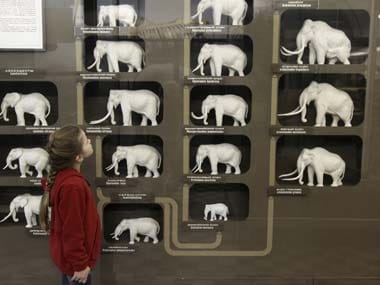 Representational image. Reuters[/caption]Researchers compared the "Red List" of endangered species with several ecological databases of living species and three paleontological databases of catalogued fossils.They ran a statistical analysis to indicate which threatened species were most likely to disappear with no mark of their existence.More than 85 per cent of the mammal species at high risk of extinction lack a fossil record, researchers found.Those at highest risk have about half the probability of being incorporated into the fossil record compared to those at lower risk.Animals least likely to be found as fossils are "the small, cute and fuzzy ones, like rodents and bats," Plotnick said."Body size is an obvious factor - bigger things tend to leave a fossil record, as do things with larger geographical ranges," he said.Viewed from the perspective of the fossil record alone, the magnitude of the current mammal die-off thus appears markedly reduced.The picture may be even more distorted for other land-dwelling vertebrates - only 3 per cent of today's threatened bird species and 1.6 per cent of threatened reptile species have a known fossil record.Comparing the scale of the current extinction episode to earlier extinctions that are mostly calculated from the fossil record of hard-shelled marine invertebrates, is particularly problematic, although ancient extinctions may also be underestimated by contemporary paleontologists, Plotnick said.Nevertheless, fossils will provide the only reliable record of life on Earth for posterity, he said."There are species going extinct today that have never been described. Others are going extinct that are known only because someone wrote it down," Plotnick said.All such species would thus be unknown in the far future, he said, if the written historical record is lost - as itmight well be.The fossil record is much more durable than any human record, Plotnick said."Clay tablets last longer than books. And who today can read an 8-inch floppy?" he asked."If we put everything on electronic media, will those records exist in a million years? The fossils will," he said.PTI

Choke terror funding, keep international shipping lanes safe: Jaishankar at Asean Regional Forum
After Australia, New Zealand signs defence pact with Papua New Guinea as China expands in Indo-Pacific
Pakistan's deep state weaponising LeT to counter Asim Munir critic Maulana Fazlur Rehman: Report
No premium queues, 30-minute target: What changes for Indian passport applicants in UAE
'We don't need straits': Trump says Iran war isn't about Hormuz as US strikes for 12th night