


South Korea’s oldest nuclear plant to halt operations on its 40th birthday
South Korea's oldest nuclear reactor, the 40-year-old Kori No. 1, will halt operations at midnight on Sunday

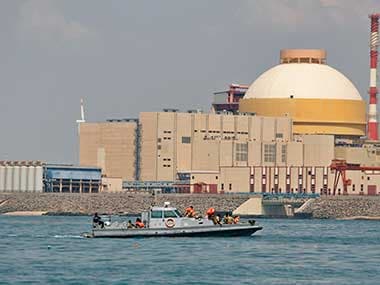
Representational image.[/caption]But a scandal over forged certificates for spare parts in 2012 and the 2011 Fukushima meltdown in neighbouring Japan have undermined public support for nuclear power, while the new left-leaning government aims to speed up plans to move away from both coal and nuclear.Another 11 of South Korea's 25 reactors are set to shut down by 2030 as they reach the end of their operating lives, although some may push to have their operating licenses renewed.With the country still setting its long-term energy plans, it is unclear how many will be replaced by new reactors.Since Kori No.1 began operations on June 19, 1977, the 587-megawatt reactor has generated enough electricity to meet the entire country's current demand for around 100 days, according to Reuters calculations and data from the Nuclear Safety and Security Commission."I feel sad because it's like telling me to bury your own child as he turned 40," 88-year-old Lee Chang-kun, who worked as an engineer at the Kori No.1 plant, told Reuters.The reactor was built by Korea Electric Power Corp (KEPCO), based on technology by now bankrupt U.S. firm Westinghouse.Suh Kyun-ryul, professor of nuclear engineering at Seoul National University, said the closure would set the stage for South Korea's aim of scaling back nuclear power.An energy ministry official estimated it will take at least 15 years to fully dismantle Kori No. 1, at a cost of about 644 billion won ($571 million).Some experts hope that shutting the reactor may help South Korea catch up to the United States, Japan and Germany in decommissioning plants.The global decommissioning market is expected to grow to about $980 billion by 2050, according to a report by the Korea Atomic Energy Research Institute."The Kori No. 1 closure could work as a testbed for dismantling nuclear power plants," said Kim Chang-lak, a nuclear engineering professor at KEPCO International Nuclear Graduate School."It should help efforts to standardise technology for other Korean nuclear reactors and tap into the global market."

No premium queues, 30-minute target: What changes for Indian passport applicants in UAE
'We don't need straits': Trump says Iran war isn't about Hormuz as US strikes for 12th night
Iran claims to stop three oil tankers transiting Strait of Hormuz
Globe at a glance: From Houthis striking Saudi tankers in Red Sea to wildfires in Europe
Houthis claim responsibility for attack on two Saudi oil tankers in Red Sea as a new chokepoint emerges