
Advertisement


Sections
Rahul Gandhi in New York takes aim at 'divisive' forces that are 'ruining' India's reputation
Congress Vice President Rahul Gandhi took aim at India’s ruling BJP government - without naming anyone - in his final gig at a New York Times Square location capping a two week tour of the US that stretched from Silicon Valley to Washington D.C and New York.

Congress Vice President Rahul Gandhi took aim at India’s ruling BJP government - without naming anyone - in his final gig at a New York Times Square location capping a two week tour of the US that stretched from Silicon Valley to Washington D.C and New York."Peace and harmony in India are being challenged. India’s reputation in the world is being ruined. People here are asking me what’s going on in your country”, Gandhi said addressing a gaggle of overseas Congress workers at the Marriott Marquis hotel in Times Square.[caption id="attachment_4037633" align="alignleft" width="380"]![File image of Congress vice-president Rahul Gandhi. PTI]() Rahul Gandhi in the US[/caption]Rahul Gandhi built on a solid opening by India’s original telecom czar Sam Pitroda at the New York event. “Contrary to what you may be led to believe, Rahul Gandhi is a concerned, committed leader, he thinks a lot, he is analytical and there’s a lot of work to be done to counter what’s going on in our country. It concerns me deeply”, said Pitroda in a warm and hard hitting re-introduction of Rahul Gandhi.New York is not the first US location where Rahul Gandhi chose to skewer status quo in India - his Berkeley address began with an allegorical tale of how the sea goes out before a tsunami and the naive run to get the fish left on the shore. He kept that pressure on in all his public engagements and coming soon after the killing of Bengaluru based journalist Gauri Lankesh, the message hit home.“But how will all this translate to advantage at home?”, is the most common reaction from India and the US. Compare the Congress' fading political footprint with the BJP's rise: Before 2014, the BJP was in power in five states and today the National Democratic Alliance rules 18 out of 29 States; thirteen of those states have a BJP Chief Minister.“He’s quite coherent when he’s not coached”, “Why has it taken this long for him to say all this”, "When these Harvard types are not writing his speeches, he's quite alright" is the chatter we’ve been hearing as crowds streamed out of the Princeton University event and in New York on September 19 and 20.In the last two weeks, Rahul Gandhi has also raised as many questions as he has answered in his carefully choreographed talks at various University campuses in the United States where he took no questions from news media.At Berkeley he clarified that he is willing to be a PM candidate for 2019 but with barely 20 months to go before general elections in India, Gandhi’s “alternative vision” for India is so far looking like a crowdsourcing project - “We are going to build that vision not top down but bottom up. So we will build that vision by coming to students, coming to other stakeholders and asking them what they think, how should India look at this problem, and how do we deal with this problem…”There were other moments too, breathlessly documented by a new, improved social media team of the Congress Party.In all his speaking engagements, Rahul Gandhi’s themes have been fairly predictable once the Berkeley blueprint was clear - India’s social fabric under stress, lack of jobs making people bend towards polarising powers, the need for an alternative vision for India and (some) mistakes that the Congress made in the run up to the 2014 wallop.But here are the questions Rahul Gandhi leaves behind as he wings back to home turf, with the Gujarat elections looming and the bigger one in 2019:How will the Congress create those jobs to soak up the 35,000 jobs-per-day demand?What is the alternative vision that the Congress proposes to counter the BJP with, what does “bottom-up” mean for a party’s vision and messaging?Whose “arrogance” killed off the Congress’ chances in 2014? Can’t be Manmohan Singh, for sure and the arrogance can’t have a generic fountainhead either, so who led it?Karnataka is a Congress ruled state, one of the last big states still under the Congress. Has law and order broken down? Why no arrests after so many murders of “liberals”?Rahul Gandhi had spoken passionately about rebooting inner party democracy in the Congress and then stopped talking about it completely. “It is a disruptive idea. There’s a lot of pushback”, he said at Princeton. What does that mean? Is that project jettisoned?“Power must be decentralised. Why should the central government decide about a village road? The state must take that call”, Gandhi said at Princeton.People looked at each other, taking the word in. “Decentralisation” and the Congress party?Twitter | @byniknat
Rahul Gandhi in the US[/caption]Rahul Gandhi built on a solid opening by India’s original telecom czar Sam Pitroda at the New York event. “Contrary to what you may be led to believe, Rahul Gandhi is a concerned, committed leader, he thinks a lot, he is analytical and there’s a lot of work to be done to counter what’s going on in our country. It concerns me deeply”, said Pitroda in a warm and hard hitting re-introduction of Rahul Gandhi.New York is not the first US location where Rahul Gandhi chose to skewer status quo in India - his Berkeley address began with an allegorical tale of how the sea goes out before a tsunami and the naive run to get the fish left on the shore. He kept that pressure on in all his public engagements and coming soon after the killing of Bengaluru based journalist Gauri Lankesh, the message hit home.“But how will all this translate to advantage at home?”, is the most common reaction from India and the US. Compare the Congress' fading political footprint with the BJP's rise: Before 2014, the BJP was in power in five states and today the National Democratic Alliance rules 18 out of 29 States; thirteen of those states have a BJP Chief Minister.“He’s quite coherent when he’s not coached”, “Why has it taken this long for him to say all this”, "When these Harvard types are not writing his speeches, he's quite alright" is the chatter we’ve been hearing as crowds streamed out of the Princeton University event and in New York on September 19 and 20.In the last two weeks, Rahul Gandhi has also raised as many questions as he has answered in his carefully choreographed talks at various University campuses in the United States where he took no questions from news media.At Berkeley he clarified that he is willing to be a PM candidate for 2019 but with barely 20 months to go before general elections in India, Gandhi’s “alternative vision” for India is so far looking like a crowdsourcing project - “We are going to build that vision not top down but bottom up. So we will build that vision by coming to students, coming to other stakeholders and asking them what they think, how should India look at this problem, and how do we deal with this problem…”There were other moments too, breathlessly documented by a new, improved social media team of the Congress Party.In all his speaking engagements, Rahul Gandhi’s themes have been fairly predictable once the Berkeley blueprint was clear - India’s social fabric under stress, lack of jobs making people bend towards polarising powers, the need for an alternative vision for India and (some) mistakes that the Congress made in the run up to the 2014 wallop.But here are the questions Rahul Gandhi leaves behind as he wings back to home turf, with the Gujarat elections looming and the bigger one in 2019:How will the Congress create those jobs to soak up the 35,000 jobs-per-day demand?What is the alternative vision that the Congress proposes to counter the BJP with, what does “bottom-up” mean for a party’s vision and messaging?Whose “arrogance” killed off the Congress’ chances in 2014? Can’t be Manmohan Singh, for sure and the arrogance can’t have a generic fountainhead either, so who led it?Karnataka is a Congress ruled state, one of the last big states still under the Congress. Has law and order broken down? Why no arrests after so many murders of “liberals”?Rahul Gandhi had spoken passionately about rebooting inner party democracy in the Congress and then stopped talking about it completely. “It is a disruptive idea. There’s a lot of pushback”, he said at Princeton. What does that mean? Is that project jettisoned?“Power must be decentralised. Why should the central government decide about a village road? The state must take that call”, Gandhi said at Princeton.People looked at each other, taking the word in. “Decentralisation” and the Congress party?Twitter | @byniknat
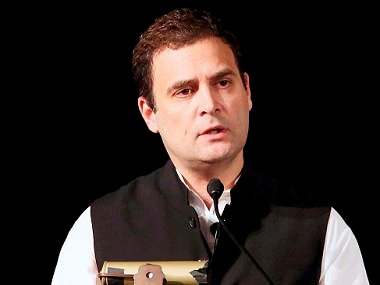 Rahul Gandhi in the US[/caption]Rahul Gandhi built on a solid opening by India’s original telecom czar Sam Pitroda at the New York event. “Contrary to what you may be led to believe, Rahul Gandhi is a concerned, committed leader, he thinks a lot, he is analytical and there’s a lot of work to be done to counter what’s going on in our country. It concerns me deeply”, said Pitroda in a warm and hard hitting re-introduction of Rahul Gandhi.New York is not the first US location where Rahul Gandhi chose to skewer status quo in India - his Berkeley address began with an allegorical tale of how the sea goes out before a tsunami and the naive run to get the fish left on the shore. He kept that pressure on in all his public engagements and coming soon after the killing of Bengaluru based journalist Gauri Lankesh, the message hit home.“But how will all this translate to advantage at home?”, is the most common reaction from India and the US. Compare the Congress' fading political footprint with the BJP's rise: Before 2014, the BJP was in power in five states and today the National Democratic Alliance rules 18 out of 29 States; thirteen of those states have a BJP Chief Minister.“He’s quite coherent when he’s not coached”, “Why has it taken this long for him to say all this”, "When these Harvard types are not writing his speeches, he's quite alright" is the chatter we’ve been hearing as crowds streamed out of the Princeton University event and in New York on September 19 and 20.In the last two weeks, Rahul Gandhi has also raised as many questions as he has answered in his carefully choreographed talks at various University campuses in the United States where he took no questions from news media.At Berkeley he clarified that he is willing to be a PM candidate for 2019 but with barely 20 months to go before general elections in India, Gandhi’s “alternative vision” for India is so far looking like a crowdsourcing project - “We are going to build that vision not top down but bottom up. So we will build that vision by coming to students, coming to other stakeholders and asking them what they think, how should India look at this problem, and how do we deal with this problem…”There were other moments too, breathlessly documented by a new, improved social media team of the Congress Party.In all his speaking engagements, Rahul Gandhi’s themes have been fairly predictable once the Berkeley blueprint was clear - India’s social fabric under stress, lack of jobs making people bend towards polarising powers, the need for an alternative vision for India and (some) mistakes that the Congress made in the run up to the 2014 wallop.But here are the questions Rahul Gandhi leaves behind as he wings back to home turf, with the Gujarat elections looming and the bigger one in 2019:How will the Congress create those jobs to soak up the 35,000 jobs-per-day demand?What is the alternative vision that the Congress proposes to counter the BJP with, what does “bottom-up” mean for a party’s vision and messaging?Whose “arrogance” killed off the Congress’ chances in 2014? Can’t be Manmohan Singh, for sure and the arrogance can’t have a generic fountainhead either, so who led it?Karnataka is a Congress ruled state, one of the last big states still under the Congress. Has law and order broken down? Why no arrests after so many murders of “liberals”?Rahul Gandhi had spoken passionately about rebooting inner party democracy in the Congress and then stopped talking about it completely. “It is a disruptive idea. There’s a lot of pushback”, he said at Princeton. What does that mean? Is that project jettisoned?“Power must be decentralised. Why should the central government decide about a village road? The state must take that call”, Gandhi said at Princeton.People looked at each other, taking the word in. “Decentralisation” and the Congress party?Twitter | @byniknat
Staff writer, US Bureau
First Published:Sep 21, 2017, 07:13:19 IST
Advertisement
Advertisement

Nawaz Sharif wants to become prime minister of PoK — but laws framed by Pakistan disqualify him
Former Pakistani Prime Minister Nawaz Sharif has said that he would ask his brother, Prime Minister Shehbaz Sharif, to appoint him as the Prime Minister of Pakistan-occupied Jammu and Kashmir (POJK). But the Constitution bars him from making such a move.
2 min read
Fake jobs, tourist visas: Inside Russia’s vast network luring foreigners to fight Ukraine war
Russia is accused of using fake job offers, tourist visas and lucrative military contracts to recruit thousands of foreign nationals for the Ukraine war. Investigations reveal how poverty, deception and coercion have drawn people from Asia, Africa and Latin America into one of the world's deadliest conflicts
8 min read
As Pakistan eyes American dollar for Iran mediation, economists sound the alarm: ‘It can buy time, not growth’
Pakistan is reportedly seeking billions in US support after claiming a role in easing US-Iran tensions, but economists warn fresh funding would offer only temporary relief without deep structural economic reforms.
2 min read
Are Chinese UN peacekeepers spies? Trump’s UN envoy sends out a warning
US UN Envoy Mike Waltz has warned that China has been using United Nations' platforms, such as peacekeeping missions, for espionage. He accused Chinese peacekeepers of serving as the eyes and ears of the Communist Party of China.
2 min read
Why has Bangladesh’s choice of India spokespersons raised eyebrows?
Bangladesh’s appointment of journalists Md Saidur Rahman and Umme Marufa to media roles in New Delhi and Kolkata has triggered controversy over their past anti-India social media posts, many of which were later deleted, prompting diplomatic scrutiny as India and Bangladesh seek to improve bilateral ties
6 min read
Advertisement
Advertisement