
Advertisement


Sections
Pakistan summons US ambassador David Hale over Donald Trump's tweet threatening aid cut
Pakistan has summoned the US ambassador, an embassy spokesman said, in a rare public rebuke after Donald Trump lashed out at Islamabad with threats to cut aid over "lies" about militancy

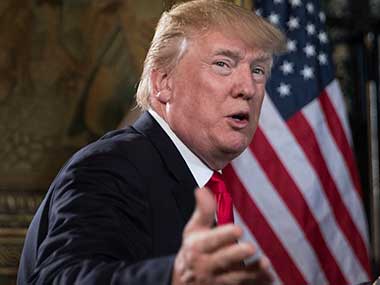
Islamabad: Pakistan has summoned the US ambassador, an embassy spokesman said Tuesday, in a rare public rebuke after Donald Trump lashed out at Islamabad with threats to cut aid over "lies" about militancy.Ambassador David Hale was asked to go to the foreign ministry in the Pakistani capital on Monday night, after Islamabad responded angrily to the US President's allegations that it provided safe havens for militants, in the latest spat to rock their alliance.[caption id="attachment_4284033" align="alignleft" width="380"]![File image of US president Donald Trump. AP]() File image of US president Donald Trump. AP[/caption]A US embassy spokesman confirmed Hale met officials, but added: "We don't have any comment on the substance of the meeting."There was no immediate response from foreign ministry officials.Trump used his first tweet of 2018 to tear into Islamabad."The United States has foolishly given Pakistan more than 33 billion dollars in aid over the last 15 years, and they have given us nothing but lies & deceit, thinking of our leaders as fools," Trump said in the early-morning New Year's Day tweet."They give safe haven to the terrorists we hunt in Afghanistan, with little help. No more!"Pakistan hit back swiftly, saying it had done much for the United States, helping it to "decimate" Al-Qaeda, while getting only "invective and mistrust" in return, in angry comments from its foreign and defence ministers.Trump's tweet offered no further details. He first hinted at cutting aid to Pakistan in an August speech charting his Afghan policy, and administration officials including Vice-President Mike Pence have also intimated cuts in recent months.Observers warned that without further information the tweet could just be more hot air between the uneasy allies, whose often fractious relationship has taken a nosedive under Trump."Trump is in the habit of issuing hardline statements which only spoil the atmosphere and violate diplomatic niceties," security and diplomatic analyst Hasan Askari told AFP, adding that Pakistan should seek more information."It will only add to the acrimony that has crept into the bilateral relationship after Trump's arrival in the White House," another analyst, Imtiaz Gul told AFP.After the 11 September, 2001 attacks on the United States, Washington forged a strategic alliance with Islamabad to help in its fight against militancy.But Washington and Kabul have long accused Islamabad of supporting militant groups including the Taliban, believed to have links to Pakistan's shadowy military establishment which aims to use them as a regional bulwark against arch-nemesis India.Islamabad has repeatedly denied the accusations, lambasting the US for ignoring the thousands who have been killed on its soil and the billions spent fighting'Harsh' responseTrump's August speech, in which he accused Islamabad of harbouring "agents of chaos", triggered a series of high-level diplomatic meetings in the US and Pakistan.The Trump administration also told Congress in August it was weighing whether to withhold $255 million in earmarked aid to Islamabad over its failure to crack down more effectively on terror groups in Pakistan.But Islamabad has given few signs of concessions.Of foremost concern in the US is Islamabad's attitude toward the powerful Haqqani network, whose leader Sirajuddin Haqqani is the deputy leader of the Afghan Taliban.The group is accused of some of the most lethal attacks on US forces in Afghanistan, and was dubbed by America's former top military officer Mike Mullen as a "veritable arm" of Pakistani intelligence.For many years it found safe haven in Pakistan's semi-autonomous northwestern tribal areas.However the Pakistani military launched an operation there in 2014, and now insists it has eradicated all safe havens in the country.For Pakistan, analyst Gul noted, the assumption is that arch-rival and fellow nuclear power India is fuelling Trump's hostility towards Islamabad.India, which Pakistan views as an existential threat, has long vied with Islamabad for influence in Afghanistan, building dams, roads and a new parliament in the troubled country, offering millions in aid and training security forces.Trump and other administration officials have called on India to become more involved in Afghanistan — an idea that is anathema to Islamabad, which fears encirclement."Now Pakistan's first attempt will be to neutralise India's narrative of Pakistan," Gul said.
File image of US president Donald Trump. AP[/caption]A US embassy spokesman confirmed Hale met officials, but added: "We don't have any comment on the substance of the meeting."There was no immediate response from foreign ministry officials.Trump used his first tweet of 2018 to tear into Islamabad."The United States has foolishly given Pakistan more than 33 billion dollars in aid over the last 15 years, and they have given us nothing but lies & deceit, thinking of our leaders as fools," Trump said in the early-morning New Year's Day tweet."They give safe haven to the terrorists we hunt in Afghanistan, with little help. No more!"Pakistan hit back swiftly, saying it had done much for the United States, helping it to "decimate" Al-Qaeda, while getting only "invective and mistrust" in return, in angry comments from its foreign and defence ministers.Trump's tweet offered no further details. He first hinted at cutting aid to Pakistan in an August speech charting his Afghan policy, and administration officials including Vice-President Mike Pence have also intimated cuts in recent months.Observers warned that without further information the tweet could just be more hot air between the uneasy allies, whose often fractious relationship has taken a nosedive under Trump."Trump is in the habit of issuing hardline statements which only spoil the atmosphere and violate diplomatic niceties," security and diplomatic analyst Hasan Askari told AFP, adding that Pakistan should seek more information."It will only add to the acrimony that has crept into the bilateral relationship after Trump's arrival in the White House," another analyst, Imtiaz Gul told AFP.After the 11 September, 2001 attacks on the United States, Washington forged a strategic alliance with Islamabad to help in its fight against militancy.But Washington and Kabul have long accused Islamabad of supporting militant groups including the Taliban, believed to have links to Pakistan's shadowy military establishment which aims to use them as a regional bulwark against arch-nemesis India.Islamabad has repeatedly denied the accusations, lambasting the US for ignoring the thousands who have been killed on its soil and the billions spent fighting'Harsh' responseTrump's August speech, in which he accused Islamabad of harbouring "agents of chaos", triggered a series of high-level diplomatic meetings in the US and Pakistan.The Trump administration also told Congress in August it was weighing whether to withhold $255 million in earmarked aid to Islamabad over its failure to crack down more effectively on terror groups in Pakistan.But Islamabad has given few signs of concessions.Of foremost concern in the US is Islamabad's attitude toward the powerful Haqqani network, whose leader Sirajuddin Haqqani is the deputy leader of the Afghan Taliban.The group is accused of some of the most lethal attacks on US forces in Afghanistan, and was dubbed by America's former top military officer Mike Mullen as a "veritable arm" of Pakistani intelligence.For many years it found safe haven in Pakistan's semi-autonomous northwestern tribal areas.However the Pakistani military launched an operation there in 2014, and now insists it has eradicated all safe havens in the country.For Pakistan, analyst Gul noted, the assumption is that arch-rival and fellow nuclear power India is fuelling Trump's hostility towards Islamabad.India, which Pakistan views as an existential threat, has long vied with Islamabad for influence in Afghanistan, building dams, roads and a new parliament in the troubled country, offering millions in aid and training security forces.Trump and other administration officials have called on India to become more involved in Afghanistan — an idea that is anathema to Islamabad, which fears encirclement."Now Pakistan's first attempt will be to neutralise India's narrative of Pakistan," Gul said.
 File image of US president Donald Trump. AP[/caption]A US embassy spokesman confirmed Hale met officials, but added: "We don't have any comment on the substance of the meeting."There was no immediate response from foreign ministry officials.Trump used his first tweet of 2018 to tear into Islamabad."The United States has foolishly given Pakistan more than 33 billion dollars in aid over the last 15 years, and they have given us nothing but lies & deceit, thinking of our leaders as fools," Trump said in the early-morning New Year's Day tweet."They give safe haven to the terrorists we hunt in Afghanistan, with little help. No more!"Pakistan hit back swiftly, saying it had done much for the United States, helping it to "decimate" Al-Qaeda, while getting only "invective and mistrust" in return, in angry comments from its foreign and defence ministers.Trump's tweet offered no further details. He first hinted at cutting aid to Pakistan in an August speech charting his Afghan policy, and administration officials including Vice-President Mike Pence have also intimated cuts in recent months.Observers warned that without further information the tweet could just be more hot air between the uneasy allies, whose often fractious relationship has taken a nosedive under Trump."Trump is in the habit of issuing hardline statements which only spoil the atmosphere and violate diplomatic niceties," security and diplomatic analyst Hasan Askari told AFP, adding that Pakistan should seek more information."It will only add to the acrimony that has crept into the bilateral relationship after Trump's arrival in the White House," another analyst, Imtiaz Gul told AFP.After the 11 September, 2001 attacks on the United States, Washington forged a strategic alliance with Islamabad to help in its fight against militancy.But Washington and Kabul have long accused Islamabad of supporting militant groups including the Taliban, believed to have links to Pakistan's shadowy military establishment which aims to use them as a regional bulwark against arch-nemesis India.Islamabad has repeatedly denied the accusations, lambasting the US for ignoring the thousands who have been killed on its soil and the billions spent fighting'Harsh' responseTrump's August speech, in which he accused Islamabad of harbouring "agents of chaos", triggered a series of high-level diplomatic meetings in the US and Pakistan.The Trump administration also told Congress in August it was weighing whether to withhold $255 million in earmarked aid to Islamabad over its failure to crack down more effectively on terror groups in Pakistan.But Islamabad has given few signs of concessions.Of foremost concern in the US is Islamabad's attitude toward the powerful Haqqani network, whose leader Sirajuddin Haqqani is the deputy leader of the Afghan Taliban.The group is accused of some of the most lethal attacks on US forces in Afghanistan, and was dubbed by America's former top military officer Mike Mullen as a "veritable arm" of Pakistani intelligence.For many years it found safe haven in Pakistan's semi-autonomous northwestern tribal areas.However the Pakistani military launched an operation there in 2014, and now insists it has eradicated all safe havens in the country.For Pakistan, analyst Gul noted, the assumption is that arch-rival and fellow nuclear power India is fuelling Trump's hostility towards Islamabad.India, which Pakistan views as an existential threat, has long vied with Islamabad for influence in Afghanistan, building dams, roads and a new parliament in the troubled country, offering millions in aid and training security forces.Trump and other administration officials have called on India to become more involved in Afghanistan — an idea that is anathema to Islamabad, which fears encirclement."Now Pakistan's first attempt will be to neutralise India's narrative of Pakistan," Gul said.
First Published:Jan 02, 2018, 17:17:23 IST
Advertisement
Advertisement

India rejects Pakistan's 'baseless' claims at Asean, says Indus Waters Treaty to remain on hold
India accused Pakistan of misusing the Asean Regional Forum to spread false narratives, reiterating that the Indus Waters Treaty will remain suspended until Islamabad credibly and irrevocably ends cross-border terrorism.
1 min read
Indian trucker arrested in US over alleged theft of $3 million worth of tungsten powder
A 39-year-old Indian national living illegally in the US has been arrested in California after authorities alleged he stole a truck carrying nearly $3 million worth of hazardous tungsten powder.
1 min read
Austria turns Hitler’s birthplace into a police station 81 years after his death: 5 things to know
Austrian authorities inaugurated a police station at the birthplace of Adolf Hitler after years of debate around the site’s troubled legacy.
3 min read
Nawaz Sharif wants to become prime minister of PoK — but laws framed by Pakistan disqualify him
Former Pakistani Prime Minister Nawaz Sharif has said that he would ask his brother, Prime Minister Shehbaz Sharif, to appoint him as the Prime Minister of Pakistan-occupied Jammu and Kashmir (POJK). But the Constitution bars him from making such a move.
2 min read
Fake jobs, tourist visas: Inside Russia’s vast network luring foreigners to fight Ukraine war
Russia is accused of using fake job offers, tourist visas and lucrative military contracts to recruit thousands of foreign nationals for the Ukraine war. Investigations reveal how poverty, deception and coercion have drawn people from Asia, Africa and Latin America into one of the world's deadliest conflicts
8 min read
Advertisement
Advertisement