


Nice attack in France couldn't be prevented: Why West's anti-terror strategy is failing
The Nice terror attack is evidence of our collective failure to understand the true dimensions of terrorism, and how to combat it.

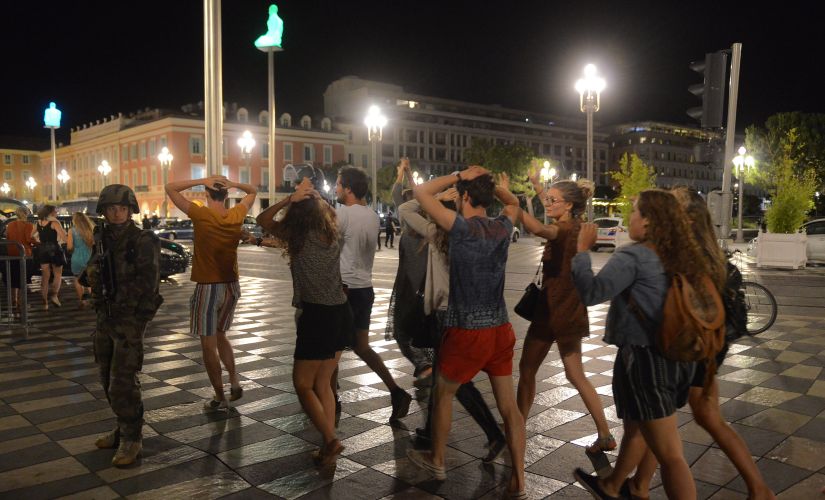
Reuters[/caption]Third, while good intelligence and a robust action are important weapons in the fight against terrorism, there is another side to this story: macho responses to terror sometimes become counter-productive as this only makes the challenge of organising terror that much more attractive to terrorists.India’s poor response to terror means that it is fundamentally easier to perpetrate acts of terror on Indian soil than America’s or France’s. But it is the US and the West that offer the maximum returns on terrorists' investment in terms of resultant publicity and the ability to draw fresh recruits. The young, who are often more inclined towards radical and extremist ideas, may be more excited by the challenge an America poses to terror than a weak India. In India, we may occasionally scream about terror on TV channels, but after a few days, we go back to our jobs and everyday concerns. This is partly because Indian lives are cheaper, but it also reflects a fatalistic attitude that "karma" cannot be avoided. We don't obsess over terror the way the West does.Fourth, social media now provides a route to self-radicalisation. You no longer need Al-Qaeda or Islamic State to provide you with the wherewithal to indulge in terrorism. Technology and mass killing armaments make terrorism easier than before. America’s lack of gun control may be a problem, but high-tech arms are today easier to procure from the world’s growing illegal arms and ammo trade. So one can self-radicalise and self-procure the means to kill and maim.This brings us to the bigger question: Is there a better way of dealing with terrorism, so that it can be contained over the medium to long term? There is no certainty that terror can ever be fully contained, for as long as the world has so many discontents, the chances of someone taking up a gun to wipe out alleged enemies is always there.But here are some starting points.
- Denying terrorists media oxygen. Terrorists love the media attention their acts get, and this is what makes the next terror act worthwhile. If, whenever a Nice happens, the focus shifts away from terrorism and anger to what government is doing to help the people affected and media focuses on the human tragedies that unfold, terrorist acts could become less heroic.
- Self-radicalisation, while partly true, is also overstated. The truth is someone close, or someone in the family or friends circle of future radicals, always knows something is wrong well before an act is perpetrated. Friends and family need to be encouraged to report changes in behaviour sooner – a new diligence in wearing the hijab or praying five times a day and a tendency to judge the west differently. Islamic terrorism is by no means the only kind around (America, for example, also sees White supremacist and evangelical or racist terrorism), but it is certainly the main one at this point of time. The 20-and-odd Keralites who are believed to have left for Islamic State did not get radicalised all of a sudden; there is usually an agent provocateur. The religious conversions of four of the people who left for Islamic State were also tell-tale signs of their impending radicalisation that was noticed but not reported widely. In the Orlando shooting, the father of the gunman noted the killer’s homophobia. The Dhaka killers were said to have been inspired by Zakir Naik, but we have been turning a blind eye to this phenomenon. This is what the intelligence agencies need to find ways of flagging early.
- The excessive dependence on electronic intelligence (monitoring email, noting social media behaviour, and tapping phone conversations) is also worrying. If radicalisation always has a human angle, it means human intelligence has to be enhanced. Believing too much in the power of technology to show us future terrorists is a mistake we should avoid in the future.
- Political correctness delays corrective action. The Orlando terrorist was able to obtain a lethal weapon despite him being under FBI monitoring. While stereotyping terrorists on the basis of their religious inclinations is wrong, excessive political correctness also prevents an early discover of potential problems.
- Most important, defeating the ideology that sparks terror is vital. America’s closest ally in West Asia, apart from Israel, is Saudi Arabia, which is the fountainhead of Salafist extremism and jihadi ideas. This ideology is spreading everywhere due to the funding of mosques and religious activities by the Saudi state. Pakistan is another purveyor or Islamism and jihadi culture, thanks to its visceral hatred for India. The world has to find ways to deal with the spread of Salafist ideology, which is a threat to the world.
- We should abolish root cause theories forever. The media tends to focus too much on root causes of terror, which gives terrorists the ideological justification for violence and mayhem. Root causes should be for academic or policy studies, not widespread media analysis that ends up encouraging the very terror it is supposed to end.
R Jagannathan is the Editor-in-Chief of Firstpost.

US set to announce new tariff plan as temporary 10% duty nears expiry
India rejects Pakistan's 'baseless' claims at Asean, says Indus Waters Treaty to remain on hold
Indian trucker arrested in US over alleged theft of $3 million worth of tungsten powder
Austria turns Hitler’s birthplace into a police station 81 years after his death: 5 things to know
Nawaz Sharif wants to become prime minister of PoK — but laws framed by Pakistan disqualify him