


New Taliban chief, part of IC-814 hijack: What you should know about Mullah Mansoor
The newly-appointed leader of the Taliban Mullah Mansoor was a former aviation minister in the Taliban government between 1996 and 2001. His role in the hijacking of IC-814 in 1999 is seen as a highlight in his rise to prominence. But not all parties approve of this appointment, with several rivals within the Taliban vying for control.

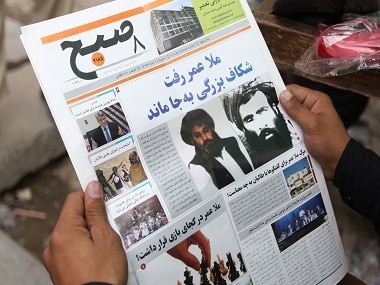
An Afghan newspaper announces the appointment of a new Taliban leader. AP[/caption]Despite being a relatively minor leader at the time, Mansoor’s worth to Omar was evident as early as 1997. As The Daily Beast reports, following a failed attempt to capture the northern city of Mazaar-e-Sharif, Mansoor was captured by an Uzbek warlord. After two months, Omar secured his release by means of a prisoner exchange.A major milestone on his road to prominence was the 1999 hijack of Indian Airlines flight IC-814, which as The Indian Express reports was overseen by the then civil aviation minister. One of the three militants exchanged for the safe release of 189 passengers and crewmembers aboard the aircraft was Maulana Masood Azhar.The newspaper quotes former Research and Analysis Wing officer Anand Arni as stating that when Azhar was released, Mansoor embraced him “like a long lost friend”, before being whisked away in a white Toyota Land Cruiser. Azhar would go on to form Jaish-e-Mohammad and is wanted by India for his role in the 2001 attack on the Indian Parliament.Following the US-led invasion of Afghanistan in the aftermath of the 11 September, 2001 terror attacks, Mansoor fled to Pakistan, to whose authorities he had endeared himself after his handling of the hijacking. As The Guardian report noted, he was among the many senior Taliban leaders who chose to seek amnesty from the new Afghan president, Hamid Karzai.But “after a series of aggressive night raids he fled to Pakistan, where he helped reshape the Taliban as an insurgent force”. The death or capture of higher-ranking Taliban leaders by Pakistani security forces during this time, saw Mansoor quickly rise up the ranks.Stars and Stripes reports that it was around this time that he was given twin charge of political and military affairs in the shura, the Taliban’s seven-member supreme council. Mansoor was Omar’s deputy over the past three years, and if the latter had indeed died two years ago, it means that Mansoor has effectively been leading the Taliban for two years.Former Taliban official Wahid Muzhda is quoted by Deutsche Welle recognising the new leader for his “pragmatic” approach and “practical vision for the Taliban”. Muzhda credits Mansoor for convincing other Taliban leaders to set up a political office in Doha, through which peace negotiations with the West have been conducted.But not everyone is pleased with the appointment.The Nation reports that the Taliban is divided into three clear groups over the issue of Omar’s successor. Former chief military commander of the Taliban Abdul Qayum Zakir—who stepped down from the post in 2014—leads one group, supported by Omar’s son and brother. The second group follows former governor of the Nimroz province and close aide of Omar, Muhammad Rasool. The third group backs former finance minister Mutasim Agha Jan, who is a proponent of peace talks. The report suggests that Omar’s eldest son Yakub may eventually choose to lead a fourth group.Meanwhile, Al-Jazeera suggested that the Taliban’s supreme council was not consulted before the new appointment. Senior member of the shura, Mullah Abdul Manan Niazi claimed that the decision was taken without consultation with the supreme council, and that Mansoor “did not even contribute much to [the] movement".Mansoor was endorsed as the most suitable successor to deceased former leader Mullah Omar by Jalalludin Haqqani, leader of the Haqqani Network—a largely autonomous group that is officially under the larger umbrella of the Taliban. But to make matters murkier than they already are, Jalalludin was reported two days ago by numerous publications including Dawn as being dead “almost a year ago… and buried in the Afghan province of Khost”. Although the Taliban issued a swift clarification on Saturday denying the reports, the damage has already been done, with Mansoor’s support base steadily dwindling.

Pakistan resorts to its military-terror nexus in a bid to neutralise Munir critic, JUI-F chief Rehman: Report
No premium queues, 30-minute target: What changes for Indian passport applicants in UAE
'We don't need straits': Trump says Iran war isn't about Hormuz as US strikes for 12th night
Iran claims to stop three oil tankers transiting Strait of Hormuz
Globe at a glance: From Houthis striking Saudi tankers in Red Sea to wildfires in Europe