


ISRO chief believes India has the capability to develop a space station
Indian Space Research Organisation (ISRO) chairman A S Kiran Kumar on Monday said the country has the capability to develop a space station, but it needed a long-term approach and an ambitious planning. His comment follows ISRO display of technological prowess last week by launching 104 satellites in a single mission.

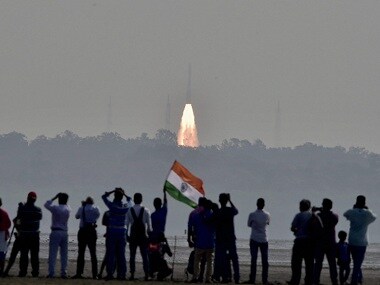
An Isro rocket with 104 satellites takes off from Sriharikota. PTI[/caption]"We have all the capabilities to set up a space station. The day the country takes the decision, we will 'ok' the project. Just draw a policy and provide us necessary funds and time," Kumar said here.He was in the city to attend the foundation day ceremony of Raja Ramanna Center for Advanced Technology (RRCAT). "We still talk about what would be the immediate benefits of a manned space mission. That is why the country hasn't made up its mind about when to invest in a space station," he said.A long-term thinking was needed for setting up a space station, he said, adding "the sooner the better." Kumar said ISRO was also mulling tying up with the industry to enhance the country's satellite launching capability. Many more satellites were needed to keep a tab on the land and weather conditions and to enhance the communication network, he said.This would be possible with increase in the number of satellite launches, for which the country needed to enhance the basic infrastructure and reduce the cost of equipment, he added. The number of companies manufacturing small satellites has gone up across the world, but these companies could not launch them, therefore this area had immense commercial potential and India could tap it by enhancing the launch facilities, the ISRO chief said.

Google Doodle celebrates 260th birth anniversary of Sake Dean Mahomed, first Indian author to publish a book in English
Pulitzer Prize-winning American novelist Philip Roth, known for the book American Pastoral, dies at 85
Indians enslaved: Remembering a pernicious history of organised labour through cultural events
Culling stray dogs: Civic bodies are inflicting needless suffering on man's best friend
'Weed-like' algae killing Great Barrier Reef corals, a new study warns