


IPCC report shows global warming fallout has come sooner, harder than predicted: UN warns paradigm shift needed to avert chaos
A Summary for Policymakers of the 400-page tome underscores how quickly global warming has outstripped humanity's attempt to tame it, and outlines paradigm-shift options for avoiding the worst ravages of a climate-addled future.

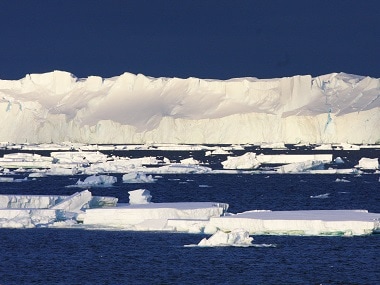
Earth's surface has warmed one degree Celsius (1.8 degrees Fahrenheit) — enough to lift oceans and unleash a crescendo of deadly storms, floods and droughts. AFP[/caption]A Summary for Policymakers of the 400-page tome underscores how quickly global warming has outstripped humanity's attempt to tame it, and outlines paradigm-shift options for avoiding the worst ravages of a climate-addled future.Before the Paris Agreement was inked in 2015, nearly a decade of scientific research rested on the assumption that 2C was the guardrail for a climate-safe world.
The IPCC report, however, shows that global warming impacts have come sooner and hit harder than predicted."Things that scientists have been saying would happen further in the future are happening now," Jennifer Morgan, Executive Director of Greenpeace International, told AFP. To have at least a 50/50 chance of staying under the 1.5ºC cap without overshooting the mark, the world must, by 2050, become "carbon neutral," according to the report."That means every tonne of CO2 we put into the atmosphere will have to be balanced by a tonne of CO2 taken out," said lead coordinating author Myles Allen, head of the University of Oxford's Climate Research Programme. Drawing from more than 6,000 recent scientific studies, the report laid out four "illustrative" pathways to that goal.The most ambitious would see a radical drawdown in energy consumption coupled with a rapid shift away from fossil fuels and a swift decline in CO2 emissions starting in 2020. It would also avoid an "overshoot" of the 1.5ºC threshold.A contrasting "pay later" scenario compensates for a high-consumption lifestyles and continued use of fossil fuels with a temporary breaching of the 1.5ºC ceiling.Summary for Policymakers of IPCC Special Report on Global Warming of 1.5ºC approved by governments
"Historians will look back at these findings as one of the defining moments in the course of human affairs." Limiting global warming to 1.5C comes with a hefty price tag: some $2.4 trillion (2.1 trillion euros) of investments in the global energy system every year between 2016 and 2035, or about 2.5 percent of world GDP.That amount, however, must be weighed against the even steeper cost of inaction, the report says.The path to a climate-safe world has become a tightrope, and will require an unprecedented marshalling of human ingenuity, the authors said. "The problem isn't going to be solved with a silver bullet," Ove Hoegh-Guldberg, director of the University of Queensland's Global Change Institute, told AFP."We need a hail of silver bullets." The IPCC report was timed to feed into the December UN climate summit in Katowice, Poland, where world leaders will be under pressure to ramp up national carbon-cutting pledges which -- even if fulfilled -- would yield and 3C world.The week-long meeting in Incheon, South Korea -- already deep into overtime -- deadlocked on Saturday when oil giant Saudi Arabia demanded the deletion of a passage noting the need for global CO2 emissions to decline "well before 2030".The report was approved by consensus as soon as the Saudis backed down, participants to the meeting told AFP. Concerns that the United States would seek to obstruct the process proved unfounded. The Trump administration has dismantled emissions reduction policies domestically, and vowed to ditch the Paris treaty.

US set to announce new tariff plan as temporary 10% duty nears expiry
India rejects Pakistan's 'baseless' claims at Asean, says Indus Waters Treaty to remain on hold
Indian trucker arrested in US over alleged theft of $3 million worth of tungsten powder
Austria turns Hitler’s birthplace into a police station 81 years after his death: 5 things to know
Nawaz Sharif wants to become prime minister of PoK — but laws framed by Pakistan disqualify him