


IMF policies hindered Ebola response, say British researchers
Professors from three British universities say economic policies favoring debt repayment over social spending contributed to the Ebola crisis by hampering health care in three worst-hit West African countries.

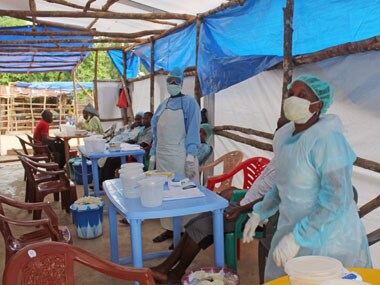
An temporary Ebola-fighting clinic in Sierra Leone. AP[/caption]IMF lending requires governments to give priority to short-term economic objectives over investment in health, the authors said, citing IMF statistics that showed the terms of loans to Guinea, under an IMF austerity program for 21 years, Liberia, following one for seven years, and Sierra Leone, in one for 19 years.Civil wars in Liberia and Sierra Leone in the 1990s also contributed to the long-term destruction of those countries' health systems, said the report.IMF policies contributed to "under-funded, insufficiently staffed, and poorly prepared health systems" in the three countries — a major reason the outbreak spread so rapidly, the report said. The IMF's insistence on decentralized health care made it difficult to mobilize a coordinated response to Ebola, it said.The IMF responded by saying that health spending had increased in the three countries, if counted as a percentage of GDP. And it is working to provide more debt relief that would free funds for increased health spending, the IMF said.Associated Press

Indian trucker arrested in US over alleged theft of $3 million worth of tungsten powder
Austria turns Hitler’s birthplace into a police station 81 years after his death: 5 things to know
Nawaz Sharif wants to become prime minister of PoK — but laws framed by Pakistan disqualify him
Fake jobs, tourist visas: Inside Russia’s vast network luring foreigners to fight Ukraine war
As Pakistan eyes American dollar for Iran mediation, economists sound the alarm: ‘It can buy time, not growth’