
Advertisement


Sections
'Hand over the jets and pay for them too': US-Pak F-16 hokey pokey continues
The case of eight F-16 Block 52 aircraft that were at one point set to be sold to Pakistan by the US has had more turns and U-turns than you'd care to imagine

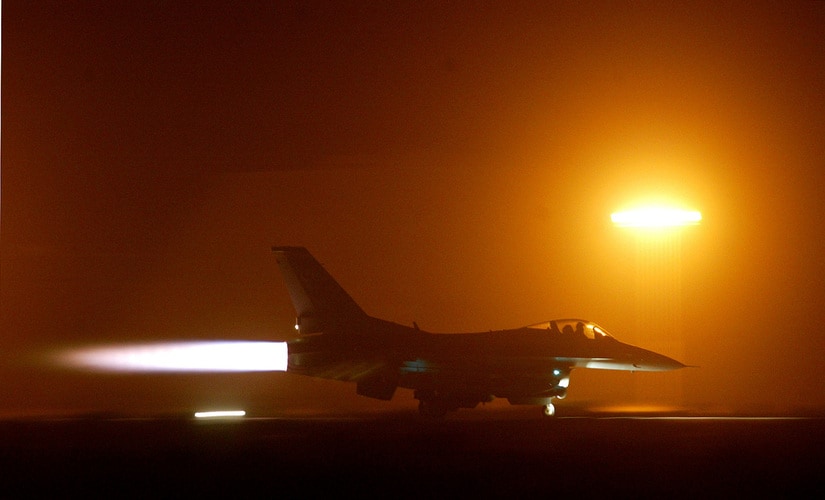 Representational image. Reuters[/caption]But first, a bit of backgroundBefore Aziz' show of defiance, the latest development in the US-Pakistan F-16 deal on Tuesday was that the “eight jets for $700 million” offer was only going to be valid until the end of this month. Further, as was made clear at a US State Department press briefing on Monday, Islamabad will be expected to dip into its own finances and stump up the moolah for the deal.“(W)hile Congress has approved the sale, key members have made clear that they object to using FMF (the US’ own foreign military financing) to support it. Given congressional objections, we have told the Pakistanis that they should put forward national funds for that purpose,” said state department spokesperson John Kirby.Also, should Pakistan miss this end-of-month deadline, it’s very likely the cost of these jets — which at one point was $270 million — will increase again.There's been a fair bit of movement on this front over the past few months.Just last week, top American lawmakers during a Congressional hearing openly shared their fears with the Barack Obama administration about arming Pakistan with these jets. Notably, Congressman Brad Sherman said, “We need to offer to Pakistan those weapon systems well-crafted to go after terrorists and not crafted for a war with India” (emphasis added).This came after both the Special Representative for Afghanistan and Pakistan Richard Olson and the Pakistan government's insistence that the F-16 is an important tool in the fight against terrorism and urging the US Congress not to withhold these jets from Islamabad.It was in February that Senator Bob Corker, chairman of the powerful Senate Foreign Relations Committee, had written to US Secretary of State John Kerry urging him to stop the sale of F-16s to Pakistan. His contention was that members of the terrorist organisation, the Haqqani Network, "still enjoy freedom of movement, and possibly even support from the Pakistani government". It was this letter that voiced the opposition of the committee to using FMF to finance this sale.Letter - Kerry Pak F16 - 09Feb2016 by John Hudson
F-16s in US-Pakistan relationsThe history of the potential American sale of F-16s to Pakistan goes back to Jimmy Carter's term as US president. As some commentators have pointed out, the fighter aircraft is something of a metaphor for US-Pakistan relations for the past 40-odd years.In 1979, Carter was not a huge fan of the Pakistani government — particularly the displacement of Zulfikar Ali Bhutto by Zia ul-Haq, the country's human rights and its efforts to go nuclear. Bhutto's hanging added to the US' displeasure with Zia and Pakistan. But after the Soviet invasion of Afghanistan, all bets were apparently off and Zia requested Carter for F-16s.Sensing Pakistan's strategic importance, Washington offered $400 million in military and economic aid to Islamabad — something a disgruntled Zia dismissed as 'peanuts' — but no F-16s. A brief chill ensued.By 1981, Zia had found a friend in the White House in the form of Ronald Reagan, whose generous offer of $3.2 billion in military and economic aid was accepted by Pakistan. From 'peanuts' to coconuts? But that's not all.A $1.1 billion deal for 40 F-16 aircraft had also been ironed out, with Saudi Arabia expected to help pay for the planes.[caption id="attachment_2753414" align="alignright" width="380"]
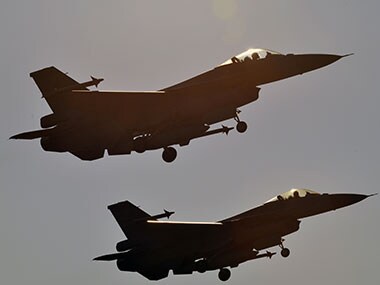 Representational image. AFP[/caption]And the first jet was shipped out soon after.Today, the Pakistan Air Force has 76 F-16 aircraft — including those provided by Jordan.After the dissolution of the USSR and the end of the Cold War at the end of the decade, Pakistan had more-or-less outlived its usefulness to the US and another chill set in. Unwilling to refund Pakistan for the undelivered F-16s Islamabad had already bought, it was during Bill Clinton's presidency that the US began paying Pakistan 'food aid' as some sort of compensation for the money that had already changed hands.And then came 11 September, 2001.Pakistan became an important ally in the Global War on Terror and among then president Pervez Musharraf's first demands of George W Bush were more F-16s. Presumably after weighing up the pros and cons, and quickly giving into the return of warmth to bilateral ties, another batch of jets were on their way to Pakistan. By 2005, defence relations between the two countries had deepened considerably and the F-16 Peace Drive Aircraft Programme was underway.The following year, both governments signed a Letter of Offer and Acceptance (LOA) agreeing to the purchase of 18 Block 52 F-16s — a figure that was halved following the 2005 earthquake that ate into Islamabad's coffers.Islamabad has long contended that these fighter jets are critical to its anti-Taliban efforts in the country's northern parts, and that the aircraft will not be used to antagonise India. Sure enough, the anti-terror line seemed to have worked, because in February 2014, a few months before launching the anti-Taliban Operation Zarb-e-Azb in North Waziristan, Pakistan received 13 F-16s from the Royal Jordanian Air Force (RJAF) with the US' blessings.Interestingly, highs in US-Pakistan relations have in past four decades nearly always been marked by some sale/transfer of F-16s, while lows have been punctuated by refusals to hand over the jet.Which brings us neatly to the present day.What this means to IndiaA few days after Corker's letter to Kerry, India's Ministry of External Affairs expressed its own disappointment at the idea of selling F-16s to Pakistan, summed up by a succinct statement on its official website:
"We are disappointed at the decision of the Obama Administration to notify the sale of F-16 aircraft to Pakistan. We disagree with their rationale that such arms transfers help to combat terrorism. The record of the last many years in this regard speaks for itself. The US Ambassador will be summoned by the Ministry of External Affairs to convey our displeasure"Ideally, India would not like to see the deal go through, and this is not necessarily linked to the strengthening of Pakistan's military might.It's worth recalling that in the Kargil war of 1999, India's squadron of MiG aircraft was sufficient to repel the threat of Pakistan's F-16. Also, it's not as though New Delhi will lose sleep over Islamabad acquiring eight additional F-16s. As an article in The Indian Express points out, India’s defence budget is nearly seven times as much as that of Pakistan. In GDP terms too, India's economy is nine times bigger than its Pakistani counterpart. And if India gives the go-ahead, Lockheed Martin — the F-16's manufacturer — seems ready to shift the production line to India.What will be of concern to India is the precedent that the US will be setting by making the sale and thereby, wittingly or unwittingly, endorsing the way Pakistan is being governed and its perceived reluctance to crack down on terrorist outfits. This will be particularly so since the US has been making all the right noises on terrorism, as far as its 'defining partner of the 21st Century' India is concerned, and these 'noises' risk ringing hollow if Washington caves in.Nevertheless, prepare for plenty more statements, notifications and random bluster over the coming weeks as this F-16 hokey pokey continues.With inputs from agencies
First Published:May 04, 2016, 07:29:49 IST
Advertisement
Advertisement

Epstein's model scout Daniel Siad found dead at his home near Paris amid rape case trial
A modelling scout who recruited women for the late sex offender Jeffrey Epstein has been found dead at his home in Paris.
2 min read
South China Sea tensions rise as China claims it expelled Philippine ships
China said on Thursday it tracked and drove away two Philippine vessels it accused of having "intruded into" waters near the disputed Scarborough Shoal despite warnings
1 min read
Choke terror funding, keep international shipping lanes safe: Jaishankar at Asean Regional Forum
Jaishankar's remarks came against the backdrop of recent terror attacks targeting India and growing threats to commercial shipping amid conflicts in West Asia and Europe
2 min read
After Australia, New Zealand signs defence pact with Papua New Guinea as China expands in Indo-Pacific
After Australia, New Zealand has signed a defence cooperation agreement with Papua New Guinea. This is the latest agreement that countries in the region have signed to integrate themselves closer on security and defence as Chinas has sought to increase its footprint in the Indo-Pacific and the United States, the traditional guarantor of security, has abandoned the theatre.
2 min read
Pakistan's deep state weaponising LeT to counter Asim Munir critic Maulana Fazlur Rehman: Report
A deepening military-terror nexus is reportedly emerging in Pakistan in a bid to neutralise the JUI-F chief, Maulana Fazlur Rehman, after he openly criticised Pakistan's Army Chief Asim Munir.
2 min read
Advertisement
Advertisement