


Experts believe Qatar-like blockade against Lebanon will be 'serious threat' to economy
Lebanese politicians and bankers believe Saudi Arabia intends to do to their country what it did to Qatar - corral Arab allies into enforcing an economic blockade unless its demands are met.

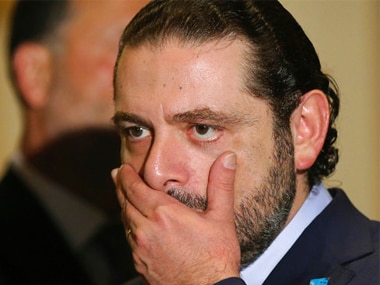
File image of ex-Lebanon prime minister Saad Hariri. AP[/caption]According to a Lebanese source familiar with Saudi thinking, Hariri’s interview “gave an indication of what might be waiting for us if a real compromise is not reached. The playbook is there in Qatar.”Hariri’s resignation has thrust Lebanon to the centre of an escalating rivalry between Sunni Saudi Arabia and Shi‘ite Iran.The non-confrontational Saudi policy of the past towards Lebanon has gone, analysts say, under the new leadership of Crown Prince Mohammed bin Salman, 32-year-old son of King Salman.He is now the de facto ruler of the kingdom, running its military, political and economic affairs.Whether Iran and Hezbollah are willing to make significant concessions to Riyadh is doubtful, sources said.“They (Hezbollah) might make some cosmetic concessions, but they won’t submit to the Saudi conditions,” a source familiar with Hezbollah thinking said.Ball in Hezbollah's courtLebanese analyst Sarkis Naoum said Riyadh wanted Hariri to return to Lebanon and press President Michel Aoun to open dialogue and address their conditions on Hezbollah’s regional interventions.“They need to come up with a position that will be satisfactory to the Saudis ... If the Saudis decide on sanctions they will do it,” Naoum said.A source close to Hariri said he had ”put the ball in the court of Aoun, Hezbollah and its allies, by saying ‘business cannot continue as usual.’“There was no sugar-coating. The sanctions were spelled out clearly. They want Lebanon to be disassociated from Hezbollah”.Aoun has welcomed comments that the former premier planned to return home soon, palace sources said on Monday.Saudi frustration with Lebanon seems to have boiled over after a string of setbacks to its foreign policy. Riyadh has been bogged down in the war it launched against Iran-allied Houthi rebels in Yemen in 2015. Saudi Arabia has accused Iran and Hezbollah of backing the Houthis, and also said Hezbollah had a role in firing a ballistic missile from Yemen towards Riyadh earlier this month.Hezbollah and Iran’s involvement in Syria has also transformed the war in favour of President Bashar al-Assad, while Saudi support for Sunni rebels in Syria’s civil war have amounted to little.Hezbollah, a movement with a heavily armed fighting force in addition to seats in parliament and government, is Iran’s spearhead in the region.Tehran’s Revolutionary Guard looks to be trying to replicate it by building coalitions of militia groups in Iraq and Syria, according to some analysts.The list of potential sanctions against Lebanon, political sources there say, could include a ban on flights, visas, exports and transfer of remittances.Some of those have been imposed on Qatar, but that blockade, initiated in June, has had limited effect on the emirate so far, beyond driving it closer to Iran.New Saudi policyAllegiance to foreign backers is not new to Lebanon. Sunnis have always looked to Saudi Arabia for support and funding while Shi‘ite Lebanese tended to turn to Tehran and Hezbollah.“The Lebanese have always been agents of foreign powers. They take their money, make promises, commitments and alliances,” Naoum said. But while Hezbollah fulfilled its promises to Iran, Sunni factions let Riyadh down, he said.Thanks in part to Iranian investment in the group, Hezbollah now calls the shots in the Lebanese capital as well as playing a pivotal role in Syria and elsewhere in West Asia.Riyadh has historically channelled billions of dollars to Lebanon to help its reconstruction after the 1975-90 civil war and following massive Israeli incursions of south Lebanon. Now it appears ready to do serious economic damage to Lebanon that could weaken Hezbollah’s standing at home and in the region, should its demands not be met.The Saudi conditions are causing alarm among some Lebanese, who have long viewed Hezbollah as a “state-within-a-state”. Many believe the solution is outside the control of local players.“Lebanon will pay the price,” a top Lebanese banker told Reuters. “The only pressure the Saudis have is economic ... they can put pressure by imposing sanctions that can hurt.”

US set to announce new tariff plan as temporary 10% duty nears expiry
India rejects Pakistan's 'baseless' claims at Asean, says Indus Waters Treaty to remain on hold
Indian trucker arrested in US over alleged theft of $3 million worth of tungsten powder
Austria turns Hitler’s birthplace into a police station 81 years after his death: 5 things to know
Nawaz Sharif wants to become prime minister of PoK — but laws framed by Pakistan disqualify him