
Advertisement


Sections
COP23 climate change summit in Bonn: All you need to know about 12-day conference
Climate change is back on the agenda, with a global climate conference kicking off in the German city of Bonn on Monday. Here's all you need to know about the UN conference, known as COP23, which will run till 17 November.

Climate change is back on the agenda, with a global climate conference kicking off in the German city of Bonn on Monday. Here's all you need to know about the UN conference, known as COP23, which will run till 17 November.Who's attending?Up to 25,000 people are expected to attend the talks, which will be presided over by Prime Minister Frank Bainimarama of Fiji — the first time that the small island nation will be at the helm of a major international climate conference. Participants will include diplomats from 195 nations, as well as scientists, lobbyists and environmentalists.The US, which has announced its intention to pull out of the landmark Paris climate accord, will be represented by Undersecretary of State for Political Affairs Thomas Shannon.[caption id="attachment_4195051" align="alignleft" width="380"]![Representational image. Reuters]() Representational image. Reuters[/caption]Key countries to watch during the talks are emerging economic powers China and India. Other nations — Estonia, Peru, Ecuador, Iran, Mali, Ethiopia and the Maldives — will also be in the spotlight for leading major international groupings.French president Emmanuel Macron, German Chancellor Angela Merkel and other leaders are expected to fly to Bonn towards the end of the summit to give the talks a final push and signal their commitment to fighting climate change.What are the major climate change topics?The 2015 Paris accord set a target of limiting global warming to 1.5 degrees Celsius by the end of the century. But diplomats didn't agree on the details of how their nations will reach that ambitious goal. The Bonn talks will flesh out the rule book that countries have to abide by.This includes coming up with international standards for how to measure carbon emissions, to make sure that one nation's efforts can be compare to another's. A second debate centers around how countries take stock of what's been achieved and set new, more ambitious goals for curbing carbon emissions after 2020.The third big issue concerns money. Experts agree that shifting economies away from fossil fuels and preparing countries for some of the inevitable consequences of climate change will require vast financial resources — including some from the US administration of President Donald Trump, which is doubtful about man-made climate change.Why Bonn?Organising a massive global conference in Fiji would have strained the Pacific nation's resources and posed a travel nightmare for thousands of delegates. Germany offered to host the talks in Bonn, the country's former capital, because it has ample conference space and is already home to the UN climate change agency.
Representational image. Reuters[/caption]Key countries to watch during the talks are emerging economic powers China and India. Other nations — Estonia, Peru, Ecuador, Iran, Mali, Ethiopia and the Maldives — will also be in the spotlight for leading major international groupings.French president Emmanuel Macron, German Chancellor Angela Merkel and other leaders are expected to fly to Bonn towards the end of the summit to give the talks a final push and signal their commitment to fighting climate change.What are the major climate change topics?The 2015 Paris accord set a target of limiting global warming to 1.5 degrees Celsius by the end of the century. But diplomats didn't agree on the details of how their nations will reach that ambitious goal. The Bonn talks will flesh out the rule book that countries have to abide by.This includes coming up with international standards for how to measure carbon emissions, to make sure that one nation's efforts can be compare to another's. A second debate centers around how countries take stock of what's been achieved and set new, more ambitious goals for curbing carbon emissions after 2020.The third big issue concerns money. Experts agree that shifting economies away from fossil fuels and preparing countries for some of the inevitable consequences of climate change will require vast financial resources — including some from the US administration of President Donald Trump, which is doubtful about man-made climate change.Why Bonn?Organising a massive global conference in Fiji would have strained the Pacific nation's resources and posed a travel nightmare for thousands of delegates. Germany offered to host the talks in Bonn, the country's former capital, because it has ample conference space and is already home to the UN climate change agency.
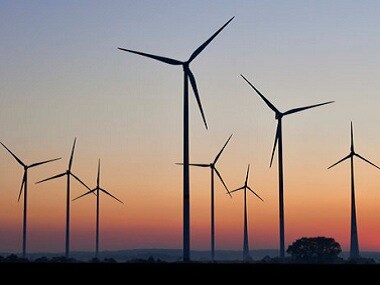 Representational image. Reuters[/caption]Key countries to watch during the talks are emerging economic powers China and India. Other nations — Estonia, Peru, Ecuador, Iran, Mali, Ethiopia and the Maldives — will also be in the spotlight for leading major international groupings.French president Emmanuel Macron, German Chancellor Angela Merkel and other leaders are expected to fly to Bonn towards the end of the summit to give the talks a final push and signal their commitment to fighting climate change.What are the major climate change topics?The 2015 Paris accord set a target of limiting global warming to 1.5 degrees Celsius by the end of the century. But diplomats didn't agree on the details of how their nations will reach that ambitious goal. The Bonn talks will flesh out the rule book that countries have to abide by.This includes coming up with international standards for how to measure carbon emissions, to make sure that one nation's efforts can be compare to another's. A second debate centers around how countries take stock of what's been achieved and set new, more ambitious goals for curbing carbon emissions after 2020.The third big issue concerns money. Experts agree that shifting economies away from fossil fuels and preparing countries for some of the inevitable consequences of climate change will require vast financial resources — including some from the US administration of President Donald Trump, which is doubtful about man-made climate change.Why Bonn?Organising a massive global conference in Fiji would have strained the Pacific nation's resources and posed a travel nightmare for thousands of delegates. Germany offered to host the talks in Bonn, the country's former capital, because it has ample conference space and is already home to the UN climate change agency.
But they will miss the sunshine of Fiji. The weather in Bonn is generally dreary at best in November.How green will the conference beGermany says the two-week talks will as environmentally friendly as possible. The country is setting aside a part of the 117 million euro ($136.3 million) budget for a fleet of bicycles and electric buses to ferry people between venues.Each participant will receive a bottle to fill with tap water — a move organisers say will save half a million plastic cups.Germany's environment ministry is also investing in renewable energy projects to compensate for the greenhouse gas emissions caused by people from all over the world flying into Bonn for the talks.Germany's coal usage
Germany likes to portray itself as a leader in the fight against global warming and Merkel's reputation as the "climate chancellor" is partly built on the pivotal role she played during past negotiations.But environmentalists note that Germany still gets about 40 percent of its electricity from coal-fired plants — one of the most carbon intensive sources of energy. And German highways are also virtually unique in having no general speed limit, despite the fact that auto emissions rise dramatically at higher speeds.If prosperous Germany fails to meet its own emissions targets, as current predictions suggest, critics say that would send a bad signal to the rest of the world.
First Published:Nov 06, 2017, 09:51:10 IST
Advertisement
Advertisement

Pakistan resorts to its military-terror nexus in a bid to neutralise Munir critic, JUI-F chief Rehman: Report
A deepening military-terror nexus is reportedly emerging in Pakistan in a bid to neutralise the JUI-F chief, Maulana Fazlur Rehman, after he openly criticised Pakistan's Army Chief Asim Munir.
2 min read
No premium queues, 30-minute target: What changes for Indian passport applicants in UAE
Indian passport applicants in the UAE can now access passport, visa and attestation services through Alhind’s 16 centres, with no premium queues, a Dh19 service fee and a target of completing applications within 30 minutes
4 min read
'We don't need straits': Trump says Iran war isn't about Hormuz as US strikes for 12th night
US President Donald Trump on Wednesday declared that the country does not need the Strait of Hormuz as Washington bombards Iran for the 12th consecutive night.
2 min read
Iran claims to stop three oil tankers transiting Strait of Hormuz
In recent weeks, Iran has targeted tankers using a route along the Omani coast to cross the strait, in what it says is an effort to force vessels to use Iranian waters and pay for safe passage
1 min read
Globe at a glance: From Houthis striking Saudi tankers in Red Sea to wildfires in Europe
Your window to world news: As Yemen's Houthi rebels claimed to have struck two Saudi oil tankers in the Red Sea on Wednesday, the United States has announced a landmark deal with Saudi Arabia that would establish a civilian nuclear program in the Gulf country
2 min read
Advertisement
Advertisement