


China's growing influence is a problem of India's making; it's time to treat all neighbours as equals
India's isolation at the China-led One Belt One Road forum shows that India has failed to help her neighbours overcome their fear and distrust, and build relationships that are meaningful and based on respect and mutual interest

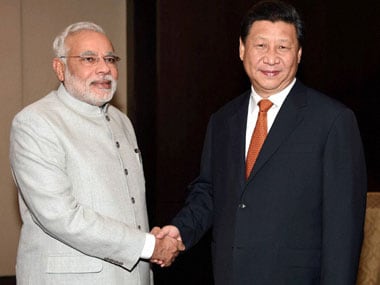
File image of Narendra Modi and Xi Jinping. PTI[/caption]The civil war in Sri Lanka ended with a victory of the Sinhalese nationalists, and today Sri Lanka is no longer under the influence of India as it was 30 years ago. If there is a nation that many Sri Lankans see as interfering (into its affairs), it is China. India cannot compete with the scale of the giant ports in Colombo and Hambantota that the Chinese are developing in Sri Lanka. However, they come with a compromise, which the China model of development brings with it. There is no time here for details, but to some extent, it means more or less like having Chinese colonies on your land. And to a larger extent, it means having to take a debt from the Chinese that you may or may not be able to afford. Today, the Chinese are also executing the most important and largest infrastructure project of the world. It is called "One Belt, One Road". The belt is a series of highways and the "road" is a network of ports and sea routes.China held a meeting in May to show its vision, and India boycotted it. However, all of India’s neighbours, except for one, Bhutan, attended it. Sri Lanka, Myanmar, Bangladesh, Maldives and Nepal all attended the meeting, leading to fears of encirclement in the community that thinks about strategic affairs in India.India warned those attending the meeting that the partnership with the Chinese would come at a heavy price, but almost nobody heard India. The question is: why not? The answer, to return to the original point of this article, is that almost all of India’s neighbours either dislike or suspect India.Even in Hindu Nepal, Indians are not particularly popular. India has no neighbour with whom it shares a relationship similar to the United States shares with Canada. All Indian borders seem to be similar to the US and Mexico’s, or worse.Perhaps, the fault is entirely that of our neighbours'. Certainly, the average Indian holds the impression that we are victims of other nations’ mischief.This is coupled with the prejudiced view many Indians have of India's neighbours. Indians believe Bangladeshis are illegal immigrants, Nepalis are watchmen and Pakistanis are terrorists.Anti-India riots broke out in Nepal a few years ago in which people were killed and property was damaged. This came after a report that actor Hrithik Roshan said he hated Nepalis. Roshan had said no such thing, and the report was false, but the thing to ask is: why did the Nepalis believe it immediately?Today, the Nepalis in the northern part of the country think India is playing games by dividing their country into hill-people and plains-people and instigating a long and painful blockade against the former (who are the elite). They also think India is interfering with their constitutional processes.It is possible that India has legitimate concerns and interests in Nepal. However, India must ask herself if that's the reason why her relations with the Hindu country are in such tatters that she could not get them to side with her against the Chinese.Even with Bhutan, India's only "friend" against the Chinese, her relationship is not one of the equals. Under Jawaharlal Nehru, India imposed on Bhutan something called a Friendship Treaty, which actually was nothing of the sort. The treaty gave India a veto on Bhutan’s foreign policy. The exact words are "the Government of Bhutan agrees to be guided by the advice of the Government of India in regard to its external relations.”This was removed only a few years ago.Nehru inherited an aggressively expansionist imperial state which had tentative borders. Neighbouring states feared the India of the British Raj, and legitimately. India's failure has been that she has not been able to help her neighbours overcome that fear and distrust, and build relationships that are meaningful and based on respect and mutual interest.That failure showed in India's isolation at the "One Belt, One Road" summit. India will not be able to match China’s economic influence on her neighbours for a long time. But that does not stop her from being real friends with them.
Aakar Patel is a writer and columnist. He is a former newspaper editor, having worked with the Bhaskar Group and Mid Day Multimedia Ltd.

Austria turns Hitler’s birthplace into a police station 81 years after his death: 5 things to know
Nawaz Sharif wants to become prime minister of PoK — but laws framed by Pakistan disqualify him
Fake jobs, tourist visas: Inside Russia’s vast network luring foreigners to fight Ukraine war
As Pakistan eyes American dollar for Iran mediation, economists sound the alarm: ‘It can buy time, not growth’
Are Chinese UN peacekeepers spies? Trump’s UN envoy sends out a warning