


China reaffirms claim over Arunachal Pradesh by announcing official names for 6 places
China has for the first time announced "standardised" official names for six places in Arunachal Pradesh, days after it lodged strong protests with India over the Dalai Lama's visit to the frontier state.

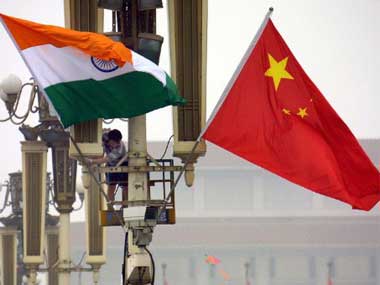
Representational image. AFP[/caption]The Dalai Lama's activities are against Indian government's commitment to China, he said.Asked about the timing of the announcement, he said China is now doing a second census of names of localities and an important part of it is to standardise names in ethnic language.The India-China border dispute covers the 3,488 km-long Line of Actual Control (LAC). While China claims Arunachal Pradesh as South Tibet, India asserts that the dispute covers Aksai Chin area which was occupied by China during the 1962 war.The two sides have so far held 19 rounds of Special Representatives talks to resolve the boundary dispute.China's move comes just days after the Dalai Lama's visit to Arunachal Pradesh, which was seventh since the 81-year-old spiritual leader fled from Tibet through Tawang and sought refuge in India.During the Dalai Lama's Arunachal Pradesh visit, China had warned India that it will take "necessary measures" to defend its territorial sovereignty and interests.Commenting on the standardisation of the names of six places, Chinese experts said that it was a move to "reaffirm the country's territorial sovereignty to the disputed region", according to the daily."The standardisation came amid China's growing understanding and recognition of the geography in South Tibet. Naming the places is a step to reaffirm China's territorial sovereignty to South Tibet," Xiong Kunxin, a professor of ethnic studies at Beijing's Minzu University of China, was quoted as saying.Xiong said that the legalisation of the regions' names is a part of the rule of law."These names have existed since ancient times, but had never been standardised before. Therefore, announcing the names is like a remediation," Guo Kefan, a research fellow at the Tibet Academy of Social Sciences, said.Standardising the names from the angles of culture and geography could serve as a reference or leverage when China and India negotiate border issues in future, Guo said."The South Tibet region is located alongside China's southwestern border and India's north-eastern border where Sino-Indian border disputes are cantered," the report said.It claimed that India "abruptly announced that it was officially designating the region as 'Arunachal Pradesh' but the Chinese government has neither recognised India's occupation of the region, nor the legitimacy of the province".During the Dalai Lama Arunachal Pradesh visit, Union Minister of State for Home Affairs Kiren Rijiju, who accompanied the Tibetan spiritual leader, had asserted that that Arunachal Pradesh is "an inseparable part of India".China had lodged a diplomatic protest with India over the visit and warned that it would have a negative impact on the efforts to resolve the border dispute.After the nine-day visit of the Dalai Lama to Arunachal Pradesh, Chinese Foreign Ministry spokesman Lu had said that India should not use the Tibetan spiritual leader to undermine China's interests.

US set to announce new tariff plan as temporary 10% duty nears expiry
India rejects Pakistan's 'baseless' claims at Asean, says Indus Waters Treaty to remain on hold
Indian trucker arrested in US over alleged theft of $3 million worth of tungsten powder
Austria turns Hitler’s birthplace into a police station 81 years after his death: 5 things to know
Nawaz Sharif wants to become prime minister of PoK — but laws framed by Pakistan disqualify him