


Benjamin Netanyahu praises Israeli troops after violent clashes near Gaza border left 16 Palestinians dead
Israeli prime minister Benjamin Netanyahu on Saturday praised troops for "guarding the country's borders" after a mass Gaza frontier protest led to clashes that left 16 Palestinians dead

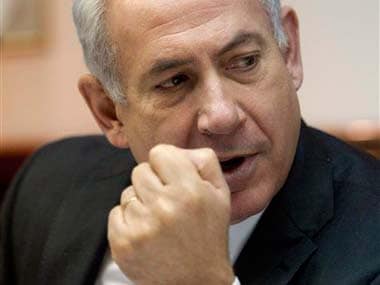
File image of Israeli prime minister Benjamin Netanyahu. AP[/caption]"Israel acts vigorously and with determination to protect its sovereignty and the security of its citizens."Tens of thousands of Palestinians rallied on the Gaza side of the border fence on Friday, some hurling stones and rolling burning tyres at Israeli troops on their side of the wire.The Israeli army said it opened fire only when necessary, against those taking an active part in violence.It said there were attempts to damage the fence and break through into Israel, as well as an attempted gun attack against troops.Palestinians accused Israel of using disproportionate force, saying the soldiers opened fire on protesters who did not pose a threat, while human rights groups questioned Israel's use of live fire.UN chief Antonio Guterres called for an "independent and transparent investigation" and European Union diplomatic chief Federica Mogherini followed suit, calling in a statement for a probe into Israel's use of live ammunition.Palestinian president Mahmud Abbas declared a day of national mourning on Saturday and in a speech said he held Israel fully responsible for the deaths.Thousands attended funerals for 14 of those killed — two were buried on on Friday — with mourners holding Palestinian flags and some chanting "revenge" and firing into the air.

No premium queues, 30-minute target: What changes for Indian passport applicants in UAE
'We don't need straits': Trump says Iran war isn't about Hormuz as US strikes for 12th night
Iran claims to stop three oil tankers transiting Strait of Hormuz
Globe at a glance: From Houthis striking Saudi tankers in Red Sea to wildfires in Europe
Houthis claim responsibility for attack on two Saudi oil tankers in Red Sea as a new chokepoint emerges