


Ahead of NSG plenary in Seoul, India has little reason for optimism
India has been trying to gain admission to the NSG ever since the historic India-US nuclear deal to gain access to nuclear material, equipment, know-how, and technology for use in its civilian nuclear energy programme

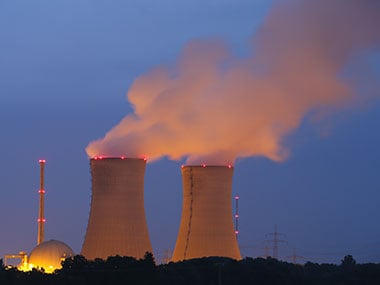
Representational image. Getty Images[/caption]The NSG waiver for India in 2008 allowed the South Asian country to buy nuclear reactors and uranium from the international market but still kept several dual-use technologies out of reach. Delhi hopes that membership to the group will allow it a role in global nuclear governance and perhaps, even the latest in enrichment and reprocessing technology that could be very useful for its fast-breeder reactor programme.Not all countries were pleased with the waiver given to India.They felt that such ad hoc and exceptional measures weakened the non-proliferation regime as a whole. The international community would come to regard the group as merely an elite cartel trying to maintain its technical superiority. Another strand of opposition — though it is never worded as such — comes specifically from China: India is not its rival but an inconvenience of concern nonetheless, and India's international elevation would put its client Pakistan at a disadvantage. Opposition to Indian membership now comes from these same quarters.That Beijing's position is purely political and hypocritical is blatantly obvious. For a country that is so committed to the process and mission of the NSG, it sold two reactors to Pakistan in 2010 in violation of the body's guidelines. Two years later, Pakistan announced that it is considering acquiring two more reactors from China. Bejing argued that these reactor sales were being grandfathered into a 2003 agreement — before China had joined the NSG — between itself and Islamabad and therefore do not come under the nuclear cartel's purview. Although India protested at this perfidy, the NSG did little to censure China. Substantial assistance to Islamabad's nuclear weapons programme before it joined the NPT indicates a pattern in Beijing's diplomatic behaviour.The non-proliferation lobby has grabbed on to China's nuclear obstinacy at the NSG and also supported a process-driven membership protocol. This process should be guided, they suggest, by United Nations Security Council Resolution 1540. Passed under Chapter VII of the UN charter, the resolution is legally binding upon all members and lays down the obligations to curtail the spread of atomic, biological, and chemical weapons of mass destruction. An Indian waiver is offensive to the institutional memory of a group created in response to the Pokhran PNE. The irony that the standard suggested — UNSCR 1540 — was created in response to the revelations of Pakistan's nuclear black-marketeering in 2003 seems to have missed their attention.Interestingly, Chinese diplomats insist that they have not opposed India's entry into the NSG. Delhi has clung to this statement as hope that its bid is not dead in the water. After all, South Block cannot be seen to be participating in its own keen. China is indeed holding open a door, but for Pakistan when the day comes that the international community will be willing to move on from AQ Khan. Indian optimism has no cause here.The question arises whether India's efforts to join the nuclear cartel are worth the trouble. After all, the tightening of controls on enrichment and reprocessing technology, now available to only NPT countries, in Noordwijk in 2011 leaves little by way of material gain for India. The 2008 waiver gives India all that it can hope for in the near future. The BJP must also come to terms with the fact that the country's nuclear industry could not capitalise on the Indo-US nuclear deal in large part because of the liability law it pushed through when it was in Opposition.

Nawaz Sharif wants to become prime minister of PoK — but laws framed by Pakistan disqualify him
Fake jobs, tourist visas: Inside Russia’s vast network luring foreigners to fight Ukraine war
As Pakistan eyes American dollar for Iran mediation, economists sound the alarm: ‘It can buy time, not growth’
Are Chinese UN peacekeepers spies? Trump’s UN envoy sends out a warning
Why has Bangladesh’s choice of India spokespersons raised eyebrows?