


ISRO
ISRO launched Megha-Tropiques, an Indo-French satellite that will study the monsoons and how climate change is affecting it at 11am from Satish Dhawan Space Centre in Sriharikota.

On Wednesday, October 12, 2011, the Indian Space Research Organisation launched Megha-Tropiques, an Indo-French satellite that will study the monsoons and how climate change is affecting it. The satellite was launched at 11am from Satish Dhawan Space Centre in Sriharikota. Following the launch, the satellite was successfully placed in the orbit.[caption id="attachment_105709" align="alignleft" width="380" caption="Four satellites were placed in their orbits 26 minutes after PSLV-C18 lifted off from Sriharikota on Wednesday, October 12, 2011. Wiki Commons"]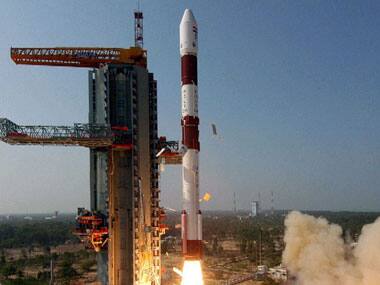 [/caption]ISRO has come a long way from since its first launch in 1975. On April 19, 1975, ISRO made foray into space by launching Aryabhatta, India's first satellite, which stopped working five days after the launch.Unlike, Aryabhatta, that weighed a mere 360kgs, Megha-Tropiques which carries three payloads - two developed by French Space Agency CNES, and one jointly developed by CNES and ISRO, weighs 500kgs. The satellite was built at a cost of Rs 80 crore by ISRO with an equal contribution from CNES.Homi Jehangir Bhabha, the father of India's nuclear program laid the foundations to ISRO, but it wasn't until Dr. Vikram Sarabhai, succeeded Bhabha that a vision and future of the institution was envisaged.Soon after taking charge Sarabhai defined the philosophy of ISRO, wherein he goes on to say:"There are some who question the relevance of space activities in a developing nation. To us, there is no ambiguity of purpose. We do not have the fantasy of competing with the economically advanced nations in the exploration of the moon or the planets or manned space-flight. But we are convinced that if we are to play a meaningful role nationally, and in the community of nations, we must be second to none in the application of advanced technologies to the real problems of man and society."Since its inception in 1969, ISRO has launched over a dozen satellites, heralding the rise of a new India, leading communication revolution in India. While ISRO developed on Russian and French launch vehicles for its satellites, in 1979, India developed its first launch vehicle, humbly referred to as the Satellite Launch Vehicle (SLV). Since then ISRO has gone on to develop its PSLV (Polar Satellite Launch Vehicle) and GSLV (Geo-synchronous Satellite Launch Vehicle), which are among the world's more reliable launch vehicles.PSLV C-18 also carried three nano satellites: Vesselsat, developed by Luxembourg; Jugnu, developed by IIT-Kanpur; and SRMSat developed by SRM University, Chennai.Jugnu, developed by IIT-Kanpur, weighs 3Kg, and was built by over 60 students and faculty members of the institution at a cost of Rs 2 crore. Jugnu will gather information regarding flood, drought and disaster management.SRMSat, which weighs over 10Kg, was developed by 50 students from SRM University, Chennai.The satellite was made at a cost of Rs 1.5crore and is expected to monitor green house gases, carbon-dioxide and water vapour over the tropics.The four satellites were placed in their orbits 26 minutes after PSLV lifted off from Sriharikota, a barrier island off the coast of the southern state of Andhra Pradesh in India, at 11 am on October 12, 2011. Sriharikota houses India's only satellite launch centre in the Satish Dhawan Space Centre and is used by the ISRO to launch satellites using the Polar Satellite Launch Vehicle (PSLV) and the Geosynchronous Satellite Launch Vehicle (GSLV).This is ISRO's fourth launch this year, and the third from Sriharikota, following the launch of RESOURCESAT-2, INSAT-4G and GSAT-12. INSAT-4G was launched from Kourou in French Guiana this May.

Dell-EMC to be biggest merger in tech history, says CEO Michael Dell
Bharti Airtel's Q4 net up 2.8%, 15 per cent rise in subscribers for mobile internet
Up to 25% stake in Tata Steel will meet EU rules on state aid, says UK