


World's largest patch of plastic in Pacific to be cleaned up in a massive effort
The effort aims to remove 50 percent of the 'Great Pacific Garbage Patch' over five years.

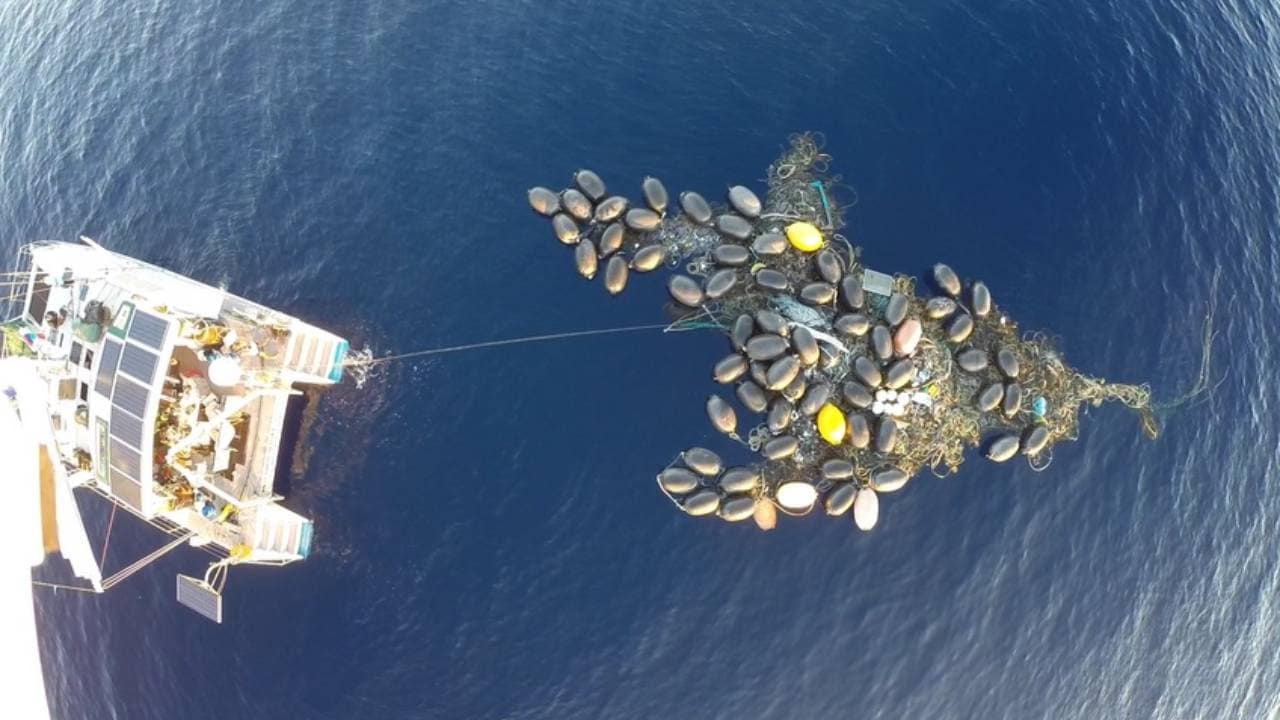 Semi-permanent islands made of ropes, buoys and other detritus continue to form in the Pacific Ocean 15 years after the Great Pacific garbage patch was first discovered in 1997
Image courtesy: Algalita[/caption]Leonard said 8 million metric tons of plastic waste enter the ocean annually and that a solution must include a multi-pronged approach, including stopping plastic from reaching the ocean and more education so people reduce consumption of single use plastic containers and bottles.“If you don’t stop plastics from flowing into the ocean, it will be a Sisyphean task,” Leonard said, citing the Greek myth of a task never completed. He added that on 15 September about 1 million volunteers around the world will collect trash from beaches and waterways as part of the Ocean Conservancy’s annual International Coastal Cleanup.Volunteers last year collected about 10,000 tons of plastics worldwide over two hours, he said.Leonard also raised concerns that marine and wildlife could be entangled by the net that will hang below the surface. He said he hopes Slat’s group is transparent with its data and shares information with the public about what happens with the first deployment.“He has set a very large and lofty goal and we certainly hope it works but we really are not going to know until it is deployed,” Leonard said. “We have to wait and see.”The system will act as a “big boat that stands still in the water” and will have a screen and not a net so that there is nothing for marine life to get entangled with. As an extra precautionary measure, a boat carrying experienced marine biologists will be deployed to make sure the device is not harming wildlife, Slat said.“I’m the first to acknowledge this has never done before and that it is important to collect plastic on land and close the taps on plastic entering into the ocean, but I also think humanity can do more than one thing at a time to tackle this problem,” Slat said.

Careless Whispers: Scientists discover that plants can 'talk' to each other using smells
Life on Mars? European Space Agency’s Orbiter discovers ice water deposits at equator
Microsoft briefly overtakes Apple as the most valuable company, Apple back on top again
Even NASA is facing a tough time, starts layoffs following major budget cuts
ISRO, NASA's NISAR satellite to get ready by Jan-end, will monitor Earth's snow-covered regions