


Why is China's Chang'e-4 lunar mission to the far side of the Moon a big deal?
The Chang'e-4 mission is also part of China's ambitions to further its space and geopolitical goals.

Late last week, China became the first country in the world to successfully launch a mission to land its spacecraft on the largely-unexplored 'far side' of the Moon.The Chang'e-4 lunar probe — named after the 'moon goddess' in Chinese mythology — was launched on a Long March 3B rocket from the Xichang Launch Centre in China, minutes from midnight. The spacecraft is now on a month-long journey to the Moon, expected to land sometime in early January.
What is Chang'e-4's mission?
This will be the world's first attempt at landing a spacecraft on the far side of the moon, which has faced away from the Earth from the time we started paying attention to it. Collectively, space and astronomy communities still know very little about the moon's far side.The Chang'e-4 mission is also part of China's ambitions to further its space and geopolitical goals. China is keen on demonstrating its capabilities as a space power, and one to rival Russia, the European Union and the US."This mission is also the most meaningful deep space exploration research project in the world in 2018," He Rongwei, the mission's chief commander from the China Aerospace Science and Technology Corp, told Global Times.The country will definitely go down the space hall of fame if Chang'e-4 makes a soft landing as planned.[caption id="attachment_5724571" align="alignnone" width="1280"]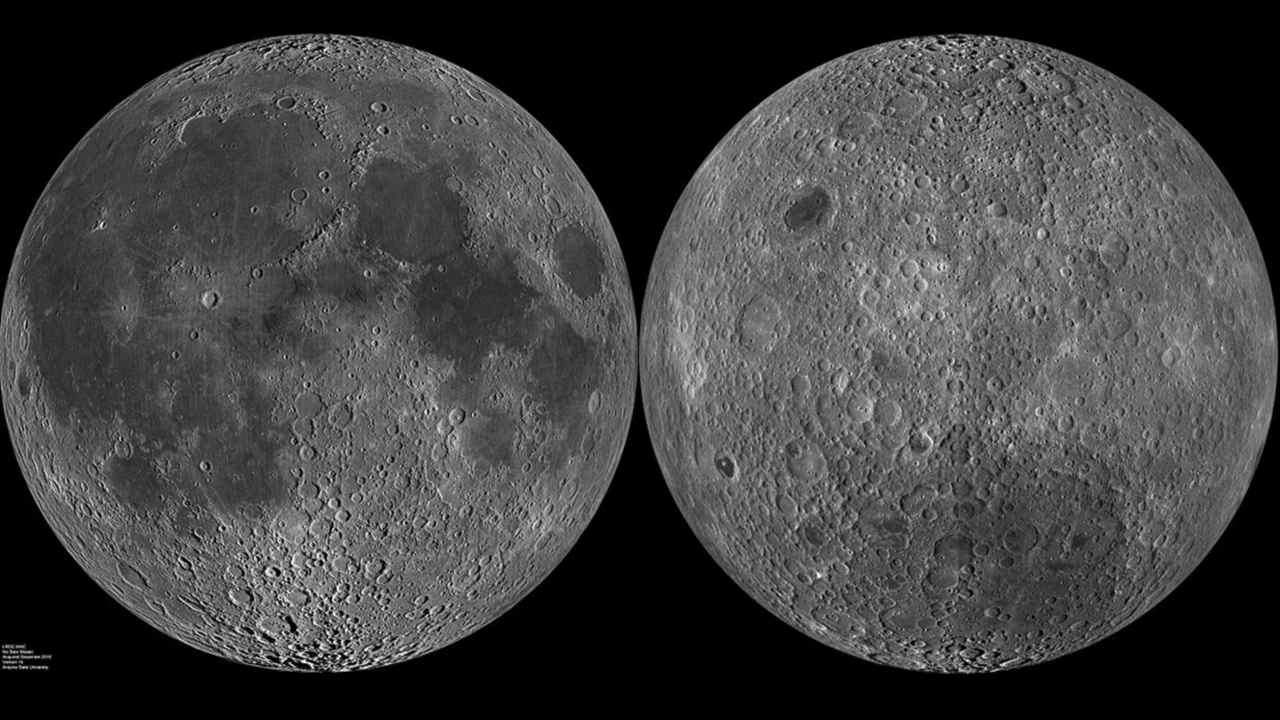
The near side (left) and far side (right) of the Moon. The far side has very little maria (plains) due to its relatively thicker, uneven crust. Image courtesy: Wikipedia[/caption]
Chang'e 4 Mission: Why go as far as the far side?
Chang'e 4 Mission: How will it work?
What will the probe get up to on the Moon?
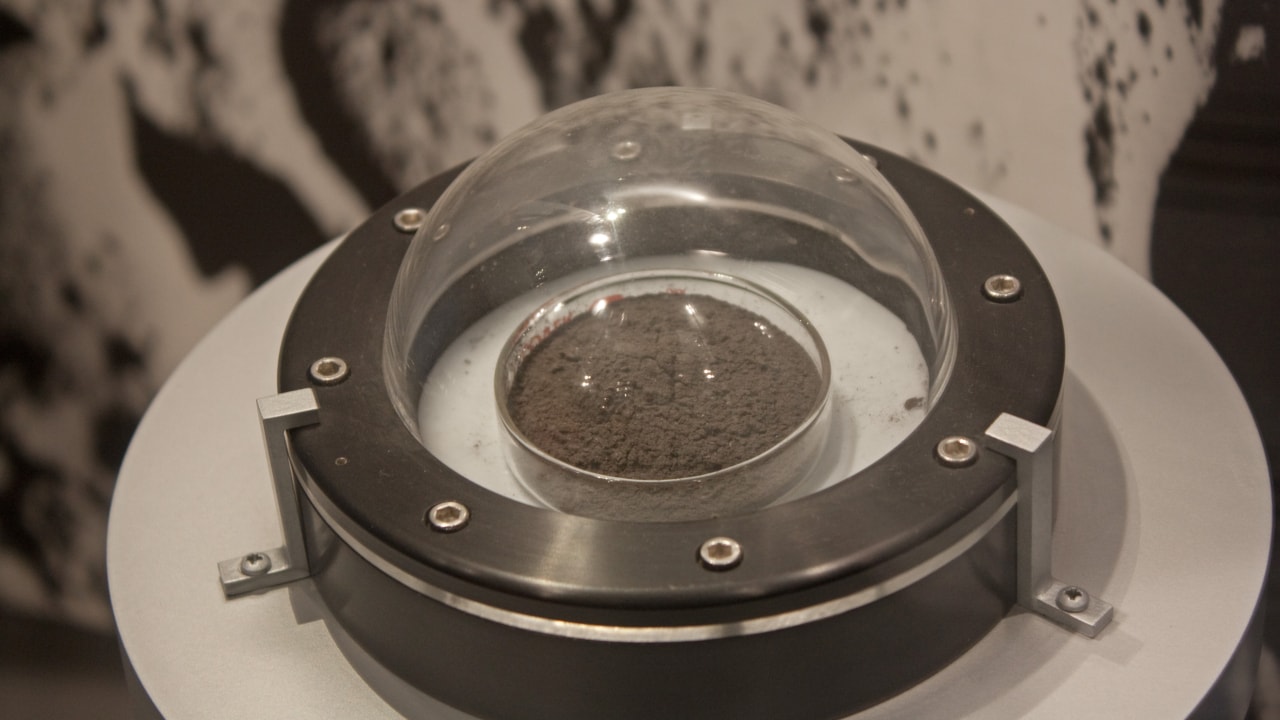 Lunar soil collected from Apollo 17 displayed in the National Museum of Natural History in Washington. Image courtesy: Wikimedia Commons[/caption]The Chang’e-4 mission will see, touch and take notes but not bring back any samples from the far side. It has a ground-penetrating radar instrument to scan the depths under the Moon’s rocky yet powdery surface. Along with mineral and radiation tests, the spacecraft is also equipped with a radio-astronomy experiment to gaze at space and make new discoveries without losing out on radio waves signals as they trickle down to terrestrial detectors on Earth.Chang'e-4 is carrying six experiments from China and four from around the world, including one involving potatoes and seeds. The rover also packs a Swedish instrument to look at how solar flares (particle streams of radiation from the Sun) interact with the Moon's surface and rocks. Much like its predecessor Chang'e-3, the Chang’e-4 mission, too, will be equipped with cameras on both its lander and rover.[caption id="attachment_5694881" align="alignnone" width="1280"]
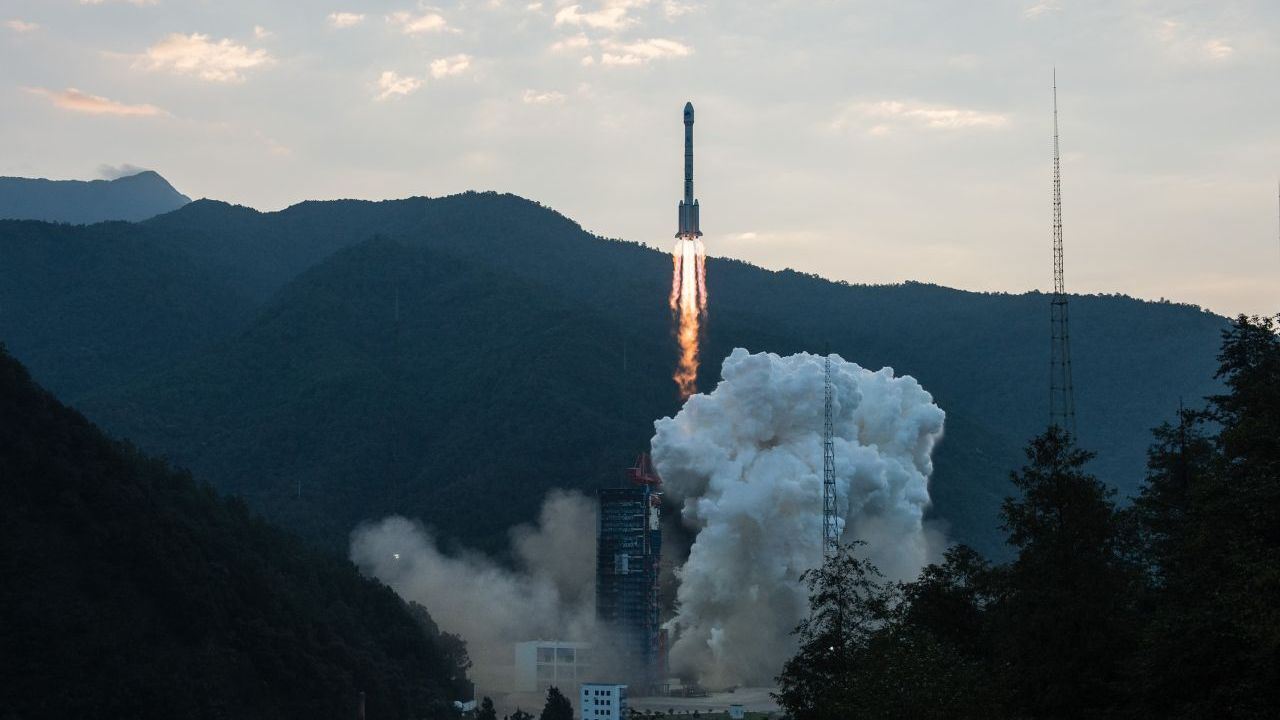 A Long March 3B rocket takes off from a launchpad in the XLC, China. Image courtesy: GBT[/caption]
Next up: Humans?
Beijing is pouring billions into its military-run space programme, with hopes of having a crewed space station by 2022. The goal is to eventually send Chinese astronauts to the moon.The Chang'e-4 mission will be a milestone in that direction — significant for its engineering expertise, which missions to explore and settle on the moon will demand. The mission is one rung in China’s decade-long, ambitious lunar-ladder.The country’s space agency plans to launch another spacecraft, Chang’e-5, to bring back samples from the Moon’s near side.That isn't all China is having their brightest space minds working on. The country has aimed to produce its first reusable launchers by 2021, a super-powerful new rocket capable of delivering payloads heavier than those NASA and SpaceX can handle, a moon base, a permanently crewed space station, and a Mars rover."Our country's successful lunar exploration project not only vaults us to the top of the world's space power ranks, but it also allows the exploration of the far side of the moon," said Niu Min, an expert on China's space programme.The Chang'e-4 mission, is more than ambitious science in action, according to Min — it's a symbolic win for the Chinese, and "greatly inspires everyone's national pride and self-confidence".
 More from Science
Careless Whispers: Scientists discover that plants can 'talk' to each other using smells
Life on Mars? European Space Agency’s Orbiter discovers ice water deposits at equator
Microsoft briefly overtakes Apple as the most valuable company, Apple back on top again
Even NASA is facing a tough time, starts layoffs following major budget cuts
ISRO, NASA's NISAR satellite to get ready by Jan-end, will monitor Earth's snow-covered regions