


Why are we afraid of fevers? Treating a fever with medicines affects the immune system too
Fever acts to mobilize multiple arms on the immune system, helping many of them work at their peak capacity.

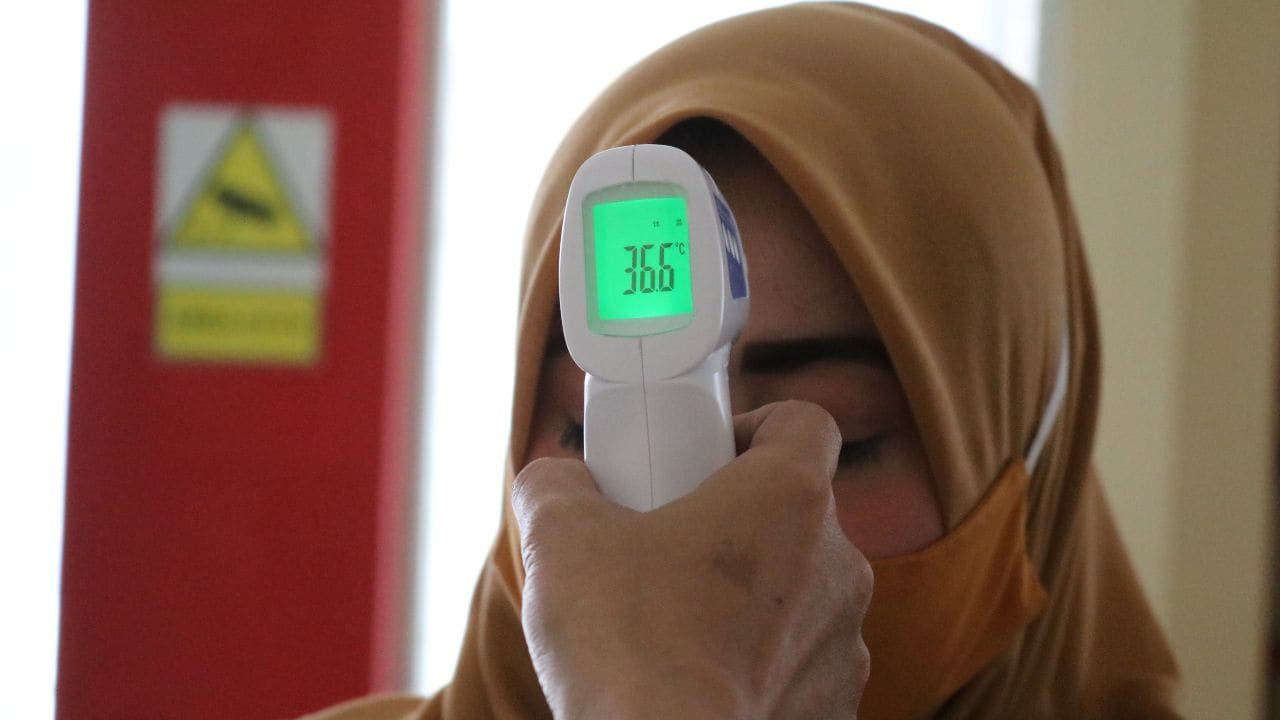
Temperature scanner gun is used to check body temperature as a Covid-19 screening measure. Image: Unsplash[/caption]For starters, Evans said, fever activates innate immunity — the mobilization of white blood cells: neutrophils that patrol the body for pathogens and macrophages that gobble them up. Macrophages, in turn, send out an alarm that help is needed, prompting adaptive immunity — T cells and B cells — into action. These cells initiate a specific response to the invader: the production of antibodies days later.“Treating fever can prolong or worsen illness,” Dr. Paul Offit, vaccinologist at the University of Pennsylvania, stated in “Hippocrates Was Right: Treating Fever Is a Bad Idea,” a fascinating YouTube presentation by the College of Physicians of Philadelphia.“Fever enhances survival,” Offit reported. That accounts for its persistence throughout animal evolution, even though it exacts a significant metabolic cost. Immunity, both innate and adaptive, “works better at higher temperatures,” he said.Thus, when you take medication like acetaminophen (Tylenol and its generic forms) or ibuprofen to suppress a fever, you actually work against the inherent protective benefits nature bestowed. Yes, a fever reducer would probably make you feel better, relieving symptoms like headache, muscle aches and fatigue. But, Offit emphasized: “You’re not supposed to feel better. You’re supposed to stay under the covers, keep warm and ride out the infection,” not go out and spread it to others.“We have fevers for a reason,” he said. Fever helps to reduce viral shedding and shorten the length of illnesses like the flu.Grandma’s proverbial common cold remedy of hot chicken soup probably helps because the steam raises the temperature of nasal passages, repressing reproduction of the virus, he suggested.Evans and colleagues wrote, “The fact that fever has been retained throughout vertebrate evolution strongly argues that febrile temperatures confer a survival advantage.” This is true for invertebrates like insects as well. And when coldblooded animals like lizards or bees get sick, they try to raise their body temperature by increasing physical activity or seeking a warmer environment, Evans said.So why are we so hellbent on suppressing fevers? Fear is one reason, said Gordon, the Brooklyn pediatrician, who said frantic parents often called in the middle of the night when a child’s fever spiked. She suggested that doctors warn parents ahead of time to expect a nighttime rise in a child’s fever and explain that high fevers from an infection are not damaging.“The body has a built-in thermostat — the hypothalamus — that keeps temperatures from getting high enough to cause damage,” she said, and febrile seizures (brief convulsions, shaking and perhaps loss of consciousness that affect some young children) result from how fast temperatures rise, not how high they get. In a genetically susceptible child, a seizure can occur when the temperature rises quickly even at low temperatures, say, from 99 to 100.8.“Febrile seizures are creepy and terrifying for parents to watch, but they don’t cause any damage,” Gordon said. She added, however, that fever is worrisome in very young babies who have immature immune systems and haven’t yet been vaccinated against serious diseases.Even knowing the infection-fighting benefits of fever, Gordon said she would still recommend medication to lower a fever if a child, especially a non-verbal child, was very miserable and perhaps unable to sleep or eat.Adults are generally advised to seek medical help if their fever rises above 103 degrees.An important caveat about high fevers: Unlike fevers resulting from an infection, there is no natural shut-off for environmentally induced fevers, such as might occur if a child is shut in a hot car or an overdressed athlete overexercises on a hot day, which can result in fatal heat stroke.Consumers should also consider how a temperature is taken before interpreting the results. An ear temperature is usually slightly higher than an oral temperature, which in turn is higher than an armpit temperature or a forehead scan.To ensure a reliable reading, the temperature of newborns should be taken with a rectal thermometer, Gordon said. But for older children with a fever, the exact number of degrees doesn’t really matter unless they’ve not been immunized, she said.Jane E. Brody. c. 2021 The New York Times Company

Careless Whispers: Scientists discover that plants can 'talk' to each other using smells
Life on Mars? European Space Agency’s Orbiter discovers ice water deposits at equator
Microsoft briefly overtakes Apple as the most valuable company, Apple back on top again
Even NASA is facing a tough time, starts layoffs following major budget cuts
ISRO, NASA's NISAR satellite to get ready by Jan-end, will monitor Earth's snow-covered regions