
Advertisement


Sections
Why are flocks of endangered vultures dying of accidental poisoning in Assam?
It's good that vultures aren't rapidly on the decline today — a world free of them is anything but pleasant.

"As the first light of the sun hit the Gibbon Sanctuary in Jorhat district of Assam, Elizabeth Allgood from the International Fund for Animal Welfare and I were engrossed in a discussion about the wide variety of wildlife inhabiting Assam and the rest of North-East India. It was 24 January, and we were here to see Hoolock Gibbons... but they were high up in the canopy and it was almost impossible to spot them from a distance. We didn’t lose hope and kept walking through this pristine landscape. Our attention was often pleasantly diverted by colorful butterflies that were fluttering all around us. I was jolted out of this paradise by a frantic call from Dr Parag of Bombay Natural History Society (BNHS) asking, “Bishwa, did you get the news?” Unaware in this paradise, I was appalled when he told me that more than 50 vultures have succumbed to poisoning in Sivasagar, Assam."The above is an excerpt from the Wildlife Trust of India's website — a personal account from a serious case of poisoning in Assam's vultures in 2015. There have been six reported incidents of vultures being poisoned in numbers larger than 20 since then. In the most recent cases, on 29 March, at least 47 vultures were found limp on the forest floor, in a coma. It was one of the worse instances of poisoning in recent years. And if wildlife experts dealing with the situation in Assam are to be believed, it certainly isn't going to be the last.The truth is, vultures are unintended casualties in a long-standing tiff between cattle farmers and predators — rabid street dogs, leopards, hyenas, and jackals. Each of these threats is a nuisance to cattle farmers. The villagers aren’t targeting vultures with the poison. In the interest of saving their cattle, they dose (poison) the predator indirectly by poisoning a sick cow or rabid dog."They’re targeting predatory threats to their farms. And some times it isn’t leopards, but vultures that come, and vultures that die," Dr Rathin Barman, Wildlife Biologist and Joint Director of the Wildlife Trust of India in Assam, told Firstpost.[caption id="attachment_6383011" align="alignnone" width="1280"]
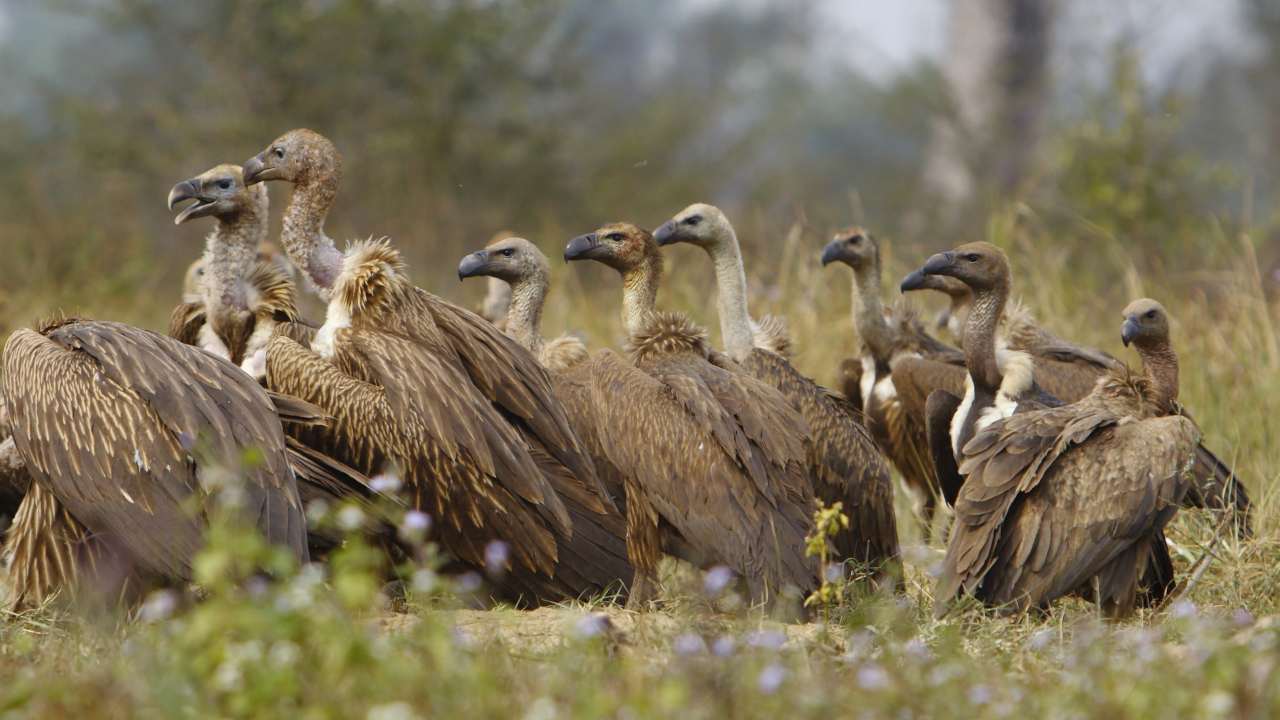 Despite preventable incidents of poisoning, vulture counts have improved in recent years. Image courtesy: Envis Centre, Ministry of Environment & Forest[/caption]In a matter of 72 hours, these poisoned vultures decorate the forest floor with their limp, comatose bodies waiting to be discovered by rangers or villagers."This has been happening for many, many years now, and is probably as important as the diclofenac problem was once. At this moment, diclofenac isn’t a problem as this has been banned in India for years — its use in the Ghats has come down significantly," Dr Barman told Firstpost. "This new (secondary poisoning strategy) is definitely a big problem."Wildlife departments are working with locals and villagers to address it. Unfortunately, it takes a single bad egg to wreak havoc of this scale, Dr Barman says. Threats like secondary poisoning continue to haunt vulture populations countrywide, but especially in Assam.India is home to nine unique species of vultures, six of which are found in Assam. Unfortunately, the most recent case of poisoning, like the many before it, threaten the endangered Gyps vultures, which include the Himalayan griffon, White-backed and slender-billed vulture species. The majority of accidentally-dosed vultures this time around were Griphons — a species just coming out of a prolonged, dark, drawn-out era of mass-culling from another poison, diclofenac.
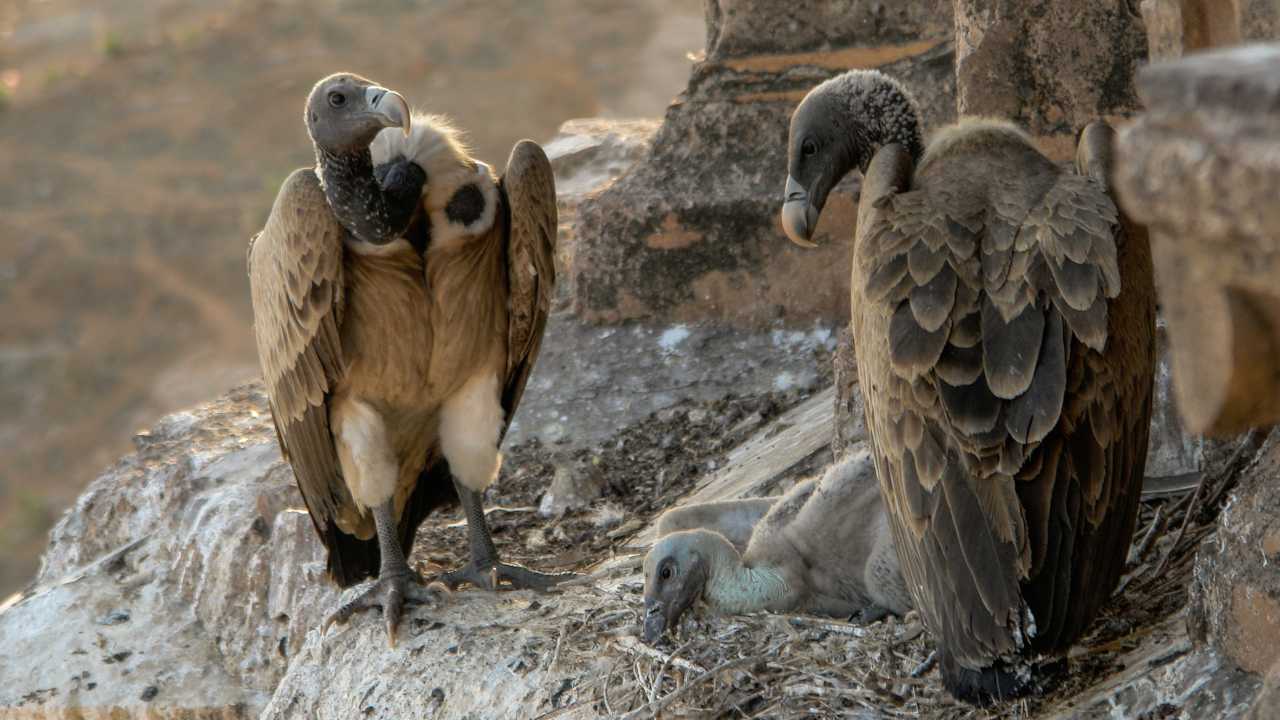 Gyps indicus vultures in the nest, on the tower of the Chaturbhuj Temple, Orchha, Madhya Pradesh, India. Image: Wikimedia Commons[/caption]"One thing I want to make very clear… this is not diclofenac poisoning. Diclofenac does not affect the bird this way... this quickly. A forensic investigation was conducted for cases last year and we showed that it was organophosphate poisoning. I have given my diagnosis for (the recent) case also as the same," Dr Samshul Ali, the veterinary doctor treating the poisoned vultures from the Centre for Wildlife Rehabilitation and Conservation (CWRC) at Kaziranga, Assam, said.The surviving vultures are responding positively to the treatment for organophosphate poisoning so far. As it turns out, vultures aren't the only birds affected by secondary poisoning incidents like this most recent one. So are crows and any other animals that feed on the poisoned animal. Efforts of wildlife groups and locals are helping the vulture species recover in recent years."Numbers of the slender-billed and Oriental white-backed vultures are recovering slowly. Griphons are also now much less affected by diclofenac poisoning, so there are also lots of these birds as well," Dr Barman said. "We are hopeful, definitely. After banning diclofenac, they are coming back... slowly, but the numbers look much better today," he added.It is a good thing vultures aren't vanishing. The consequences of a vulture-free world — more communicable disease, more feral dogs, rats, and flies — is a scenario that is anything but pleasant.
First Published:Apr 03, 2019, 21:13:36 IST
Advertisement
Advertisement

Careless Whispers: Scientists discover that plants can 'talk' to each other using smells
Japanese scientists have recorded a video that shows plants, in certain conditions, communicate with each other using mists that carry smells. The discovery, reveals that plants release a fine mist of airborne compounds, to warn nearby plants of potential dangers
Life on Mars? European Space Agency’s Orbiter discovers ice water deposits at equator
European Space Agency's Mars Express Orbiter has identified massive ice and ice water deposits beneath the surface of Mars. The Mars Express orbiter was also the first to confirmed the presence of ice on Mars in 2004
Microsoft briefly overtakes Apple as the most valuable company, Apple back on top again
At its peak during the session, Microsoft's value reached $2.903 trillion, with a 2% surge. As of writing this article, Apple closed at $2.89 trillion, whereas Microsoft closed at $2.86 trillion
Even NASA is facing a tough time, starts layoffs following major budget cuts
NASA is facing some massive budget cuts, because of which, it has been forced to postpone some upcoming missions. NASA's Jet Propulsion Laboratory has been hit hard by recent federal budget cuts, resulting in the layoff of 100 contractors last week
ISRO, NASA's NISAR satellite to get ready by Jan-end, will monitor Earth's snow-covered regions
The NISAR satellite which has been developed jointly ISRO and NASA, should be ready for launch by the end of January 2024. The collaboration between NASA and ISRO on NISAR is the first time the two agencies have cooperated on hardware development for an Earth-observing mission
Advertisement
Advertisement