


WHO COVID-19 origins report: What are WHO's four theories on the emergence of SARS-CoV-2?
A joint statement by 14 countries states that they don't believe the conditions under which the report was written was "independent and objective".

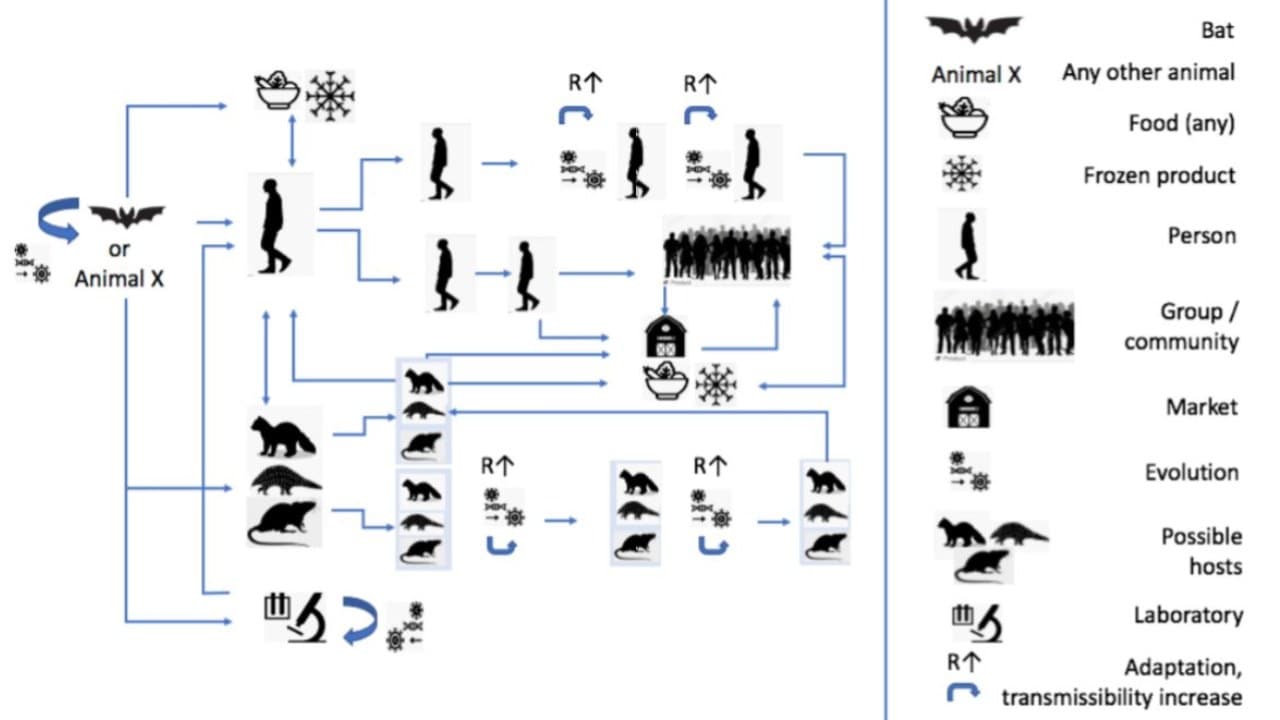
This illustration explains the possible pathways for the emergence and spread of SARS-CoV-2. Image credit: WHO-China joint report[/caption]The report does not give us a clear answer. It does, however, give us four theories of what the WHO and its team think may have happened. The team have ranked the likelihood of each of these scenarios from very likely to extremely unlikely:
- An intermediate host
- Direct zoonotic introduction
- Introduction through cold/food chain
- Introduction resulting from a laboratory incident
Transmission to human via intermediary host
The most likely scenario in the spread of the novel coronavirus, according to the WHO report, is that an infected animal transmitted the virus to another animal, which then passed it on to a human being. The infected human being, unbeknownst to them, spread the virus to others they came in contact with, which led to a pandemic.While the virus has been found in animals such as bats and pangolins, there is a missing evolutionary link. This, the WHO team believes, is because there might be an intermediary animal that the virus passed through before it came in contact with a human being. The SARS-CoV-2 virus has shown that it is highly adaptable, and can infect other animals (such as minks, tigers, cats, dogs and more) as well.
Spillover from infected animal
The second most likely theory that caused the spread of the SARS-CoV-2 virus is via animal spillover to humans. According to this theory, the SARS-CoV-2 virus was transmitted from an animal to a human being directly (i.e. without any animal acting as an intermediary). The virus then continued spreading due to person-to-person contact and super-spreading events.The main reason this theory is ranked so high is that a virus very similar to the SARS-CoV-2 virus was found in bats, pangolins and even minks. A more detailed analysis found "several decades of evolutionary space between the viruses." The reason that may work against this theory is that the chance of contact between a human and one of the aforementioned animals is quite slim. Humans beings are more likely to come in close contact with farm or domestic animals.[caption id="attachment_9498551" align="alignnone" width="1280"]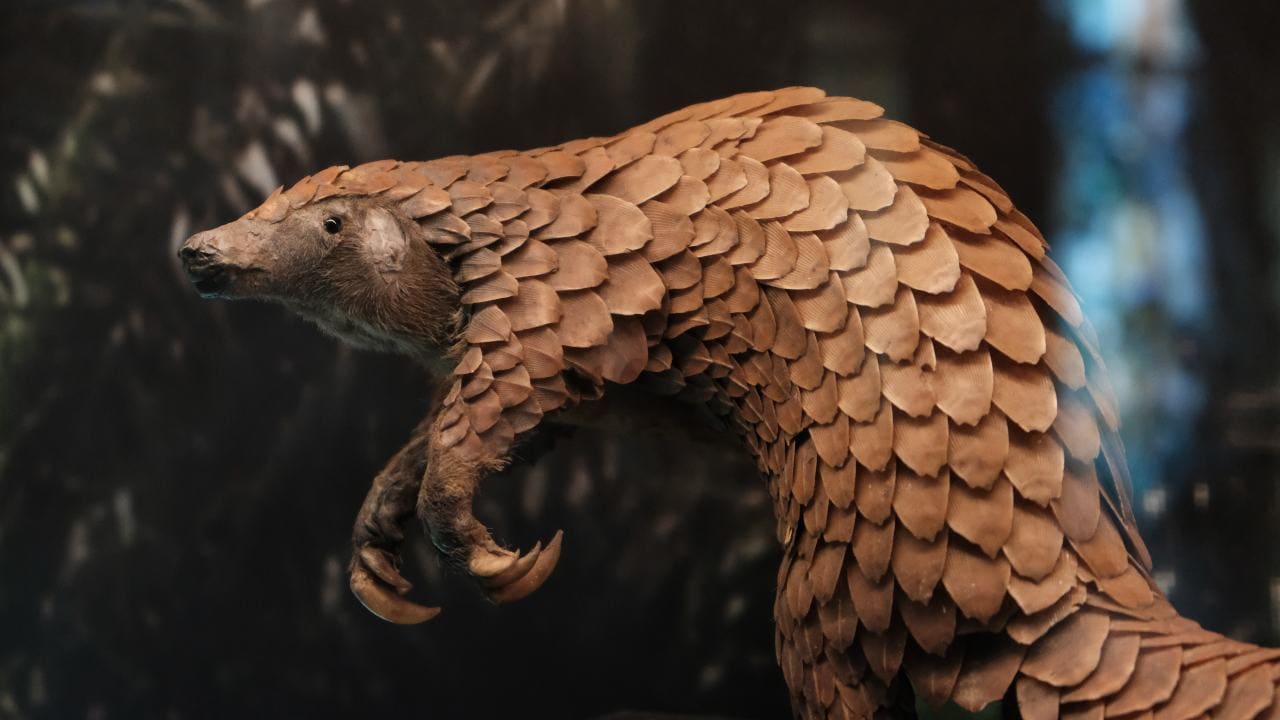
Pangolins are believed to be the world's most trafficked mammal, accounting for as much as 20 percent of all illegal wildlife trade.[/caption]
Frozen food theory
 More from Science
Lab leak theory
The last and least likely theory is that the virus came from a laboratory in China or that it was biologically engineered. The theory suggests that a staff member from the lab was accidentally infected and the virus then spread. The report did mention that it does not believe this virus was deliberately released, as scientists have analysed the genome.The staff at the Wuhan Institute of Virology, the lab that is at the centre of this accusation, checked its records to see if it had any virus similar to this coronavirus. They found nothing."Nobody has been able to pick up any firm arguments or proof or evidence that any of these labs would have been involved in a lab leak accident," said Peter Ben Embarek, the lead researcher for the international mission to Wuhan.Another reason against this theory is the labs involved in studying bat coronaviruses were "well-managed, with a staff health monitoring programme, and no one reported COVID-19 symptoms. There was also "no serological evidence of infection in workers through SARS-CoV-2-specific serology-screening."
Not enough data
WHO-China break up?
The WHO has been accused of being buddy-buddy with China, praising it for doing the bare minimum and not holding it adequately responsible for its hand in the spread of this pandemic. This sentiment has been echoed by many countries, especially the US, and was one of the main reasons Trump walked out of the UN health agency. He had also stopped funding the WHO.So it came as a surprise when Ghebreyesus called the Asian country out, albeit indirectly. He spoke of the difficulties the team faced while trying to access data in the country. He also said that this report would've benefited from having "full access to data, including biological samples from at least September 2019."Since there are calls for new investigations and further studies, he also asked that everyone (hint: China) collaborate more openly for future investigations."In my discussions with the team, they expressed the difficulties they encountered in accessing raw data," he said. "I expect future collaborative studies to include more timely and comprehensive data sharing."[caption id="attachment_9498541" align="alignnone" width="1280"]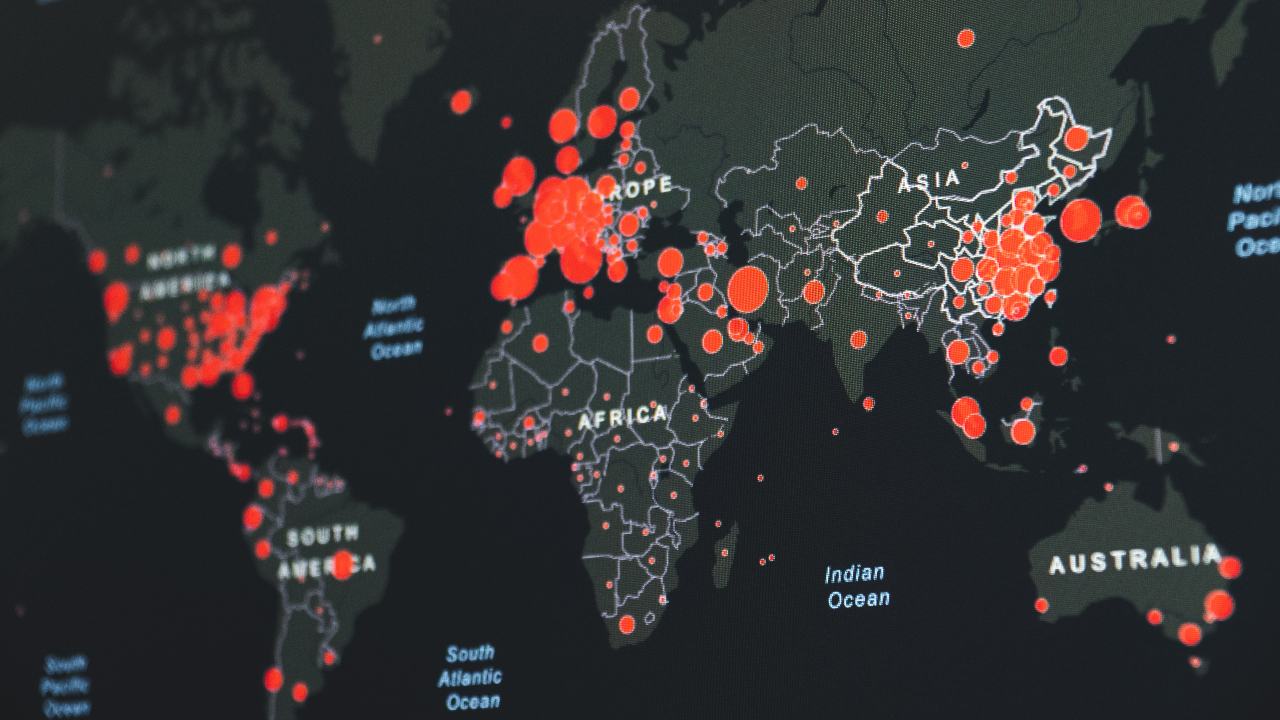
The WHO has been accused of being buddy-buddy with China, praising it for doing the bare minimum and not holding it adequately responsible for its hand in the spread of this pandemic.[/caption]
UK, US, Japan and the world
In a joint statement signed and released by the US, Australia, Canada, Czechia, Denmark, Estonia, Israel, Japan, Latvia, Lithuania, Norway, the Republic of Korea, Slovenia, and the UK have expressed concern with regard to the report. They believe the report was "delayed and lacked access to complete, original data and samples." The countries believe the conditions under which the report was written might not be "independent and objective".Japan's Chief Cabinet Secretary Katsunobu Kato has also called for "additional investigation and analysis."He said, “We are concerned that the latest investigation faced delays and the lack of access to virus samples."
China answers back

Careless Whispers: Scientists discover that plants can 'talk' to each other using smells
Life on Mars? European Space Agency’s Orbiter discovers ice water deposits at equator
Microsoft briefly overtakes Apple as the most valuable company, Apple back on top again
Even NASA is facing a tough time, starts layoffs following major budget cuts
ISRO, NASA's NISAR satellite to get ready by Jan-end, will monitor Earth's snow-covered regions