


Visuals from New Horizons capture faint glow of visible light permeating the universe
New Horizons is currently cruising beyond the solar system's edge, where light pollution caused by sunlight bounces off dust and debris.

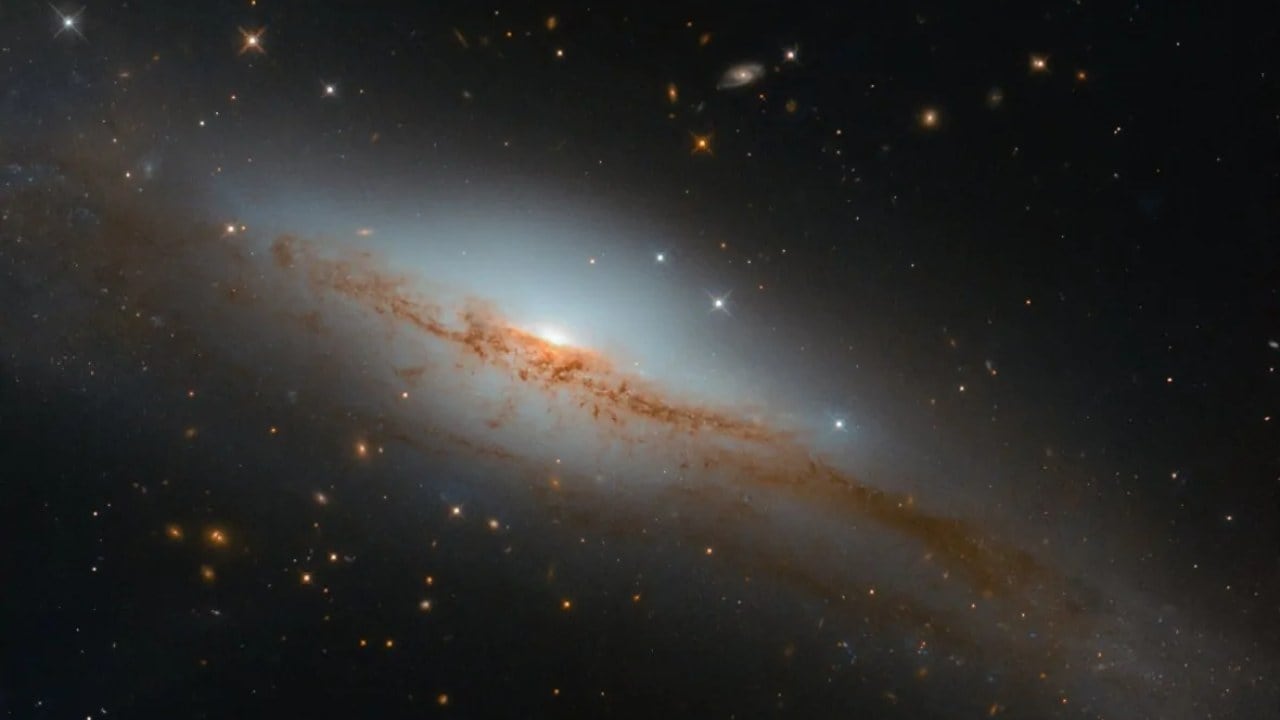
Hubble sees light emitting from a galaxy. Image: ESA/Hubble/NASA/D Rosario et al[/caption]After New Horizon's Pluto fly-by in 2015, it continued through the outer reaches of the solar system and is presently at the edge of the Kuiper belt on the verge of leaving the solar system. This is only the fifth man-made craft to be able to do so.While the inner solar system is filled with dust particles that reflect the sun's light, New Horizons is currently cruising a place which is beyond the light pollution caused by sunlight bouncing off dust and debris. So it should be able to see the dark of the space much clearly. While the team of scientists eliminated all possible sources, they still do not have any good explanation to what the source of light could be. One possibility is rogue stars in intergalactic space that are too dim to see as points of light, according to Lauer,Lauer added that there are a few wild speculations, including one that has to do with interactions between still-hypothetical particles of exotic 'dark matter'.The study has been accepted for publication in The Astrophysical Journal.

Careless Whispers: Scientists discover that plants can 'talk' to each other using smells
Life on Mars? European Space Agency’s Orbiter discovers ice water deposits at equator
Microsoft briefly overtakes Apple as the most valuable company, Apple back on top again
Even NASA is facing a tough time, starts layoffs following major budget cuts
ISRO, NASA's NISAR satellite to get ready by Jan-end, will monitor Earth's snow-covered regions