


Universe might end in a blast with the death of several black dwarfs, finds a new study
Black dwarfs are white dwarfs that have cooled down to the temperature of the “cosmic microwave background”, and become invisible.

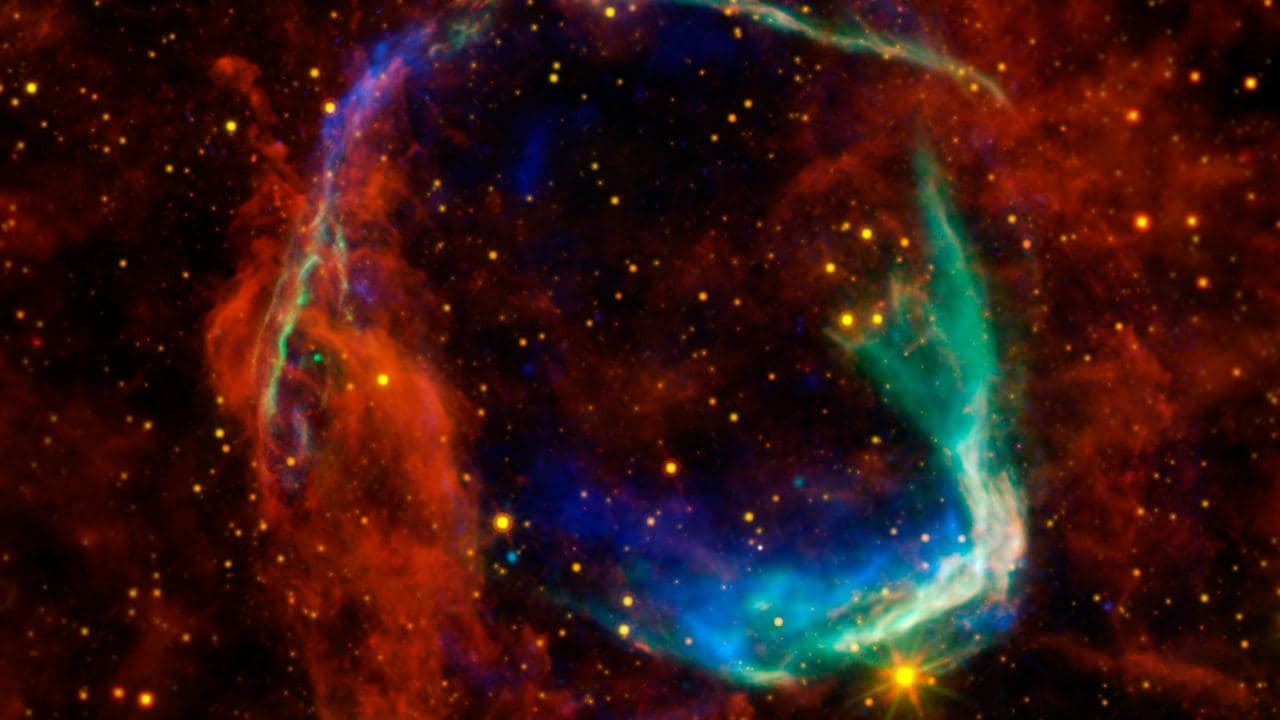
This image combines data from four different space telescopes to create a multi-wavelength view of all that remains of the oldest documented example of a supernova, called RCW 86. Image credit: NASA[/caption]However, the recent study shows that these stars can continue to undergo nuclear fusion at a “mind-bogglingly slow rate”, which ultimately leads to the huge blasts, reported National Geographic.According to the study, now accepted to be published in the journal Monthly Notices of the Royal Astronomical Society, these dwarfs would be one of the last components of the universe to exist before its end. Hence the supernovae events have been calculated by Matthew Caplan, author of the paper, to take place sometime after 10 to the power 1100 years, a number so huge that it does not have a name.Caplan, who is an astrophysicist at Illinois State University, said the time frame is massive, yet the “core-collaps[ing] supernova” very well might be the “last interesting astrophysical transients to occur prior to heat death”. Heat death is the death of difference between all kinds of heat. Or, once the universe reaches heat death, “everything everywhere will be the same temperature”. This will come after every star has died in the universe and all the energy left keeps thinning out due to the continuous expansion of the universe. This is one of the most plausible ways hypothesized about the end of the universe.

Careless Whispers: Scientists discover that plants can 'talk' to each other using smells
Life on Mars? European Space Agency’s Orbiter discovers ice water deposits at equator
Microsoft briefly overtakes Apple as the most valuable company, Apple back on top again
Even NASA is facing a tough time, starts layoffs following major budget cuts
ISRO, NASA's NISAR satellite to get ready by Jan-end, will monitor Earth's snow-covered regions